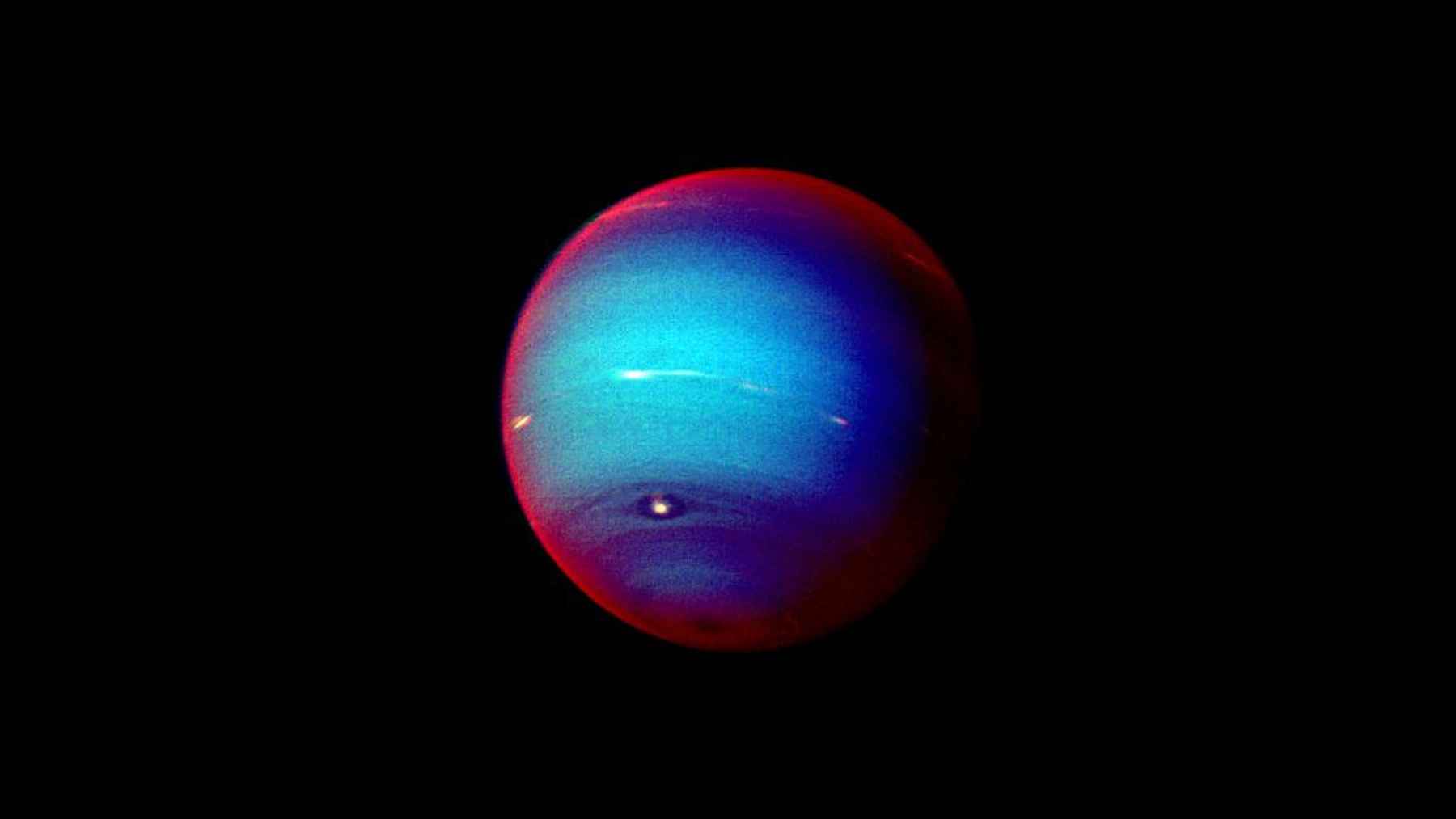
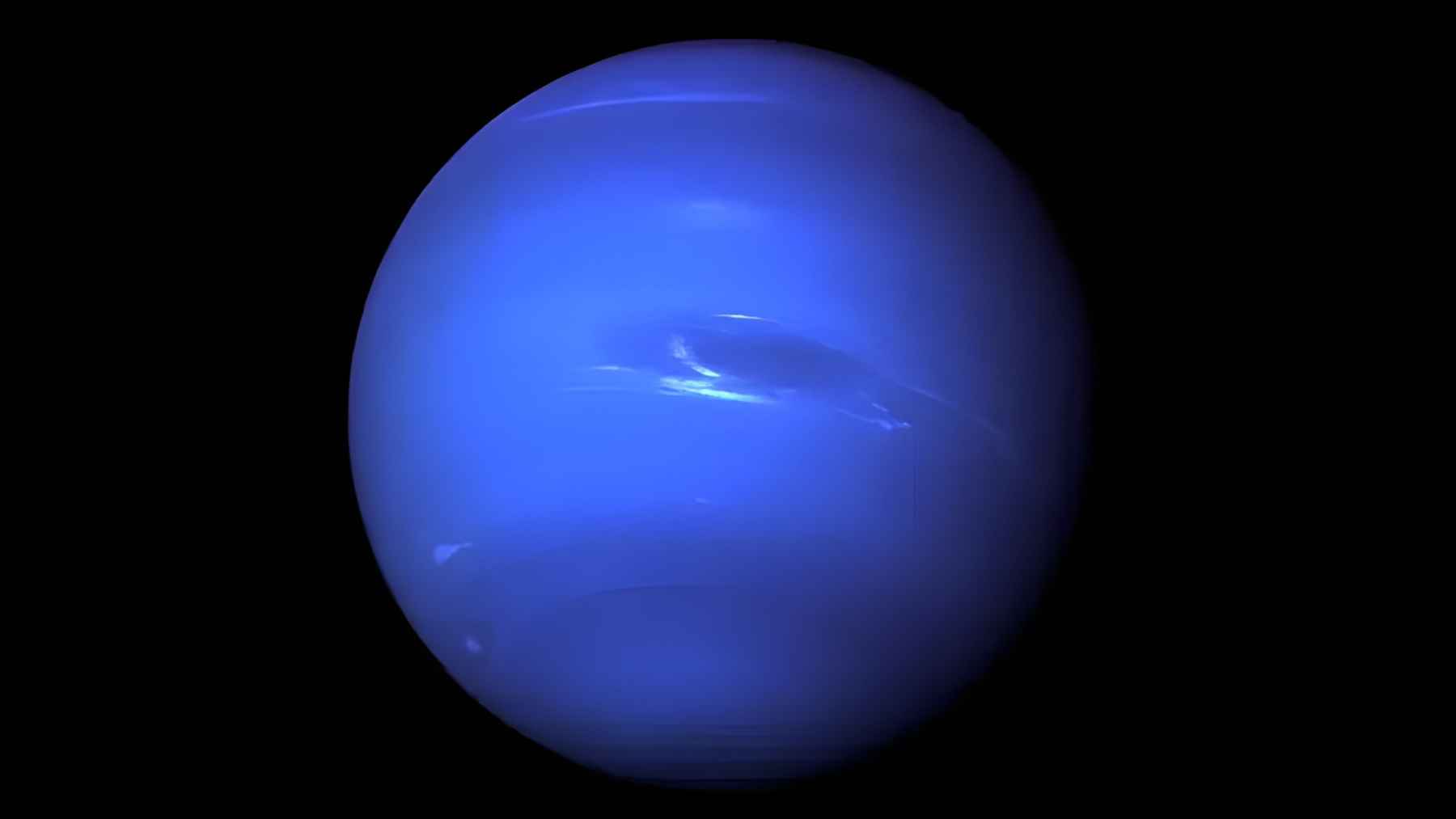
When Voyager 2 swept past Neptune in 1989, its cameras grabbed the headlines. The real surprise, though, came from its magnetometers. Instead of a tidy north-south field like Earth, Neptune’s magnetism looked crooked, shifted and full of extra poles that refused to line up with the planet’s spin.
For years, planetary scientists suspected the answer was hiding deep inside the ice giant, where water is crushed and heated far beyond anything in your kitchen kettle. Now an international team has recreated those extreme conditions in the lab and uncovered a form of water so strange it could finally explain Voyager’s puzzling data.
Hot black ice at nearly two million atmospheres
At everyday pressures, water is simple enough. In your glass it flows, in the freezer it forms neat crystals. Inside Neptune, it behaves more like a sci-fi material. Under pressures of around 150 to 180 gigapascals, which is roughly 1.5 to almost 2 million times the air pressing on you at sea level, and temperatures of about 2,500 kelvin, water enters a superionic state.
In this state, oxygen atoms lock into a solid framework while hydrogen ions roam freely through it, carrying electrical charge. Think of a city where the buildings never move but the streets are packed with rushing traffic. That restless, charged traffic is exactly the kind of thing that can power a planetary magnetic field. Neptune and Uranus are both thought to contain huge layers of this strange water deep inside.
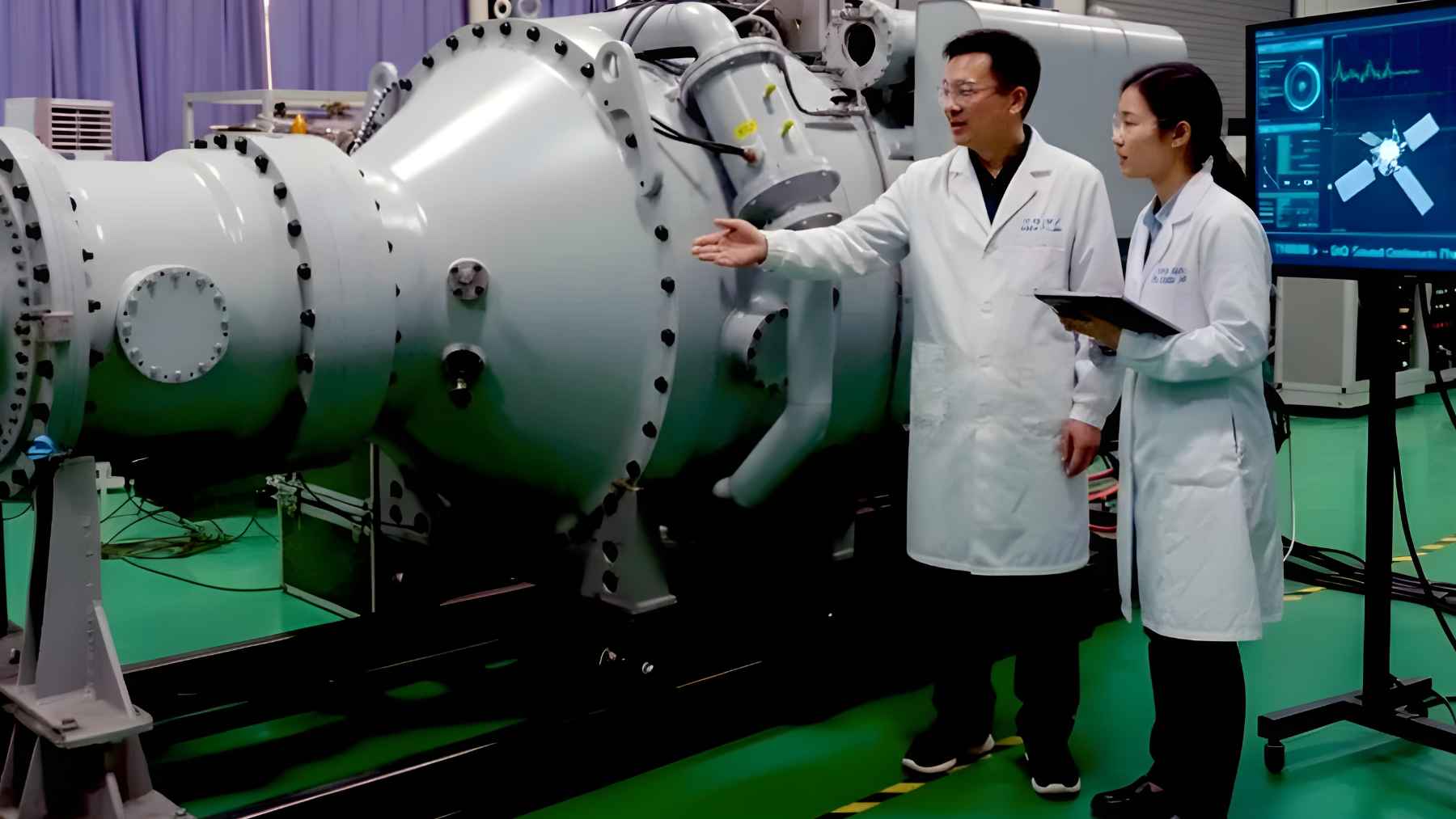
To probe it, researchers squeezed tiny water samples between diamonds and then hit them with powerful lasers. For a fleeting instant, the water became superionic. In that sliver of time, they fired intense X rays and collected diffraction patterns that reveal how the atoms are arranged.
A messy crystal for a messy magnetic field
Earlier theories assumed the oxygen lattice inside superionic water was neat and regular, with atoms sitting in one simple pattern. The new measurements tell a different story. Instead of a single, clean crystal, the lattice blends several close-packed arrangements, mixing layers that resemble face-centered cubic and hexagonal structures. The result looks more like shuffled cards than a perfectly stacked deck.
That structural disorder matters. Magnetic fields come from moving electrical charges. If the conductive layer inside Neptune is patchy and tangled, the resulting field will also look patchy and tangled, just as Voyager measured. The study does not solve every detail of the planet’s magnetism, but to a large extent it finally ties a messy field to a messy kind of ice.
What this means for planets and for water itself
On Earth, the magnetic shield that protects our atmosphere and every power grid from harsh solar particles is driven by molten iron in the core. For ice giants, the story may be written in water instead.
That makes this work more than a curiosity about a distant blue world. It reshapes how scientists think about planetary interiors, climate histories and even which exoplanets might keep stable, life friendly environments.
There is another twist. The oceans and rivers we know may be only a tiny fraction of water’s story in the universe. Because planets similar to Neptune appear common around other stars, superionic water could be one of the most widespread forms of water by mass, quietly shaping space weather on countless worlds.
Three decades after Voyager 2 rushed past Neptune, its odd magnetic snapshot is starting to look less like an anomaly and more like a clue that pointed straight at an unseen ocean of hot black ice.
The study was published in Nature Communications.