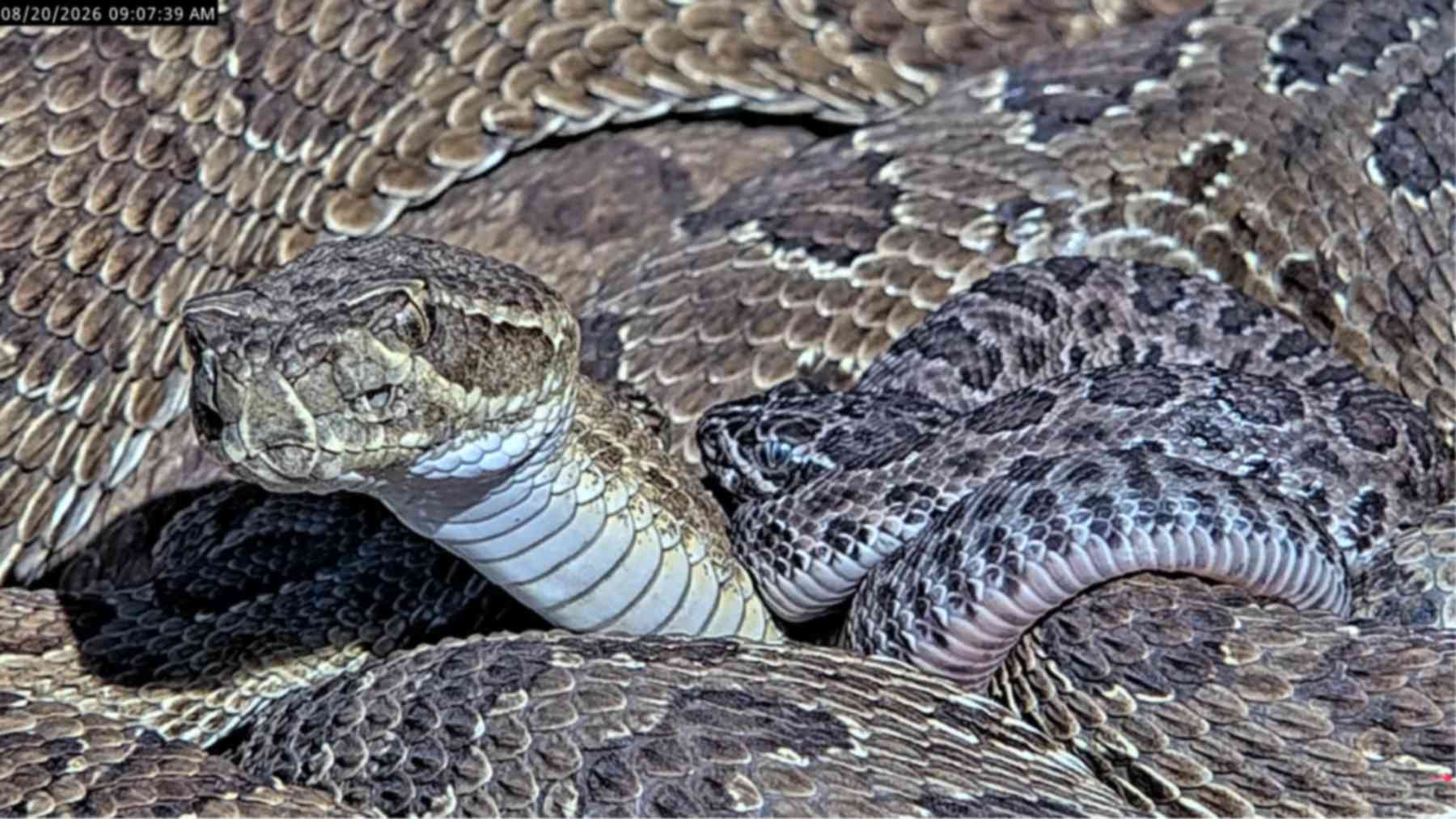
Baby rattlesnakes are giving viewers a close look at a part of their lives that usually unfolds out of sight. During the 2026 birthing season, Project RattleCam recorded newborns across its California, Colorado, and Pennsylvania livestreams for the first time, including footage of females giving birth.
More than 60 newborns had been observed in Colorado by the time Cal Poly announced the milestone on September 10. Alongside the births, the cameras are showing young snakes nestled against adults, giving researchers an opportunity to investigate how these animals spend their earliest days.
Three states and three different rattlesnake species
The first newborn sightings came on July 30 in California, August 11 in Colorado, and September 8 in Pennsylvania. Pennsylvania’s camera, which began operating in May, added the project’s first livestream views of newborn timber rattlesnakes.
Each location offers a different window into rattlesnake life. The California stream follows western rattlesnakes along the Central Coast, Colorado features prairie rattlesnakes, and Pennsylvania shows timber rattlesnakes gathering at a communal birthing site called a rookery. Viewers can explore all three through the Project RattleCam website.
One California snake gives the footage an especially personal thread. Iris, first observed as a baby in 2021, is now five years old and has produced offspring of her own, according to Cal Poly. Her story connects the brief excitement of a birth with the much longer life unfolding around the cameras.
Why newborn rattlesnakes stay close
Rattlesnakes give birth to live young, and a mother’s involvement can continue afterward. The project’s educational material explains that mothers often remain with their pups for a week or two, protecting them until they shed their skin. For anyone picturing a baby snake immediately setting off alone, that is a different introduction to the world.
“Cuddling is a common rattlesnake behavior, which provides baby snakes protection,” said Cal Poly graduate student Anthony DiMeglio in the September release. He explained that kingsnakes can prey on newborn rattlesnakes, while larger adults are generally too big for them to eat.
But which adult does a baby choose? DiMeglio is investigating whether pups gather beside their own mother or settle against another adult. The footage offers a way to examine that question, but the release does not report an answer yet.
What patient observation can reveal
The cameras let researchers watch wild snakes over extended periods without standing beside them. As Dickinson College student Zoe Aksim explained in the release, repeated observation helps distinguish ordinary routines from unusual behavior, including courtship and combat between males. A quiet stretch of basking can provide context for the next interaction.
That patience also gives viewers a practical role in research. Through its participation page, the project asks people to flag head-twitching interactions by typing “twitching” and the livestream timestamp into the chat. Scientists can then locate those moments for later analysis as they investigate possible communication between snakes.
Can watching snakes change people’s minds?
The conservation question extends beyond what happens at the rookery. Could watching mothers and pups make people more willing to tolerate rattlesnakes? A 2024 study in PLOS ONE offers evidence that educational videos can improve people’s immediate perceptions.
Researchers compared a video about social behavior and parental care with one emphasizing ecological benefits. Among 712 participants with initially neutral or unfavorable perceptions, 81% recorded improved scores after viewing one of the videos, with the ecological message producing the larger increase. Those results measured survey responses, so they do not establish lasting changes in how people treat wild snakes.
Evidence specific to the livestream is more limited. In a 2025 paper, the RattleCam team presented encouraging viewer comments but acknowledged that it had not quantitatively established an effect on attitudes. The comments suggest promise, while leaving room for a more rigorous test.
A wildlife encounter from the couch
For viewers, joining in can be as simple as opening a stream during a coffee break and watching what comes into frame. The project also accepts observations of interactions between snakes, responses to rain, and visits from other animals. Its website includes video highlights for people who miss an event live.
Seeing maternal care is a reason to better understand these animals while respecting their venom and space. RattleCam advises people who encounter a rattlesnake outdoors to stay at least 10 feet away and leave it alone. Watching remotely makes that distance easy to maintain.
The newborn footage offers a chance to follow those first days while researchers continue investigating the details of rattlesnake social life. The latest press release was published on Cal Poly’s University Communications and Marketing website on September 10, 2026.
Photo: Project RattleCam / Cal Poly