The event occurred about thousands of years ago on the west coast of Africa, leaving an indelible mark even on Santiago Island of Cape Verde. Current scientific studies point to massive collapse of Fogo volcano as the cause of the megatsunami that produced giant waves that could reach 800 feet in height. It would not only reshape the landscape but also raises a lot of questions for present-day volcanic islands risks. Let’s have a closer look at the evidence and implications of this ancient catastrophe.
Mysterious boulders on the island of Santiago: Clues to the origins of a megatsunami
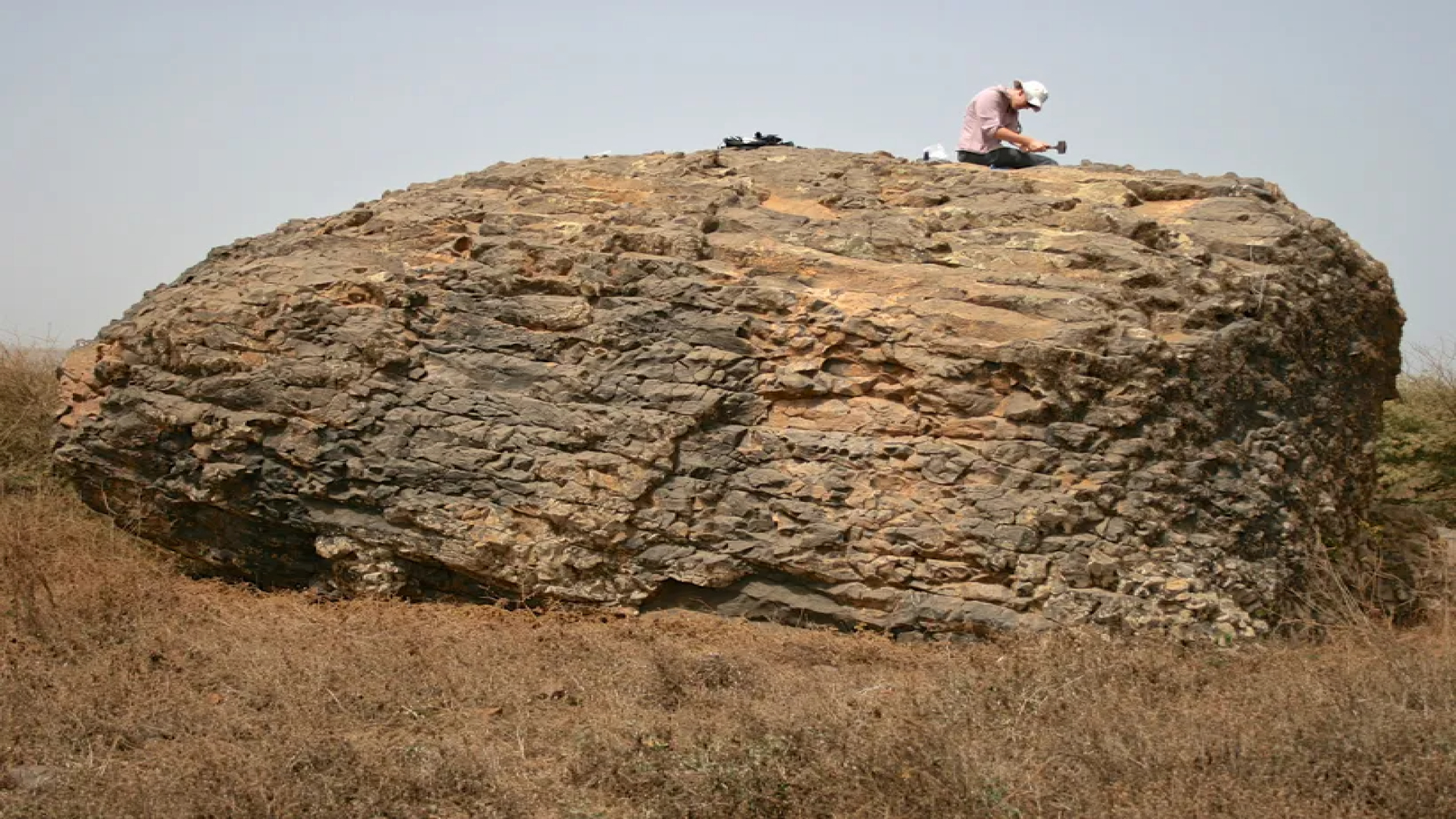
This geophysicist, Ricardo Ramalho, would stumble across such lands as he ventured into Santiago Island. These big boulders would be dashed within miles from the coastline, all sitting at an altitude of 650 feet above sea level. Those measured to some-size of delivery vans and location seemed unexplainable at first.
Early evidence suggested that these boulders were probably related to some extraordinary megatsunami event created by possibly some collapse of the volcanic flank of Fogo. The subsequent research that followed revealed that approximately 73,000 years ago, 160 cubic kilometers (40 cubic miles) of volcanic rock plunged into the ocean, creating a wave of unimaginable size.
Helium isotopes in the boulders’ olivine minerals confirmed their displacement dates, aligning them with the estimated time of Fogo’s collapse. The only plausible force capable of transporting such massive rocks was an 800-foot-high wave, dwarfing the infamous 2004 Indian Ocean tsunami. However, not all experts agree.
Thus, these theories cannot account for the size of the distance and really cannot be considered enough to exclude the megatsunami hypothesis, as sedimentologist Peter Talling explained. Rockfalls and storm waves were some of the other alternatives he suggested.
Collapse of Fogo: New models disputing slow velocity versus catastrophic hypotheses of volcanic slide
The precise cause of the collapse of Fogo has not been satisfactorily solved in the scientific debate, although some scientists believe that the events take place slowly and that several such events together form one which cuts down over days or weeks. But evidence from Fogo and other volcanic islands such as the Canary and the Hawaiian Islands testifies to the notion of rapid, catastrophic collapse that releases great waves.
Ramalho and his team have different ideas on the process-they are coming up with a new model that suggests “perhaps somewhere in between”, whereby the first happened as one single-event collapse that generated the megatsunami and which was followed by smaller subsequent slides.
This is turned out to be consistent with other discoveries from all over the globe and could thus further underline the catastrophically dangerous profile of volcanic flank collapses. Very few incidents like these occur in nature, and the damages meted out are fatal. The studies estimate that these kinds of occur about once in every ten thousand years, only that triggers and frequency are still being investigated.
The hazard of volcanic flank collapses: The need for caution
Events like the megatsunami in Fogo happen only rarely, yet such events call for a constant watch in the areas that have active oceanic volcanoes. Fogo typically erupts every 20 years and is still a very vivid reminder of what can be done by a volcano. In 2014, the eruption sent more than 1,200 people into exile and destroyed vital infrastructure rendering immediate scenarios for local communities.
Flank collapses would not be improbable for other volcanic islands around the globe, particularly in the Pacific and Indian Oceans. However, there is currently no evidence that such events are a threat to anybody soon. Yet it is essential to understand how these processes work for disaster preparedness. Modern systems of monitoring and geological mapping may provide early warnings to mitigate risks from coastal populations.
The collapse of the ancient Fogo volcano and its megatsunami has shown the powerful forces at work in the shaping of our planet. Over time and though rare, these events witnessed help in understanding the dynamics of the Earth and protected communities. Thus, alertness and resilience are essential when adapting to nature’s power.