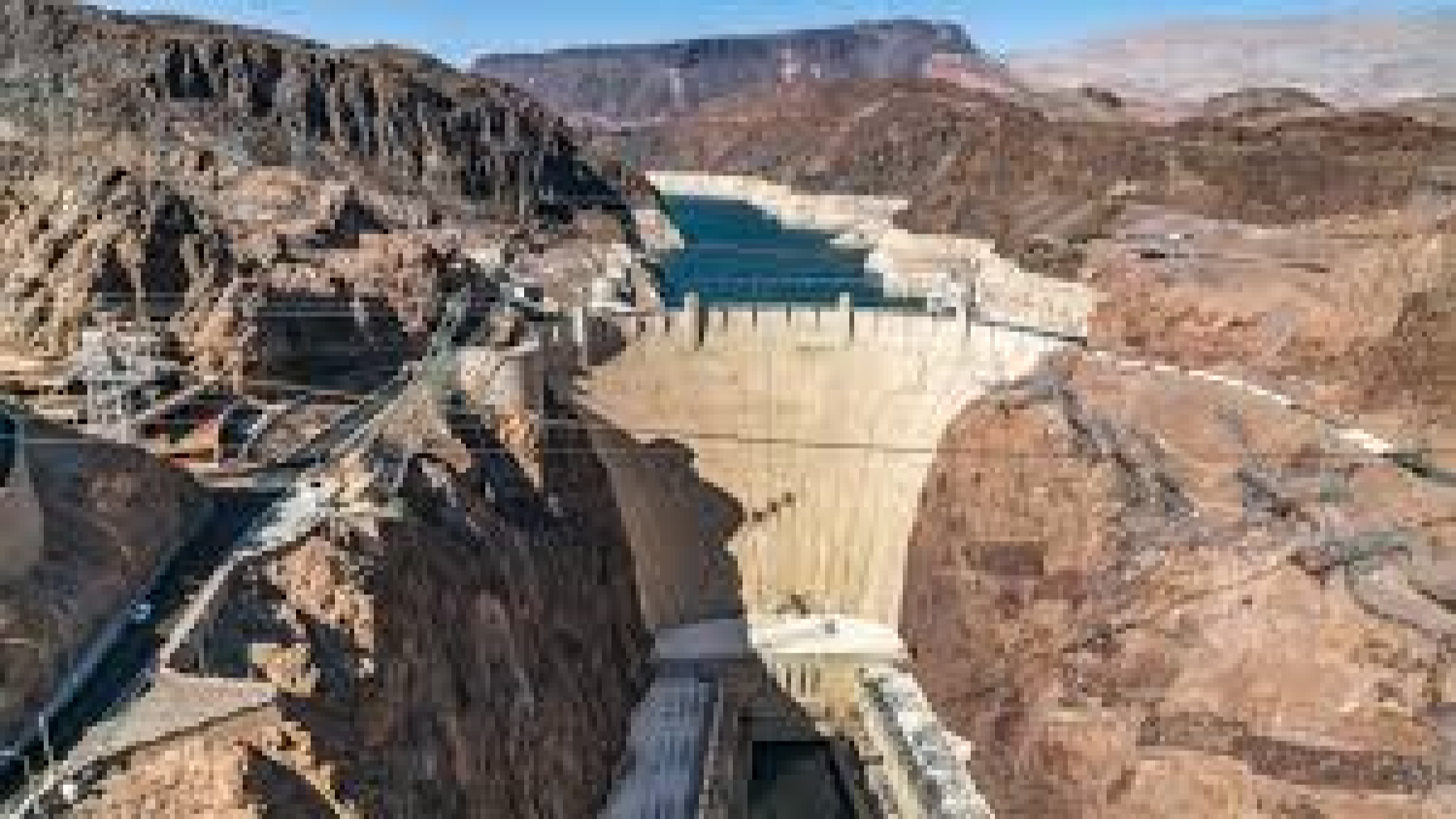
Originally built 85 years ago, the Hoover Dam on the border between Nevada and Arizona is still one of the most recognizable landmarks of American engineering. In addition to the historical perspective, the powerhouse built here has produced hydroelectric power, flood control, and water supply to millions of people from this dam. However, as the time for its centennial nears, it is evident that Hoover Dam is in the middle of an emerging problem— an environmental and, in fact, a social one.
A modern-day engineering accomplishment that changed the face of the American Southwest for good
Hoover Dam is one of the largest hydroelectric dams in the world, and it has achieved unprecedented success in engineering terms, as it was built in 1935. Herbert Hoover, the man behind the dam, saw it as something far more than a structure and visualized it as the answer to the problems of water supply development, flood control, and reclamation in the arid and semi-arid regions of the southwest.
The construction of the dam was a monumental kind. Men suffered heat up to 140 degrees in tunnels with carbon monoxide gas to great heights as they dug at the walls of a canyon. These endeavors changed the previously erratic Colorado River into a managed utility that irrigated 1.5 million acres of land and supplied over 16 million people with water. Still, like anything potentially beneficial, the dam’s presence was not without problems.
Effects of attempts at regulating the Colorado River
The Hoover Dam has dramatically changed the Colorado River ecosystem over the years. It has brought benefits for its users through enhancing urban development and farming. Yet, it has also adversely impacted aquatic life, disrupting the river flow and affecting fish productivity and the environment. Some of the problems associated with the construction of Lake Mead will be the flooding of extensive areas, effectively covering natural features and several archaeological sites.
Today, Lake Mead struggles with a water problem. Long years of misuse of water, together with long dry seasons attributed to climate change, have seen the level of water drop. Initially one of the most popular recreation and wildlife destinations, Lake Mead looks rather dreary, and its shores hide such things.
This paper examines emerging challenges to Hoover Dam as the main electrical power source in the American Southwest region.
The status of the Hoover Dam as a symbol of modernity at the time of construction comes with the contradictory reality of today’s operation, which depends on the water supply and demand. Due to the Colorado River Compact, which apportions water between seven states, competition for a decreasing resource is escalating. Several western states relying on water from the river, including California, Nevada, and Arizona, must make difficult choices over water use at any time.
Other important dam functions, such as hydropower generation, have also been compromised. Low water levels weaken the dam’s capacity to produce electricity, threatening to cause rolling blackouts for more than 500000 homes. This raised debate to seek new ways of sourcing electrical energy through finding alternative means of energy that can be used to put the dam into consideration, as well as strategies to be used in the conservation of water.
Looking ahead: Is history and sustainability possible at Hoover Dam?
Thus, the development of a set of guiding principles The Hoover Dam’s centennial marks an opportunity to reflect on its legacy and plan for the future. The problems it has met are not problems of this structure but issues of water resource management and climate change adaptation. Possible recommendations are, inter alia, the review of water allocation policy, the development of new and better water management infrastructure, and better ways in agriculture and cities.
Standing just 94 years away from the centenary of its construction, the hydroelectric dam of America is a great treatise on how humans can harness nature – and how we should. As Hoover Dam was a symbol of the advance of American society, its “queer” problems need to be tackled to maintain its function as the supporting of American Southwest into the future.