On September 16, 2023, a remote fjord in East Greenland generated something scientists had never seen at a global scale, a slow, steady seismic pulse that lasted nine days and showed up on instruments around the world. The source was not a typical earthquake.
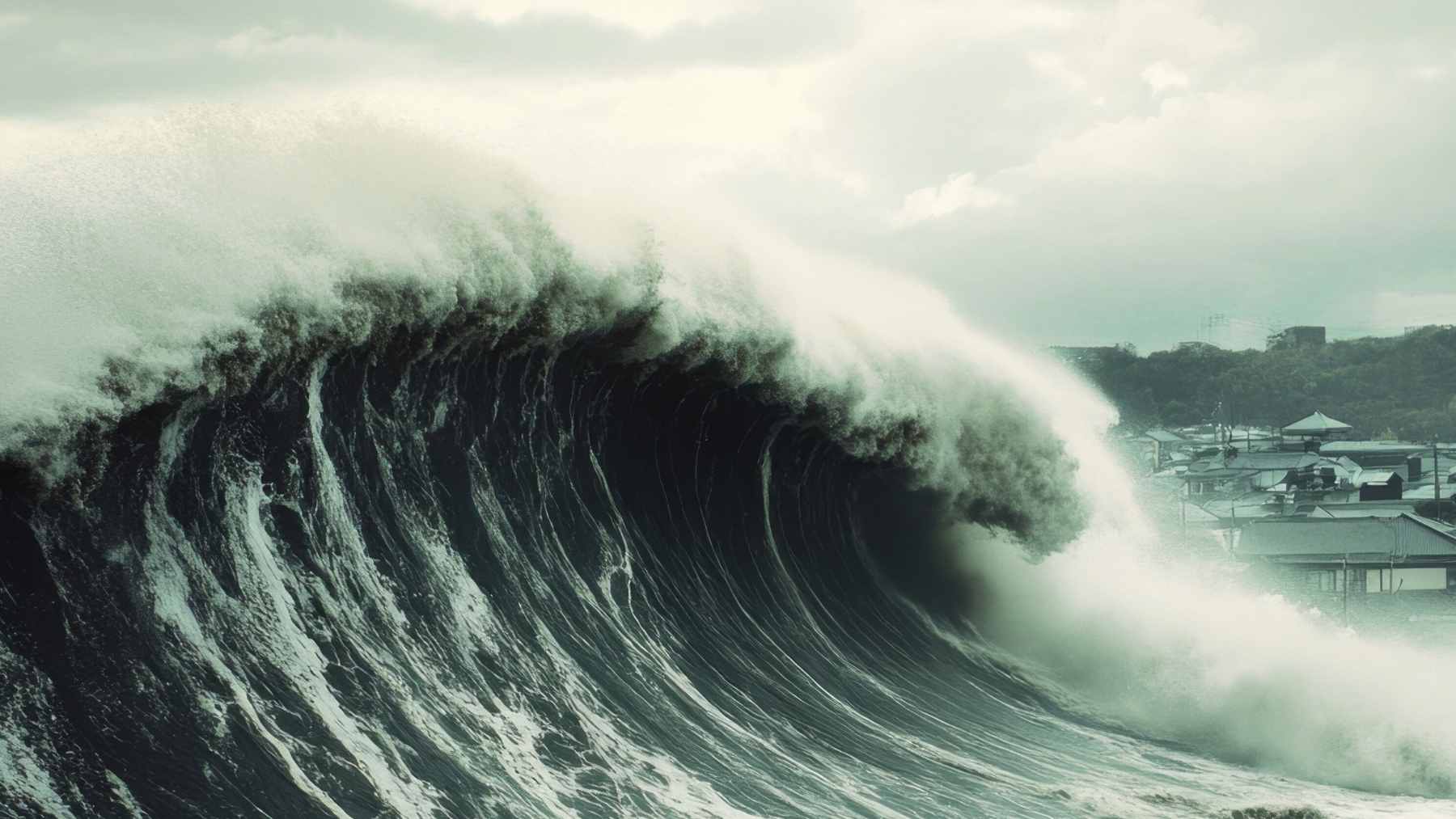
It was a huge landslide that slammed into Dickson Fjord, launched a mega tsunami, and then left the water rocking back and forth like a giant bathtub. Now, researchers have confirmed that “sloshing” with direct satellite observations, turning an eerie geologic mystery into a climate-era warning signal.
The new confirmation comes from a June 3, 2025 paper in Nature Communications titled “Observations of the seiche that shook the world.” The team used measurements from the Surface Water and Ocean Topography mission, known as SWOT, to directly observe the water surface patterns consistent with a standing wave, also called a seiche, inside the fjord.
The moment a mountain hit the water
The chain of events began when more than 25 million cubic yards of rock and ice broke loose and plunged into Dickson Fjord. Reports based on field and satellite evidence describe an initial tsunami reaching roughly 650 feet near the impact area. Even after that first violent surge, the fjord did not settle. The water continued to swing from wall to wall, repeatedly loading the seafloor and generating a very long period seismic signal at about 10.88 millihertz, which corresponds to a rhythm of about 92 seconds.
That “heartbeat” quality is what made the event so confusing at first. Earthquakes usually produce a burst of shaking that fades quickly, not a clean pulse that stays coherent for more than a week. In this case, the signal weakened slowly over nine days, and then a similar signal returned around October 11, 2023 after a second tsunami producing landslide in the same fjord.
Why the satellite proof matters
Before this latest work, multiple research groups had strong reasons to suspect a seiche was responsible, but they were relying on modeling and on what seismic waves implied about the force direction. The new study adds the missing piece, direct water surface observations inside the fjord from SWOT’s wide swath measurements.
That is a big deal because fjords are notoriously hard places to monitor. They are narrow, steep, remote, and often covered by ice for much of the year. Traditional instruments can be sparse or vulnerable. SWOT helps close that gap by mapping a broad swath of water surface height rather than just a thin track beneath a satellite. NASA describes SWOT as a mission designed to survey Earth’s surface water and improve understanding of climate-related questions, following its December 2022 launch.
Using SWOT data alongside seismic records, the Nature Communications authors estimated the initial amplitude of the seiche at about 7.9 meters, after ruling out other processes like tides and wind driven circulation as explanations for the observed cross fjord slopes.
A climate risk that is easy to underestimate
It is tempting to treat this story as an exotic Arctic oddity. But the ingredients are not unique. As glaciers thin and retreat, they can stop acting as a stabilizing brace for steep slopes. That raises the odds of large rock and ice failures into confined waters, which is exactly the recipe for dangerous local tsunamis. The Science paper on the Dickson Fjord event frames these tsunamigenic landslides as part of a growing hazard picture in polar regions as climate conditions shift.
Greenland has already seen what that can mean for people. In Karrat Fjord on June 17, 2017, a landslide triggered a tsunami that killed four people and destroyed or washed away multiple structures, including houses.
Dickson Fjord also sits near routes used by Arctic cruises, an industry that has expanded as seasonal ice conditions change. When a single slope failure can generate both a towering wave and days of sustained oscillation, the safety question is no longer only about the initial impact. It is also about what the water keeps doing afterward, especially in narrow basins where resonance can trap energy.
What to watch next
Researchers are now combing seismic archives for similar slow pulses that might have been missed. That work matters because the signal itself can become part of an early warning toolkit. A quake like this was not felt by people, but it was loud in the language of instruments. With satellites like SWOT adding direct surface measurements, scientists can better distinguish between “normal” ocean motion and rare, high consequence events.
The larger lesson is simple and unsettling. Climate change does not just warm air and melt ice. It can rearrange the stability of landscapes, and in the right geometry, it can make an isolated fjord shake the whole planet in a slow, steady rhythm.