Far beyond Neptune, astronomers have spotted a small icy world that behaves like a fossil from the dawn of the solar system. The object, officially named 2023 KQ14 and nicknamed “Ammonite,” follows such a distant and stable path that it is forcing scientists to rethink how the outer solar system formed and whether a hidden Planet Nine really exists.
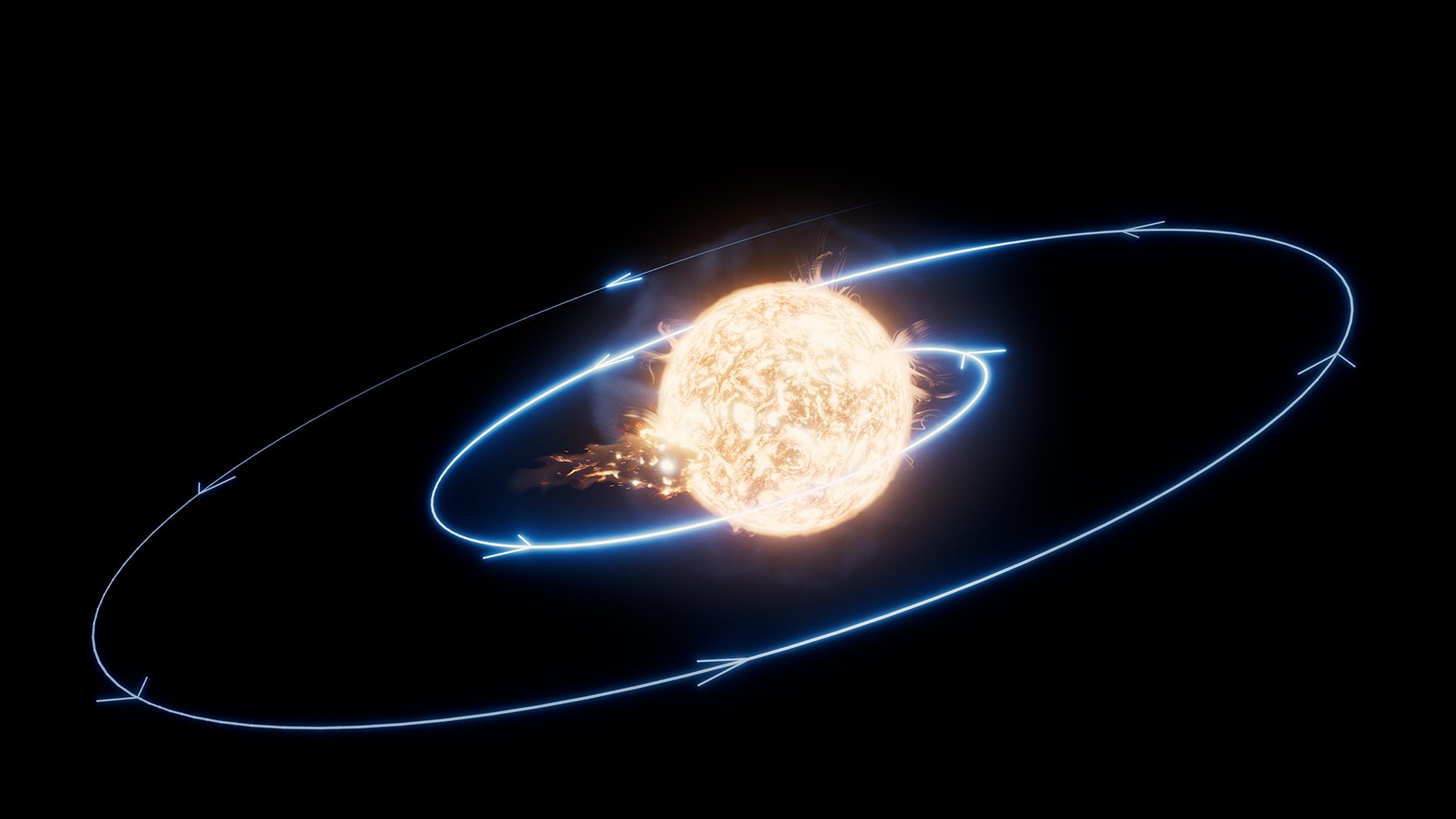
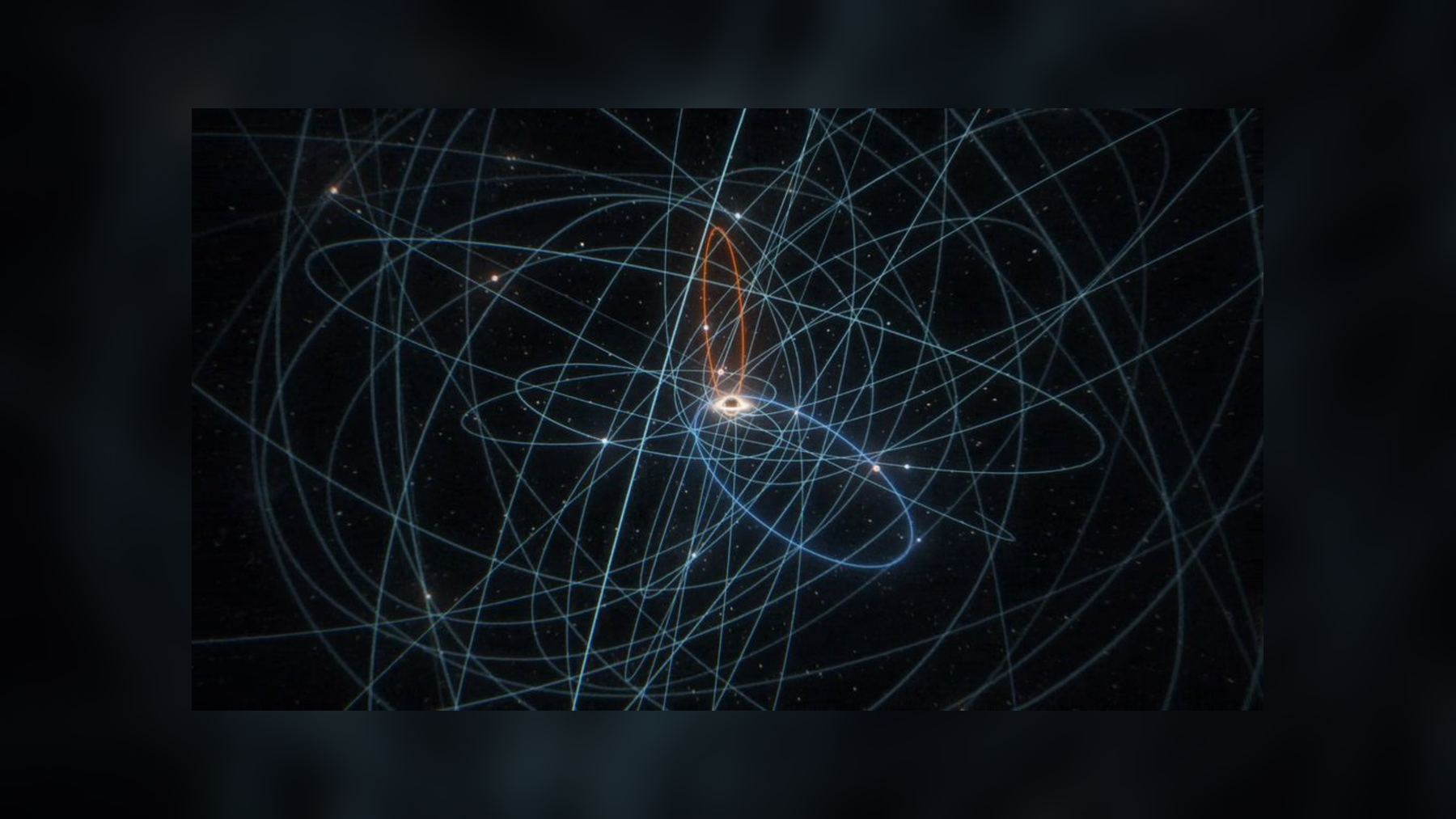
Ammonite belongs to an ultra rare family of bodies called sednoids. Only four are known so far: Sedna, 2012 VP113, Leleākūhonua, and now Ammonite. All of them travel on elongated orbits that never bring them close enough for Neptune to shape their paths in any significant way. Ammonite comes no nearer to the Sun than about 66 astronomical units, or 66 times the distance between Earth and the Sun, and on average it stays more than 200 astronomical units away. One full circuit takes roughly four thousand years.
This lonely orbit was reconstructed from nearly two decades of observations. Ammonite was first seen with the Subaru Telescope on Maunakea as part of the FOSSIL survey, then tracked with the Canada France Hawaii Telescope and even identified in older images from other observatories. Together, those data show that Ammonite has followed a remarkably stable path for at least four and a half billion years.
Because of this stability, researchers describe Ammonite as a kind of time capsule. It carries a memory of whatever event lifted it and the other sednoids onto their distant tracks. As project leader Fumi Yoshida puts it, “The presence of objects with elongated orbits and large perihelion distances in this area implies that something extraordinary occurred during the ancient era when Ammonite formed.”
For nearly a decade, the leading explanation for these strange orbits has been the Planet Nine idea. In that scenario, a yet unseen planet several times more massive than Earth circles the Sun far beyond Neptune and slowly herds distant icy bodies into a preferred orientation. Some of the previously known sednoids do appear to share similar directions for their closest approach to the Sun. That apparent clustering was one of the main clues behind the Planet Nine proposal.
Ammonite refuses to follow that pattern. Its orbit points almost the opposite way in space compared with the other sednoids. Computer simulations show that if Planet Nine sat on the closer orbits originally proposed, its gravity would likely have kicked Ammonite out of the solar system entirely.
Co author Yukun Huang explains, “The fact that Ammonite’s current orbit does not align with those of the other three sednoids lowers the likelihood of the Planet Nine hypothesis. It is possible that a planet once existed in the solar system but was later ejected, causing the unusual orbits we see today.”
That does not completely kill Planet Nine. The new work suggests that if such a planet exists, it probably travels on a wider, more distant orbit, which would let Ammonite survive while still gently shaping other objects.
The Nature Astronomy study behind the discovery also looks back in time. By rewinding the orbits of all four sednoids under the pull of the known giant planets, the team finds signs that their paths may have been more tightly aligned about 4.2 billion years ago. The result is not yet definitive, but it hints that a powerful gravitational event early in solar system history either a passing star, or a roaming planet, could have lifted a small population of icy bodies into these detached orbits before drifting away.
For Earth, these remote fossils matter because they help complete the story of how our planetary neighborhood formed and evolved. Sednoids live in the borderlands between the Kuiper Belt and the inner Oort Cloud, where many long-period comets are thought to originate. Understanding how this region was sculpted tells scientists how often comets might rain inward over billions of years and how stable the environment around our planet has been.
Ammonite also shows the power of wide-field sky surveys. Subaru’s FOSSIL project was designed to find faint outer solar system bodies that traditional surveys miss. Next, the Vera C Rubin Observatory in Chile will scan the southern sky repeatedly and is expected to discover tens of thousands oft rans-Neptunian objects. Among them could be many more sednoids and perhaps even the long sought Planet Nine if it is really out there.
For now, this small, distant world stands as a reminder that our solar system is still full of surprises. A single icy object, quietly circling the Sun every few millennia, is already reshaping big ideas about hidden planets, stellar flybys, and the cosmic environment that gave rise to Earth.