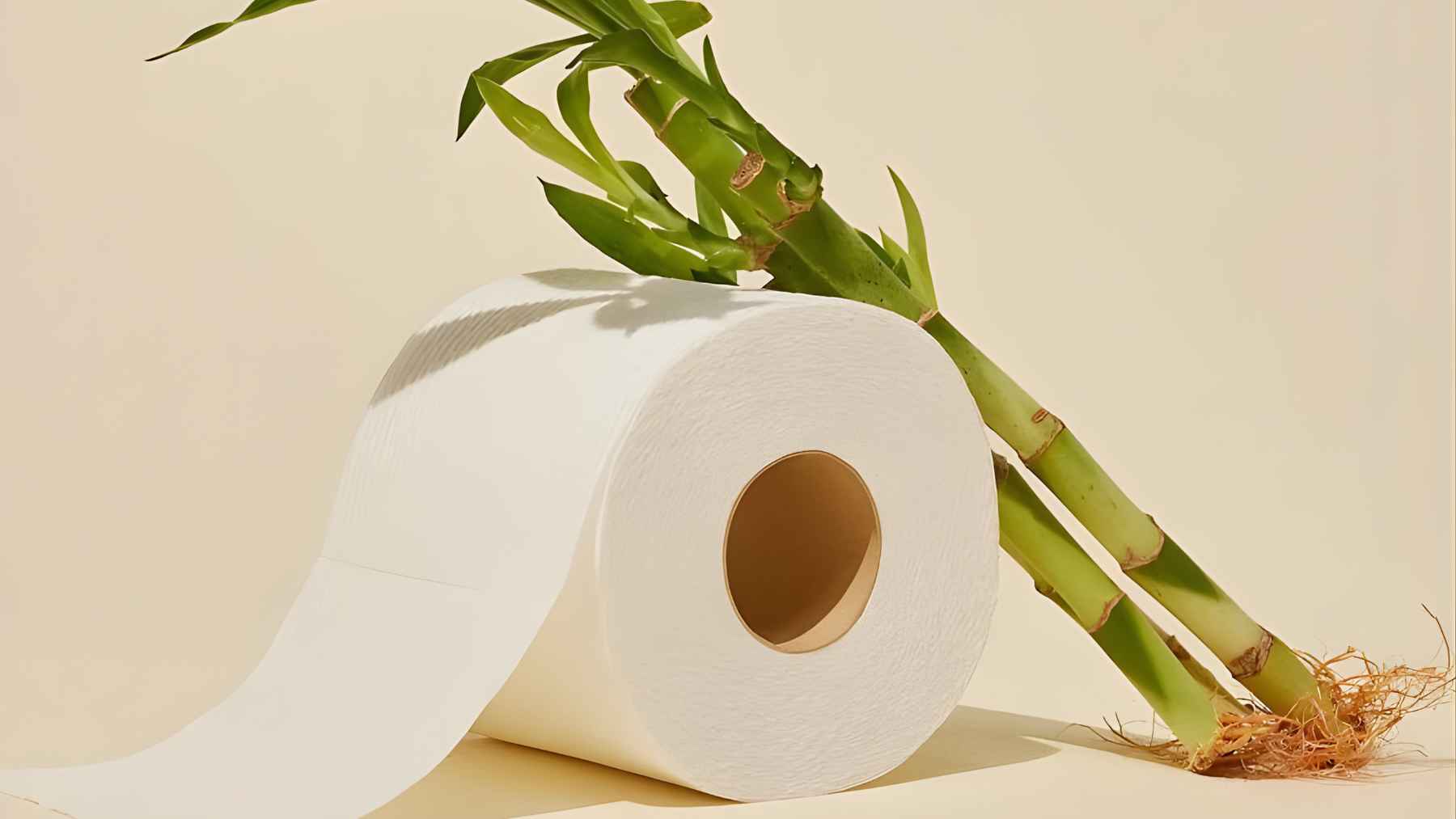
Toilet paper feels non-negotiable in daily life. Yet new research suggests that one of the trendiest eco swaps in the bathroom bamboo toilet paper from China may actually leave a bigger climate footprint than conventional tissue made from wood in the United States.
At the same time, more households are quietly testing something far more radical. They are cutting paper use altogether with bidets and simple water-based washing. Put together, these shifts raise a basic question. If we care about forests, emissions and our water pipes, what is really the cleanest way to clean up?
What the new bamboo study really found
Researchers at North Carolina State University carried out a full life-cycle assessment of consumer bath tissue. They compared standard US tissue made from Brazilian eucalyptus pulp and Canadian softwood pulp to bamboo-based tissue produced in China and shipped across the ocean.
Their numbers are sobering. A ton of typical US wood-based bathroom tissue produced with a common technology known as light dry creped came in at about 1,824 kilograms of carbon dioxide equivalent from cradle to grave. Bamboo tissue manufactured in China and delivered to the US reached roughly 2,400 kilograms for the same amount of product.
Premium ultra-soft tissue that uses a more energy-hungry drying technology pushed emissions even higher. In those high-end products the study found that switching part of the fiber mix to bamboo raised climate impact again compared with a purely wood-based recipe.
Bamboo tissue also performed worse in several other environmental categories, including smog formation and some respiratory health indicators.
So is bamboo the villain. Not really.
The real problem sits in the power grid and the machine room
The scientists are clear on one point. Bamboo as a plant is not dirtier than wood. The gap comes mainly from how and where current bamboo tissue is made.
Chinese mills in the study relied heavily on coal-based electricity and additional fossil fuels for steam and drying. Production lines in Canada and Brazil that supply pulp to US mills use more biomass and draw from cleaner power grids that include large shares of hydro and other renewables.
When the researchers modelled a scenario where bamboo tissue was produced with a much cleaner electricity mix, its carbon footprint dropped and began to look similar to wood-based options. The take home message is simple. For climate impact, the type of fiber matters less than the energy behind the mill and the drying technology on the machine.
That is not what most bathroom marketing suggests when you see a green leaf and the words ‘tree free’ on the package.
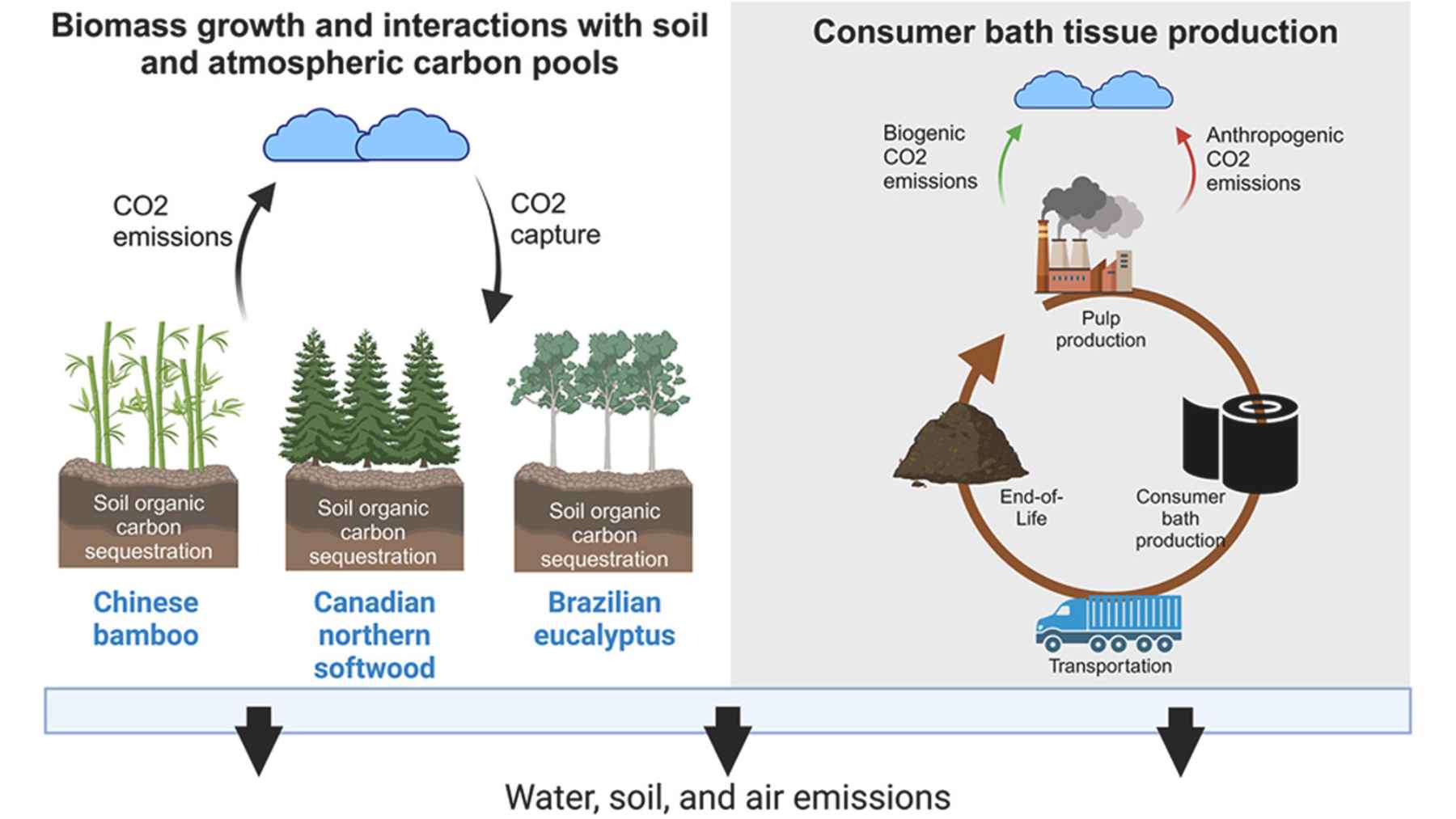
Infographic comparing bamboo, Canadian softwood, and Brazilian eucalyptus in toilet paper production and their carbon emissions cycle.
Why swapping the roll is not enough
Globally, toilet paper production already consumes tens of thousands of trees every day and people in the United States use far more tissue per person than the global average, partly because many other regions rely on water for personal hygiene.
The US hygiene tissue market alone is expected to reach close to $50 billion in annual revenue, so even small changes in product design or habits add up.
If we simply replace one kind of single-use fiber with another, especially one shipped from far away and dried with coal-fired steam, the climate math does not work out in our favor. Environmental gains from bamboo forests and fast regrowth are largely eaten up by energy use and transport under current conditions.
This is where everyday choices can go beyond picking a different logo in the supermarket aisle.
Paper-free bathrooms are already normal in many countries
In large parts of Asia and southern Europe, the main way to get clean is water, not paper. Classic porcelain bidets, toilets with integrated wash functions and simple hand held sprayers are common fixtures. For small bathrooms, there are compact bidet attachments and hose style sprayers that connect to the existing toilet supply line without major plumbing work.
A gentle jet of potable water removes residue mechanically and more thoroughly than dry paper. Health experts generally consider this safe when the device is installed correctly and the water is clean.
After rinsing, people can pat dry with a small cotton towel kept next to the toilet or use a small amount of tissue. That simple change can cut paper use dramatically, along with the number of cardboard cores and plastic wrappers heading to the trash.
Travel bidets essentially squeeze bottles with a small nozzle offer a low-tech way to try water-based cleaning without changing any hardware at home first.
What about wet wipes and so called flushables
Many consumers reach for wet wipes when they want a fresher feeling. Wastewater operators describe a different story. Studies and field measurements in Europe and North America link nonwoven wipes to clogged pumps, sewer blockages and expensive maintenance, even when the pack says flushable.
Compared with regular toilet paper, many wipes break down slowly, can carry synthetic fibers and at the end of the day are better treated as trash, not as something that goes down the pipe. For households trying to lower their environmental footprint, replacing one disposable product with another tougher disposable is a step sideways.
Practical steps for a lower-impact bathroom
For most homes, the lowest effort hierarchy looks something like this.
Use less tissue overall and avoid overly thick, ultra-dried premium rolls that require more energy in production. When possible, choose products made closer to home from certified or recycled fibers, which reduces transport distances and supports better forest management.
Consider adding a simple mechanical bidet attachment or hand sprayer. Upfront costs are similar to a few months of branded bamboo tissue and the payoff shows up both in reduced paper purchases and in a smaller share of the global pulp stream dedicated to the bathroom.
Be skeptical of ‘tree free’ claims that do not show numbers. The new life cycle work on bamboo tissue shows that without cleaner energy and efficient machines, a different plant does not automatically mean a lower carbon footprint.
At the end of the day, a greener bathroom is less about the mascot on the wrapper and more about how much fiber we use, how it is produced and where water does part of the job for free.
The study was published in Cleaner Environmental Systems.