For centuries, the Lighthouse of Alexandria has lived in the weird space between fact and legend. It was real, it was huge, and it guided ships into one of the busiest ports in the ancient world. Then it broke apart, sank, and slowly faded into myth.
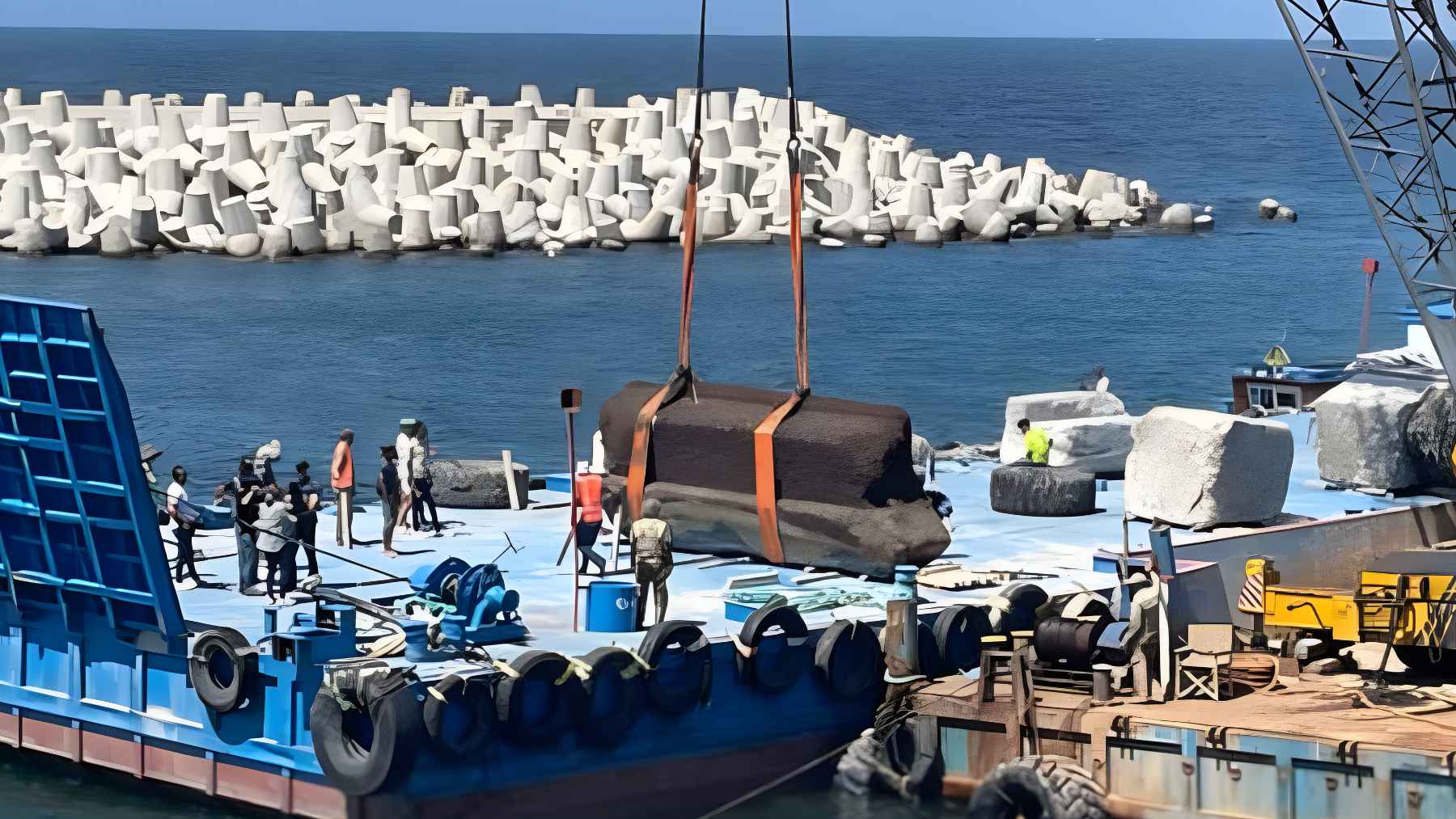
Now a major piece of that story has surfaced again, quite literally. Archaeologists working in Alexandria’s Eastern Harbor have raised 22 massive stone blocks linked to the lighthouse, and the plan is to scan them in detail to help rebuild the monument in a lifelike virtual model.
A wonder of the ancient world, found piece by piece
The Lighthouse of Alexandria, also called the Pharos, was built in the early third century BCE under the Ptolemaic rulers of Egypt. It stood near the harbor entrance, acting like the ancient version of a runway light for sailors approaching a tricky coastline.
Over time, earthquakes and stone recycling did the rest. Parts of the lighthouse were reused in later construction on the same shoreline, including the Citadel of Qaitbay that still dominates the site today.
What exactly was recovered from the seafloor
The newly recovered pieces include parts of a monumental entrance, such as lintels, door supports, thresholds, and heavy paving slabs. Some individual blocks weigh around 70 to 80 metric tons, which is the kind of weight that makes “moving day” sound like a joke.
One of the most intriguing finds is a previously unknown pylon-like structure with an Egyptian-style doorway, suggesting a blend of Egyptian and Greek design ideas in the same building. In practical terms, it hints that the lighthouse was not just tall, but also architecturally complex.
The long search under the harbor
This work did not start last week. Jean-Yves Empereur led an early major underwater exploration in the 1990s that documented thousands of objects in the area, from large blocks to statuary fragments.
Since then, teams have returned regularly, often limited by weather and sea conditions. That slow, careful pace is typical of underwater archaeology, where visibility, currents, and modern harbor activity can turn a simple plan into a long negotiation with the sea.
Why the project is going digital
The new lifting mission is tied to an international effort called PHAROS, which aims to create a full “digital twin” of the lighthouse. Think of it as a highly accurate virtual reconstruction that researchers can test and the public can explore, without guessing what the missing parts looked like.
Isabelle Hairy is overseeing the scientific work, with the French National Center for Scientific Research involved through its Egypt-based research unit, and the Egyptian Ministry of Tourism and Antiquities authorizing the excavation.
The Dassault Systèmes Foundation is supporting the scanning and virtual rebuilding effort, where engineers try different assembly scenarios to see what best fits the evidence.
A wider shift in how underwater ruins are studied
This approach builds on years of progress in photogrammetry, a method that turns many overlapping photos into a precise 3D model. A 2019 photogrammetry study of the submerged site shows how researchers can map large areas underwater and track thousands of individual blocks in a database.
That matters because the lighthouse is not sitting there in neat layers. It is scattered, broken, and mixed with other ruins, so digital tools help researchers test ideas without forcing the stones into a story that does not match the data. And that’s the real tension here, turning legend back into something measurable.
The main official project update has been published by La Fondation Dassault Systèmes.