Imagine picking up something that looks and chews like chicken, only it never clucked, never set foot on a farm, and needed a fraction of the land and water.
That is the promise behind a new gene-edited fungus strain from Jiangnan University in China, known as FCPD, which delivers protein with a meat-like taste while cutting resource use and greenhouse gas emissions compared with both traditional mycoprotein and chicken farming.
Why sustainable protein is becoming urgent
The timing is not accidental. United Nations projections suggest the world could reach close to 9.8 billion people around 2050, at the same time that food systems are already straining land, water, and the climate.
Animal agriculture today accounts for roughly 14 to 15 percent of global greenhouse gas emissions and occupies about 40 percent of agricultural land, much of it for livestock feed rather than direct human food. For anyone who has stared at a rising grocery bill or worried about the climate impact of a steak, the search for smarter protein is not an abstract debate. It is dinner.
What Fusarium venenatumis and why it matters
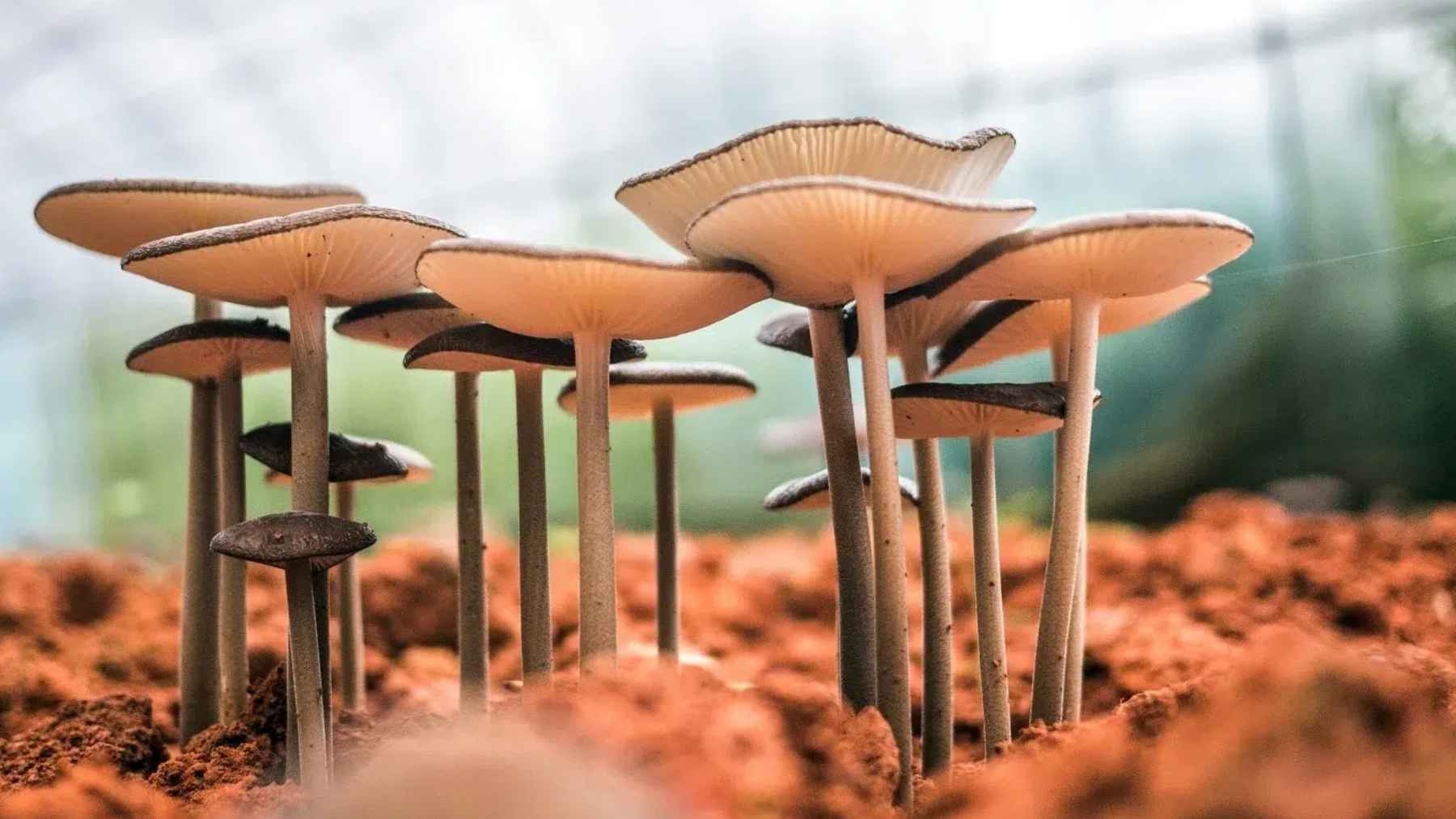
Fusarium venenatum, the fungus at the heart of this work, already has a place in many freezers. It is the species behind well-known mycoprotein products such as Quorn, valued because its natural fibers and flavor already resemble meat, and it is approved for consumption in several major markets including the United States, the European Union, China, and others.
The catch is that its thick cell walls make some of the nutrients harder for our bodies to access, and growing it at scale still demands a lot of sugar and energy.
CRISPR gene editing boosts efficiency and digestibility
The Jiangnan team set out to tune the fungus from the inside. Using the CRISPR Cas9 gene editing system, they deleted two of its own genes rather than inserting foreign DNA. One gene controls chitin synthase, a key builder of the cell wall.
The other encodes pyruvate decarboxylase, an enzyme that shapes how the fungus channels carbon through its metabolism. Removing the first thins the cell wall so more protein becomes digestible, while removing the second nudges the organism to turn sugar into protein more efficiently.
What the results show in production and nutrition
“We successfully made a fungus not only more nutritious but also more environmentally friendly by tweaking its genes,” explained Xiao Liu, the corresponding author at Jiangnan University. That is a bold claim, so the team backed it with numbers.
In fermentation trials the FCPD strain produced the same amount of protein using about 44 percent less sugar than the original strain and did so in roughly half the time, close to an 88 percent faster production rate.
The edited mycoprotein also showed a higher essential amino acid index, meaning its protein quality moved closer to that of high-value animal sources.
Life cycle analysis and greenhouse gas reductions
Speed and sugar savings are only part of the story. The researchers modeled full life cycle impacts from spores in the lab to a finished, inactivated meat-like product at an industrial scale of one million kilograms, using data from pilot scale production.
They ran those scenarios in six countries with very different electricity mixes, from largely-renewable Finland to coal-heavy China. Across that range, the FCPD process cut global warming potential by roughly 4 to a little over 60 percent compared with the original Fusarium venenatum strain, mainly because it turned each unit of glucose into more protein and required less energy overall.
Land use and freshwater pollution benefits
To see how this stacks up against what ends up on a typical plate, the team compared FCPD based mycoprotein with chicken production in China. Their analysis found that the fungus-based protein needed about 70 percent less land and lowered the potential for freshwater pollution by around 78 percent, largely because it avoids manure runoff and feed crop cultivation. For anyone living near an industrial poultry farm, those numbers may sound less like theory and more like cleaner rivers and quieter nights.
What comes next for commercialization and regulation
What would this mean in practice? In everyday terms, FCPD is a way to grow something that behaves like meat in giant steel fermenters fed with sugar and nutrients instead of raising animals in barns and feedlots.
The study authors classify their technology readiness at level five, which corresponds to validation at an industrial pilot scale. That suggests the strain has moved beyond a petri dish but still needs more safety work, regulatory review, and product development before it shows up as nuggets or burger patties in the supermarket cooler.
Consumer acceptance and gene-edited foods
As with any gene-edited food, public acceptance will matter. Surveys in China and other countries indicate that many consumers view genome edited foods somewhat more favorably than traditional genetically modified products, especially when no foreign DNA is added and when clear environmental or health benefits are explained.
Even so, experts note that concerns about safety, labeling, and control over food systems remain, so transparent communication will be crucial.
Limits and trade offs still matter
There are also trade offs that the headlines tend to skip. FCPD still depends on sugar and electricity, so its footprint will always reflect how those inputs are produced. If sugar comes from deforested land or if the grid is highly fossil-based, some of the theoretical gains shrink, a point the life cycle modeling tries to capture by testing different national scenarios.
And while a fungus can outcompete chicken in many environmental metrics, cutting food waste, shifting diets toward more plant-rich patterns, and decarbonizing power grids remain just as important. No single technology gets us off the hook.
A new direction for climate-friendly food
Yet to a large extent this gene-edited fungus shows how climate solutions are becoming more precise. Instead of asking people simply to “eat less meat,” scientists are redesigning microbes so that every spoonful of sugar and every kilowatt in the fermenter goes further, with better nutrition and a smaller footprint as a package deal.
The study was published in Trends in Biotechnology.