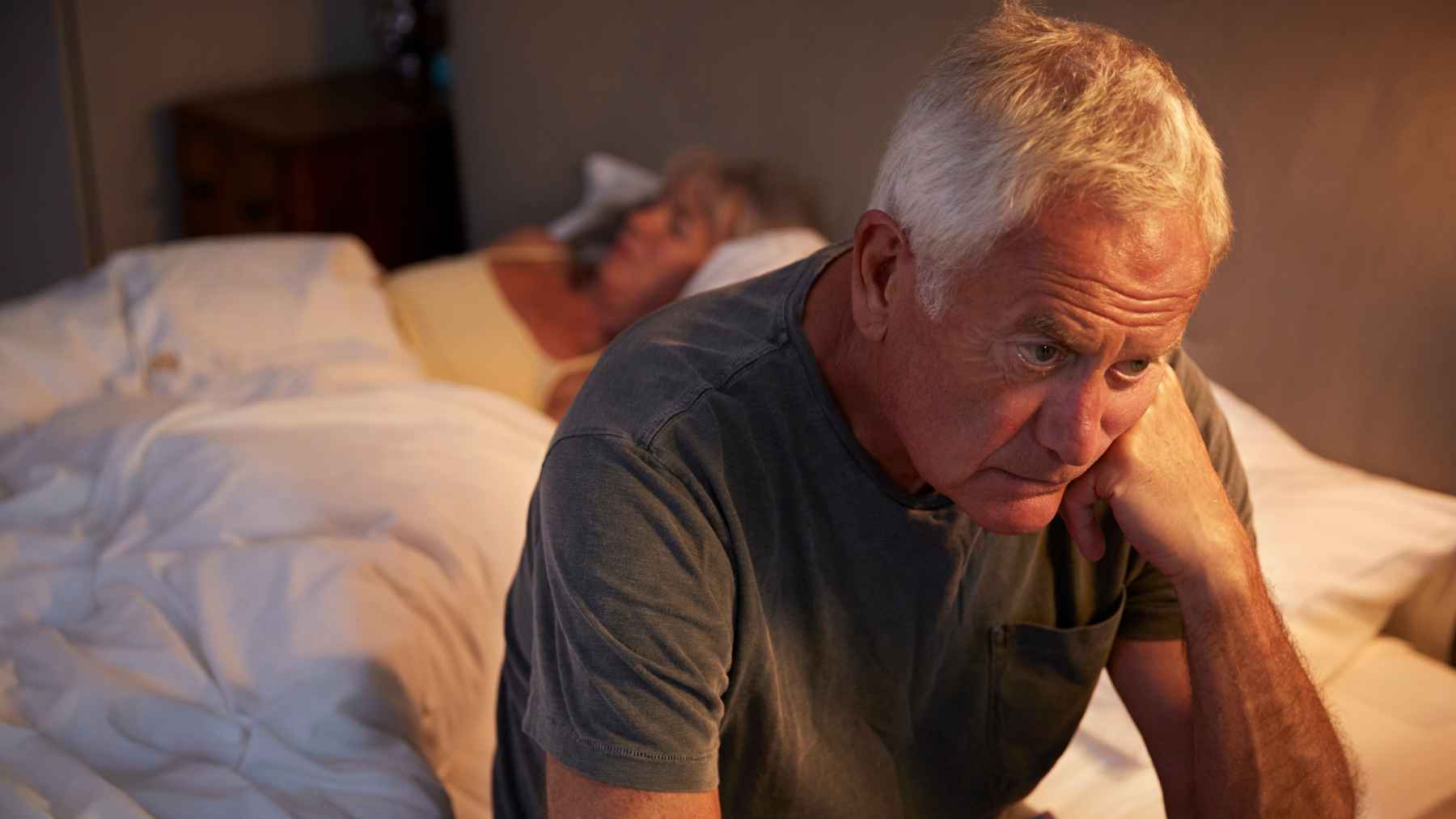
Have you ever watched an older relative toss and turn at night and quietly wondered what that restless sleep is doing to their health? Along-running US study of community dwelling seniors suggests that both very short and very long nights of sleep are linked to a higher risk of dying earlier, and that quiet culprit in the background is often chronic inflammation.
What the researchers actually found
The Health, Aging and Body Composition Study followed a little over three thousand adults in their seventies living in Pittsburgh and Memphis.
At the start, participants reported how many hours they usually slept at night and gave blood samples so researchers could measure key inflammatory markers in their bloodstream. Then they were tracked for about eight years to see who survived and who did not.
A clear pattern emerged. Older adults who slept less than six hours a night and those who reported more than eight hours had a higher risk of death than people who slept around seven hours. Before any adjustments, the risk was roughly one-third higher for the shortest sleepers and about half higher for the longest sleepers when compared with seven hour sleepers.
So what changed when the team looked inside the blood
When the researchers adjusted their models for three inflammatory markers interleukin 6, tumor necrosis factor alpha and C reactive protein along with existing health problems and lifestyle factors, the extra risk tied to short sleep almost disappeared.
For long sleep, the risk dropped but was still partly explained by poor health and frailty. The inflammatory markers themselves stayed clearly linked to a higher chance of dying during follow up.
In other words, in this older population, very short nights often went hand in hand with an already stressed body that was running slightly hot with inflammation. Long nights often signaled underlying illness and disability more than a simple love of extra sleep.
Inflammation as inner smog
Doctors sometimes describe chronic low-grade inflammation as a kind of internal smog. It is not the dramatic fever of a flu, but a steady haze of immune activity that wears on blood vessels, the heart and the brain over many years.
High levels of markers such as interleukin 6, tumor necrosis factor alpha and C reactive protein have repeatedly been tied to higher mortality in older adults.
Sleep sits right in the middle of this story. Laboratory studies show that cutting sleep short can bump up inflammatory molecules and alter blood pressure, metabolism and stress hormones.
Large reviews of population studies now describe a U-shaped curve linking sleep duration and death risk, with about seven hours a night appearing safest for most adults.
The new analysis adds an important nuance for older people. It suggests that in late life, unhealthy sleep duration is often a signal of broader biological strain rather than a simple lifestyle choice.
When the neighborhood keeps you awake
Of course, sleep does not happen in a vacuum. Many older adults live beside busy roads, under bright street lamps or in apartments that trap heat on summer nights. That stubborn glow leaking around the curtains and the traffic rumble at midnight are not just annoyances.
Research has linked outdoor light pollution to shorter and poorer sleep by disrupting melatonin, the hormone that helps set the body clock. Experimental work also shows that even modest light during sleep can impair cardiometabolic function, nudging blood sugar and heart regulation in the wrong direction.
Put together, the picture looks familiar to anyone who cares about environmental health. Just as smog in the air slowly burdens lungs and hearts, chronic disturbance of night time darkness and quiet can chip away at sleep and keep inflammatory signals slightly elevated over many years.
What this means for healthy aging
For families and caregivers, the take-home message is not that every bad night is dangerous. Instead, regularly sleeping far below six hours or needing more than eight hours in later life is a reason to pay attention.
It can be a clue that the body is under strain from pain, sleep apnea, depression, cardiovascular disease or other chronic conditions that are themselves linked to inflammation.
Clinicians in geriatric care increasingly see sleep duration as a simple question that opens a window on overall health. At the end of the day, asking patients how many hours they usually sleep at night can help flag who might need a closer look at medications, mood, breathing during sleep and even the bedroom environment.
For households, small environmental tweaks carry a double benefit. Shielding outdoor lights, using warm, dim bulbs indoors at night, keeping the bedroom cooler during heat waves and reducing late screen glare all support healthier sleep.
They also cut unnecessary energy use and light pollution, which is good news for wildlife and for that dwindling view of the stars.
Healthy aging is not only about diet and steps on a fitness tracker. For the most part, it also means protecting the nightly rest that helps clear our internal air.
The study was published in SLEEP.