Curious humpback whales are blowing bubble rings at us. Is it a new kind of conversation?
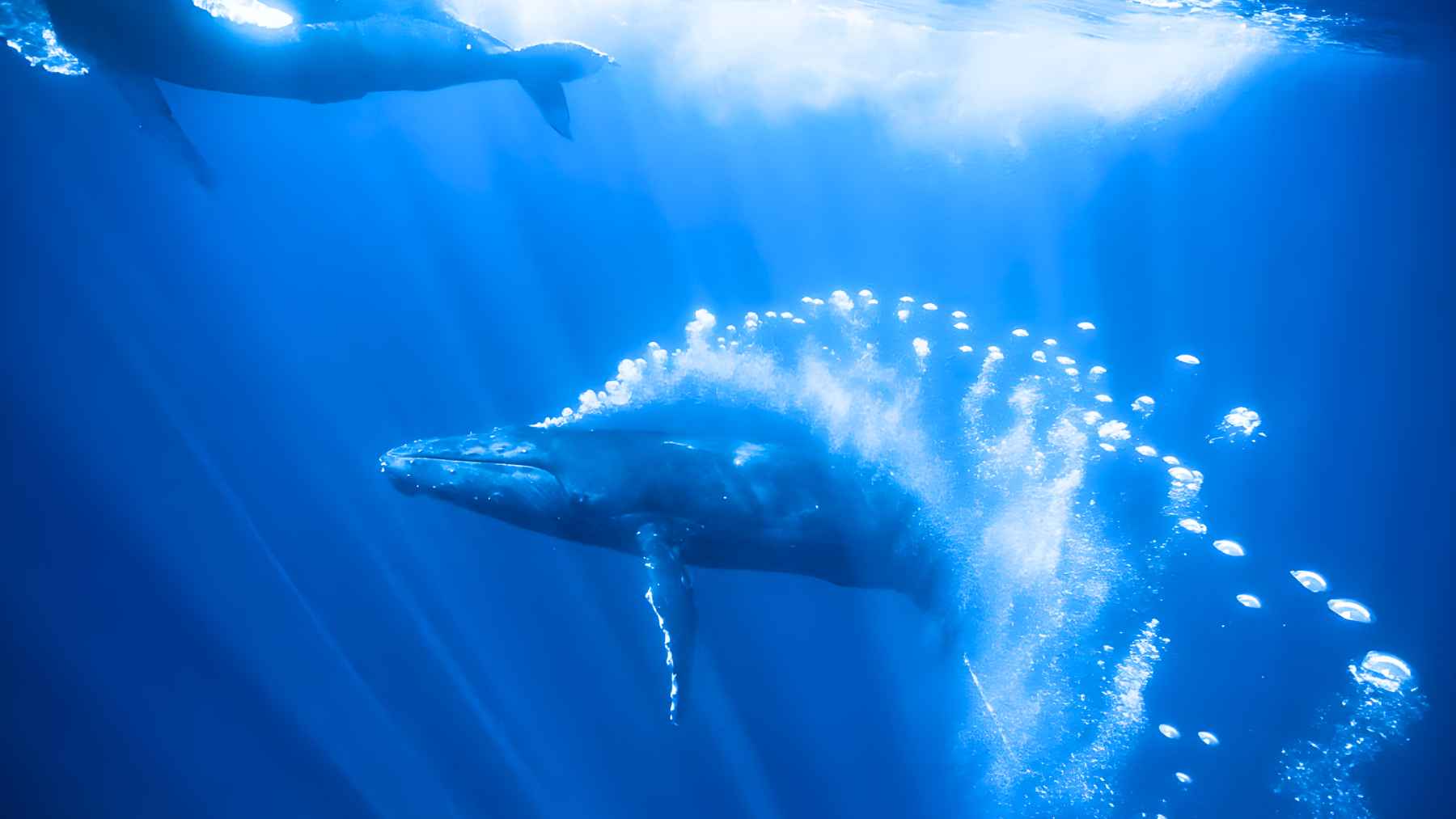
Imagine you are on a quiet whale watching trip. A humpback surfaces beside the boat, lingers for a moment, then releases a perfect underwater ring of bubbles that rises like a giant smoke ring toward you. It looks playful. It also feels strangely intentional.
A new scientific study has now documented this rare behavior in detail and it has scientists asking a big question. Are these whales simply playing around, or are they experimenting with a new way to communicate with us?
What exactly is a whale bubble ring?
Humpback whales have long been known to use bubbles as tools. They send up dense curtains of bubbles to herd fish and create chaotic bursts during intense mating contests. In this case though, the animals are crafting something much more precise.
The new research describes large doughnut-shaped rings of spinning air that rise toward the surface like slow-motion smoke rings. These poloidal vortex rings are usually two to three meters wide and packed with many tiny bubbles, which gives them an opaque, milky look instead of a single clear ring.
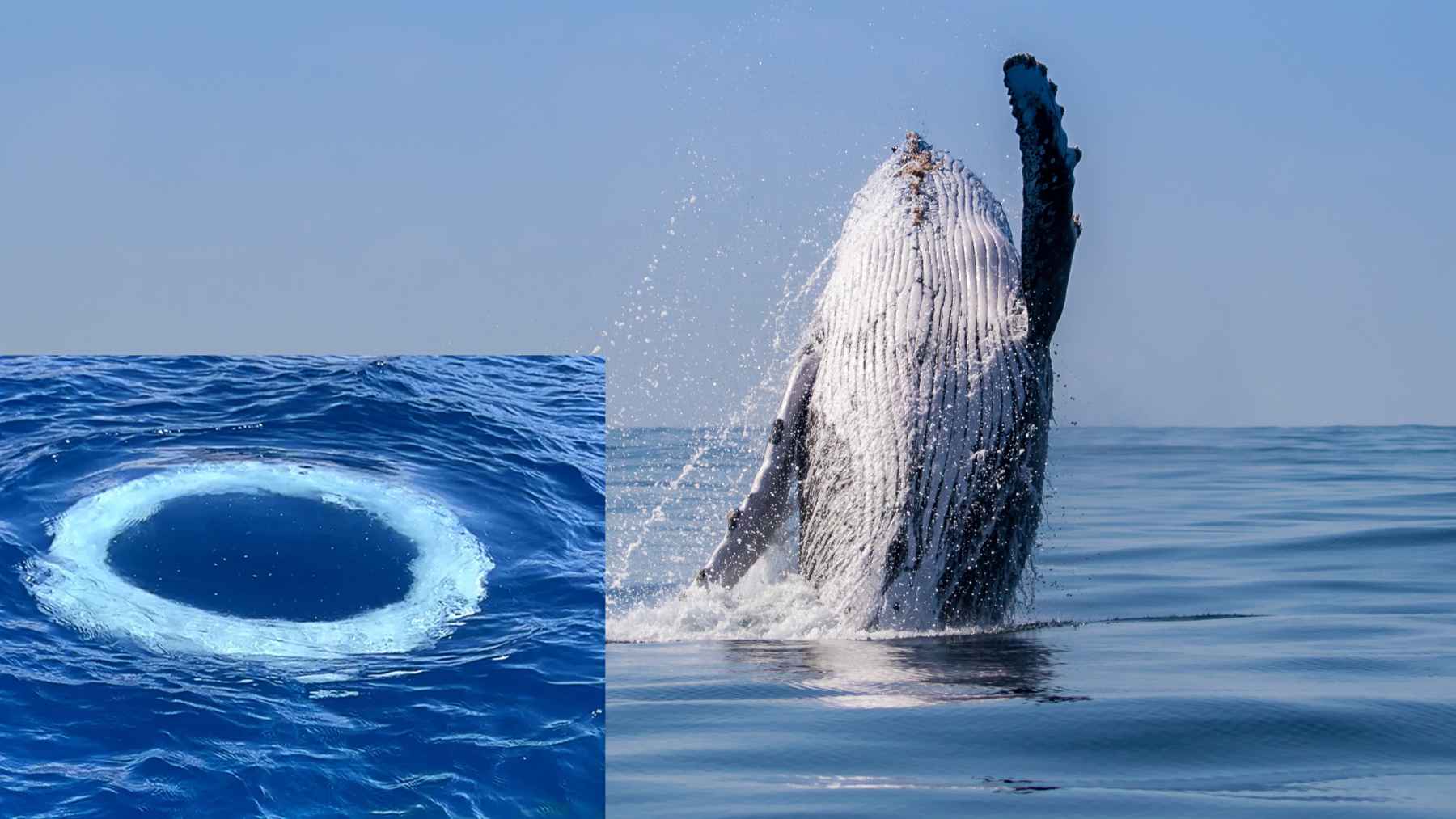
In several cases the team could see that the ring started from just one nostril in the whale’s blowhole, a sign of remarkable control over its breathing muscles.
A rare behavior caught on camera
Scientists and citizen observers collected video and photos of 12 bubble ring events in three oceans. In total they identified 39 rings made by 11 individual humpbacks. Most of these encounters happened near boats or swimmers, often in clear tropical waters where the entire scene could be filmed.
The whales were not charging or fleeing. Instead they moved slowly, appeared relaxed and frequently approached to within roughly one body length of people at the surface.
In one famous 1988 sequence a whale nicknamed Thorn created 19 bubble structures, including 11 full rings, in about ten minutes while circling a tour boat. As one researcher recalled, “We were just gobsmacked, like, ‘What the hell is going on’.”
At the same time, thousands of drone flights over humpbacks in feeding and breeding areas have never recorded a single bubble ring when no boats or swimmers were nearby. That pattern hints that human presence may be part of the trigger, although the authors stress that more systematic data are needed.
Play, curiosity, or visual language
So what are the whales doing? In several sequences a whale would blow a ring, then swim through it or rise in a slow spy hop with its head poking up through the center, almost as if stepping through its own hoop. That certainly looks like play.
Yet some scientists wonder if there is something more. The WhaleSETI team, which studies non-human intelligence to better prepare for the search for life beyond Earth, notes that many of the ring blowing whales first approached boats or swimmers and then directed the rings toward them.
One biologist suggests that this might be a “species atypical signal that is crafted for people” and even compares the rings to symbols coming from a mouth, only made of bubbles instead of sound.
Other experts urge caution. With only a dozen documented events, it is far too early to say that humpbacks are “talking” to us. What most agree on is that the behavior shows impressive control, creativity and curiosity.
Why it matters for whales and for us
At first glance bubble rings might seem like a charming footnote in whale behavior. Look a little closer and they become something else. They are a visible reminder that humpbacks live in complex societies, use tools made of air and sometimes appear eager to engage with us on their own terms.
That matters in a world where humpbacks still face ship strikes, fishing gear entanglement, underwater noise, chemical pollution and disruptions to their food web. When people feel that a whale is not just a distant giant but a thinking neighbor experimenting with new ways to reach out, support for stronger protections tends to grow.
For now, scientists are asking whale watchers, researchers and coastal communities to keep their eyes open and their cameras ready. Every new ring on video is another clue in this slow moving mystery about how a very different mind chooses to interact with us at sea.
The study was published in Marine Mammal Science.