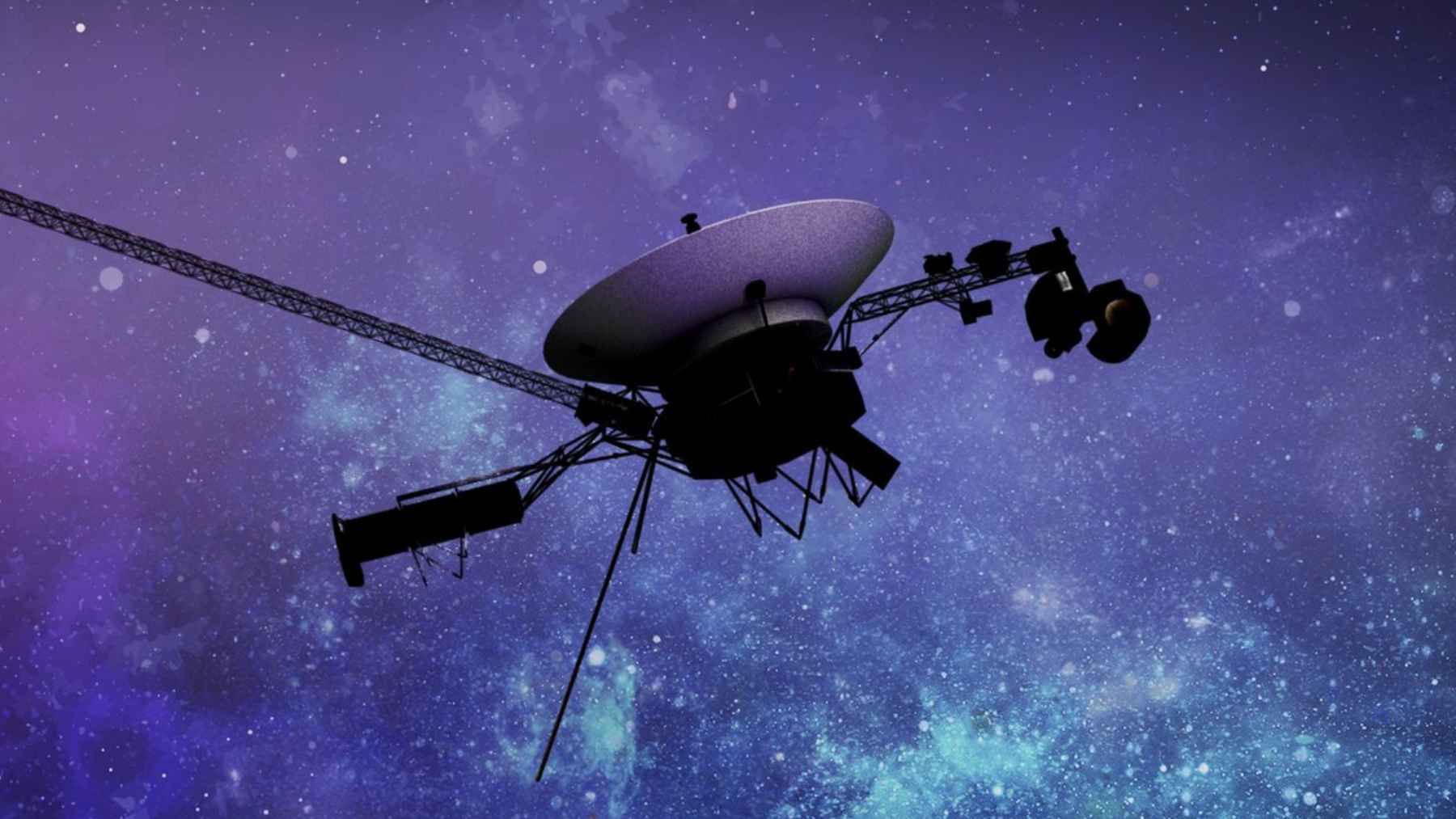
An aging spacecraft almost 25 billion kilometers from Earth has just checked in again, and this time the call did not go through a giant space agency antenna.
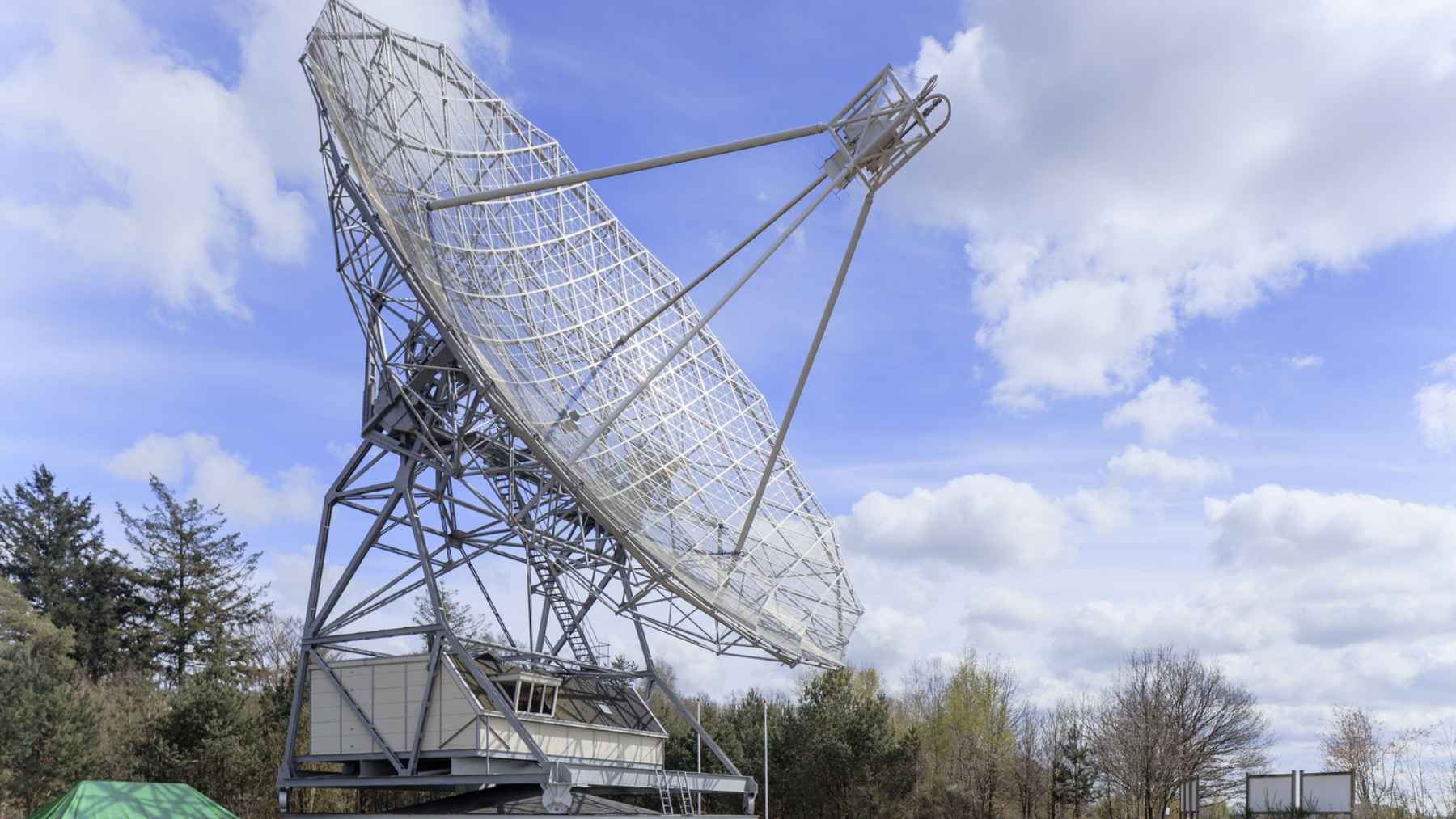
A team of amateur astronomers using the historic Dwingeloo Radio Telescope has managed to detect the ultra-faint carrier signal from Voyager 1, confirming that the most distant human-made object is still talking to us from interstellar space.
For decades, only NASA’s Deep Space Network handled this kind of deep space listening. So how did a volunteer run dish from the 1950s pull this off?
Pushing a vintage dish to its limits
Dwingeloo was built in 1956 and today is run by the foundation Stichting Radiotelescoop Dwingeloo, better known as CAMRAS. The telescope was originally designed for lower radio frequencies.
Voyager 1 sends its engineering signal at 8.4 GHz, which is far less forgiving for an old metal mesh dish. At those frequencies the surface reflects less efficiently, so every imperfection eats into the already tiny signal.
To even have a chance, the team installed a dedicated high-frequency antenna and receiver chain. Then came the hard part. The carrier from Voyager 1 is buried in background noise, like a whisper at the edge of a busy café.
Using precise orbital predictions for the spacecraft, the amateurs corrected for the Doppler shift caused by the motion of Earth and the probe. Only after that careful correction did a thin spike at 8.4 GHz appear on their screens in real time, matching exactly what Voyager’s frequency should be.
The radio call that produced that tiny spike had been traveling for about 23 hours at the speed of light before it reached the Dutch countryside.
A mission in its twilight years
Voyager 1 left Earth in 1977 and crossed into interstellar space in 2012. It was built for a few years of planetary flybys yet it has now been working for nearly half a century. Its three nuclear power generators are steadily fading, so engineers at NASA have begun turning off instruments one by one to keep the essentials alive for as long as possible.
Official estimates suggest at least one science instrument can keep running into the early 2030s, as long as the power budget allows.
That is why every confirmed signal matters. When a small amateur team can independently verify that the probe is still transmitting, it acts as a safety net and a morale boost for the professionals managing an aging spacecraft from billions of kilometers away.
Citizen science at the edge of the Solar System
The Dwingeloo group is clear about one thing. They cannot talk back to Voyager 1. For that, NASA relies on the giant dishes of the Deep Space Network in complexes such as the one at Goldstone Deep Space Communications Complex and the antennas near Canberra and Madrid, which are far larger and purpose built for deep space commands.
What the Dutch volunteers have shown instead is that citizen science can now reach all the way to interstellar space. With careful engineering, patient data analysis and a restored national monument, they have joined a very short list of facilities on Earth that can still hear Voyager 1’s faint heartbeat.
It is a reminder that our long-range explorers are not just symbols of high-tech spaceflight. They are also tools that knit together professionals and amateurs, big agencies and small foundations, all listening to the same fragile signal from the dark between the stars.
The official statement was published on CAMRAS.