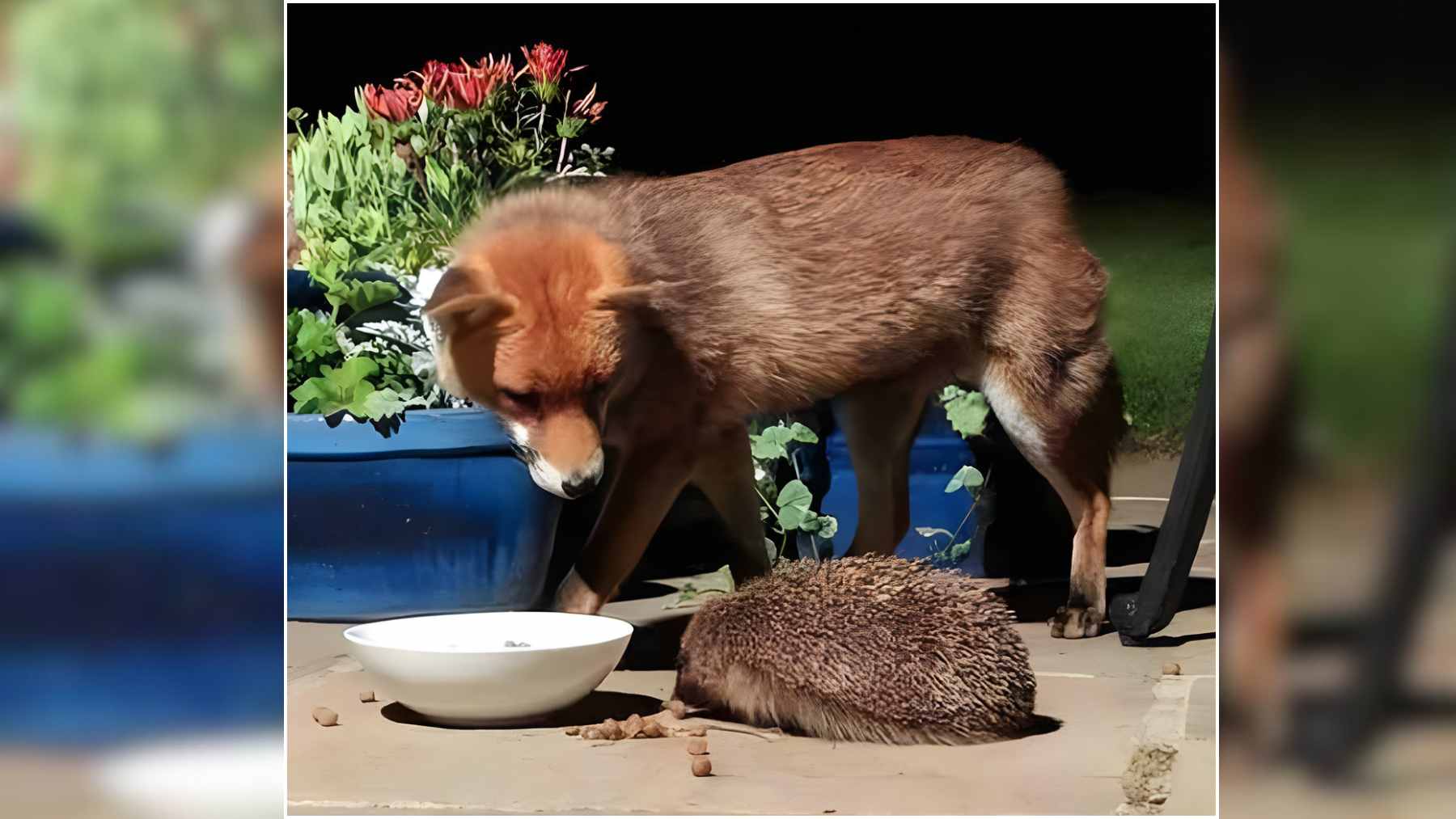
On a snowy night in the Swiss town of Dietlikon, a red fox and a hedgehog lower their noses into the same bowl of cat food. The scene looks like something from a storybook, yet it is playing out on a small urban lawn while fireworks pop in the distance and winter tightens its grip on local wildlife.
For 58-year-old Markus Graber, who lives on the ground floor of an apartment block with direct access to the garden, this shared dinner has become almost routine. He first took in a weak young hedgehog, nursed it indoors, then built a little house outside and began leaving out wet and dry cat food so the animal could recover and live free.
The smell of that food did not go unnoticed. Over time, birds, crows, pigeons, magpies and neighborhood cats began to drop by. Then a fox started slipping in from the nearby woods at night. On the video clips Graber records with several garden cameras, the fox and the hedgehog often eat side by side in calm silence. He jokes that “everyone gets something.”
At first glance it is simply heart melting. Look, a fox and a hedgehog sharing snacks while the rest of us are checking the forecast and the electric bill. Yet this small story raises a bigger question. How far should people go when helping wild animals through a hard winter in our cities?
Winter pressure on wild neighbors
Snow cover makes it harder for many animals to find insects, seeds and other natural food. In towns and suburbs, they also face traffic, garden walls and noisy celebrations that stretch well into the night. Research in Europe has shown that fireworks can trigger strong stress in birds, with heart rates in some species jumping to nearly double their resting levels during New Year displays.
Radar-based studies have recorded huge spikes in bird flight activity during firework nights as flocks take off together and fly higher and farther in an effort to escape the noise and light.
Deep snow and ice can also force mammals to burn more energy just to move and stay warm. That makes any reliable extra food source very attractive, whether it is a compost heap, a bird feeder or a bowl of cat food on a patio.
Hedgehogs on the edge
In Switzerland, hedgehogs have become increasingly dependent on urban green spaces because modern farmland and uniform-production forests offer them little cover or food. A long-term study in Zurich found that hedgehog numbers in the city fell by about forty percent over twenty five years and that the area where they are still present has shrunk as well.
That decline helps explain why conservation groups and rescue centers now encourage targeted support for struggling animals. When a hedgehog is underweight, injured or recovering in human care, experts often recommend high-quality wet cat food which can supply the protein and fat they would usually get from insects and other invertebrates.
For healthy wild hedgehogs, organizations in the United Kingdom and across Europe usually suggest a lighter touch. They note that people can put out meat based cat or dog food or specialist hedgehog food during cold spells, as long as this is clearly supplementary and does not replace natural foraging.
Swiss conservationists also warn that permanent feeding stations can create problems. If bowls stay full every night, hedgehogs may crowd together, fight over food and spread disease, and young animals may never learn to search for insects on their own. Camera studies have shown that these spots attract foxes, martens, rats and mice as well, which is not always what neighbors had in mind.
Foxes at the table
Foxes are incredibly adaptable. In many European cities, urban foxes now slip between gardens, survive on rodents, birds, fruit and human leftovers and sometimes take advantage of food that residents put out on purpose.
Wildlife charities differ slightly in their advice about feeding them. Some say that modest, irregular offerings of meat, dog food or similar items are acceptable as long as foxes are not encouraged to approach people or become dependent on a single yard. Others urge residents not to feed foxes at all in order to keep them wary and to avoid conflict with neighbors.
In practical terms this means that scenes like the one in Dietlikon sit in a gray zone. On the one hand, Graber gives a weak hedgehog a second chance and offers a quiet refuge while snow and fireworks make life outside the garden wall more dangerous. On the other hand, regular pet food outdoors can teach wild animals to search for dinner on terraces rather than in the woods and can pull predator and prey into close contact.
How to help wildlife without turning your yard into a buffet
If you have a balcony or garden, there are ways to copy the best parts of Graber’s example while avoiding the risks. Most experts agree on a few simple rules drawn from hedgehog specialists and wildlife organizations.
- Focus on habitat first by leaving leaf piles, hedges, native shrubs and undisturbed corners where insects and small animals can shelter and feed.
- Offer water in shallow dishes and keep it ice free during cold snaps.
- If you put out food for hedgehogs, use plain meat based cat or dog food in modest amounts, remove leftovers each morning and stop once natural food becomes easier to find.
- Avoid hand feeding foxes or encouraging them to come close to people. If you do leave a small snack, place it in a quiet spot and vary the timing so they do not build a strict routine.
- Choose quieter, low-impact celebrations and limit fireworks where possible so that local birds and mammals are not startled night after night.
For people watching from a warm living room, the sight of a fox and a hedgehog sharing cat food under garden lights is a welcome reminder that wild animals are still moving through our towns, even in deep winter. The challenge now is to support them in ways that keep them healthy, keep them wild and keep the fragile balance between comfort and caution.