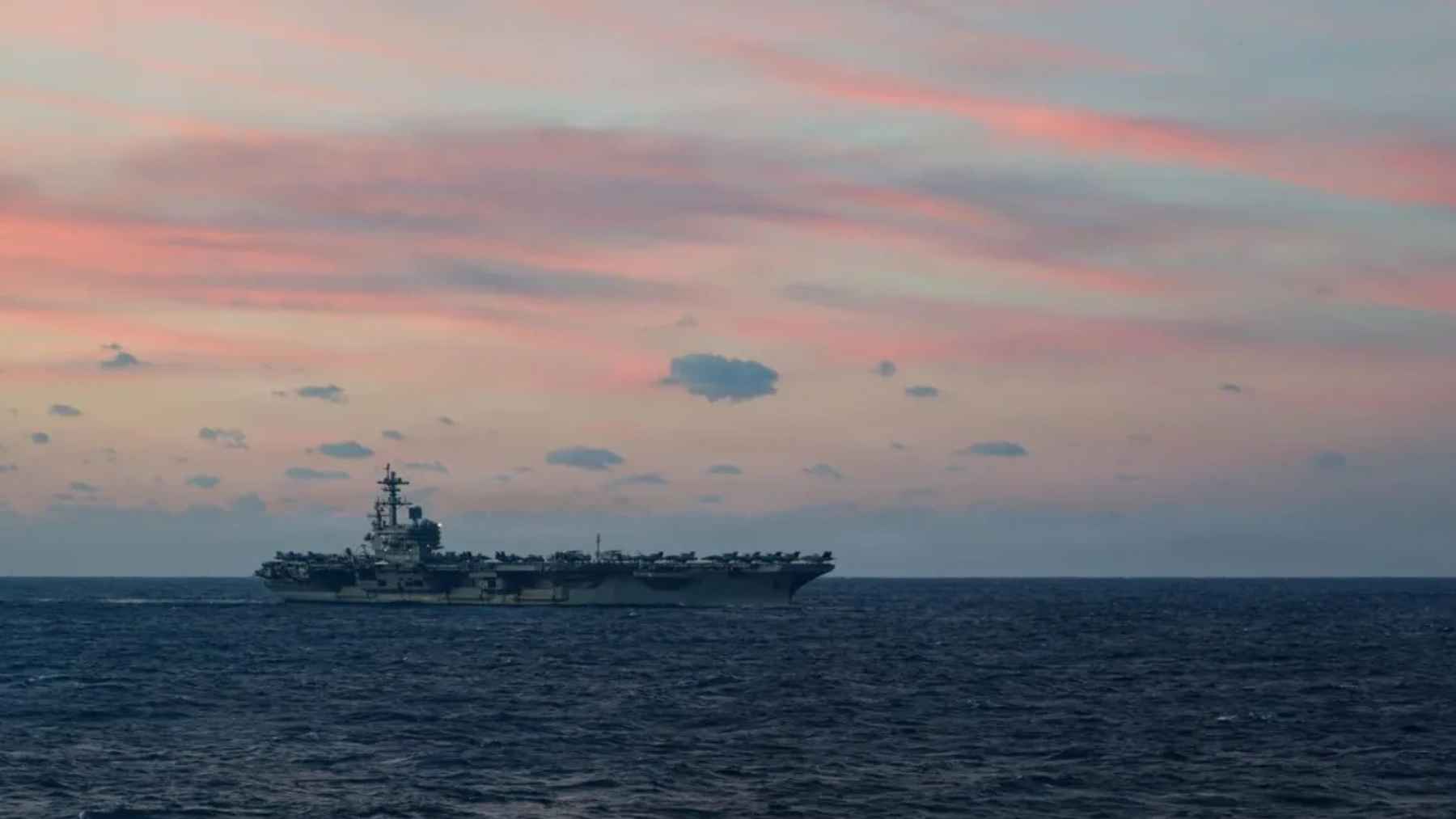
The nuclear-powered aircraft carrier USS George H.W. Bush has been spotted returning to Naval Station Norfolk in Virginia after completing COMPTUEX, a major Atlantic training event that serves as a final readiness check before deployment. Videos shared by shipwatchers show the carrier returning to its home port after drills offshore.
In an official announcement, the Navy said the strike group, known as Carrier Strike Group 10, finished COMPTUEX on March 5, 2026, signaling it can operate as a team. Does this return mean a long pause, or just a quick pit stop before the next tasking?
Home after COMPTUEX
For residents around Hampton Roads, a carrier coming home can feel like a neighborhood moment. For the crew, it is a practical reset after training that runs day and night.
The installation in Norfolk is the largest naval complex in the world, and it is built for quick turnarounds. A ship can take on fuel, food, spare parts, and people while maintenance teams tackle repairs that are hard to do at sea.
Open-source observers expect a replenishment period before the next at-sea stretch, though no official destination has been announced. Even nuclear-powered ships still need supplies and maintenance.
What COMPTUEX tests
COMPTUEX stands for Composite Training Unit Exercise, and it is often described as the last big exam a carrier strike group takes before deployment. Every part of the group has to fight, communicate, and sustain itself under pressure.
During COMPTUEX, units are tested across air, surface, subsurface, and cyber scenarios – shorthand for threats from aircraft, ships, submarines, and computer attacks. Some training is live, while simulators add surprise events that force quick decisions.
Rear Adm. Alexis Walker, the strike group commander, summed it up when she said, “COMPTUEX is the certification event for the strike group.” That certification is not a trophy. It is a practical signal to commanders that the force can deploy and operate as designed.
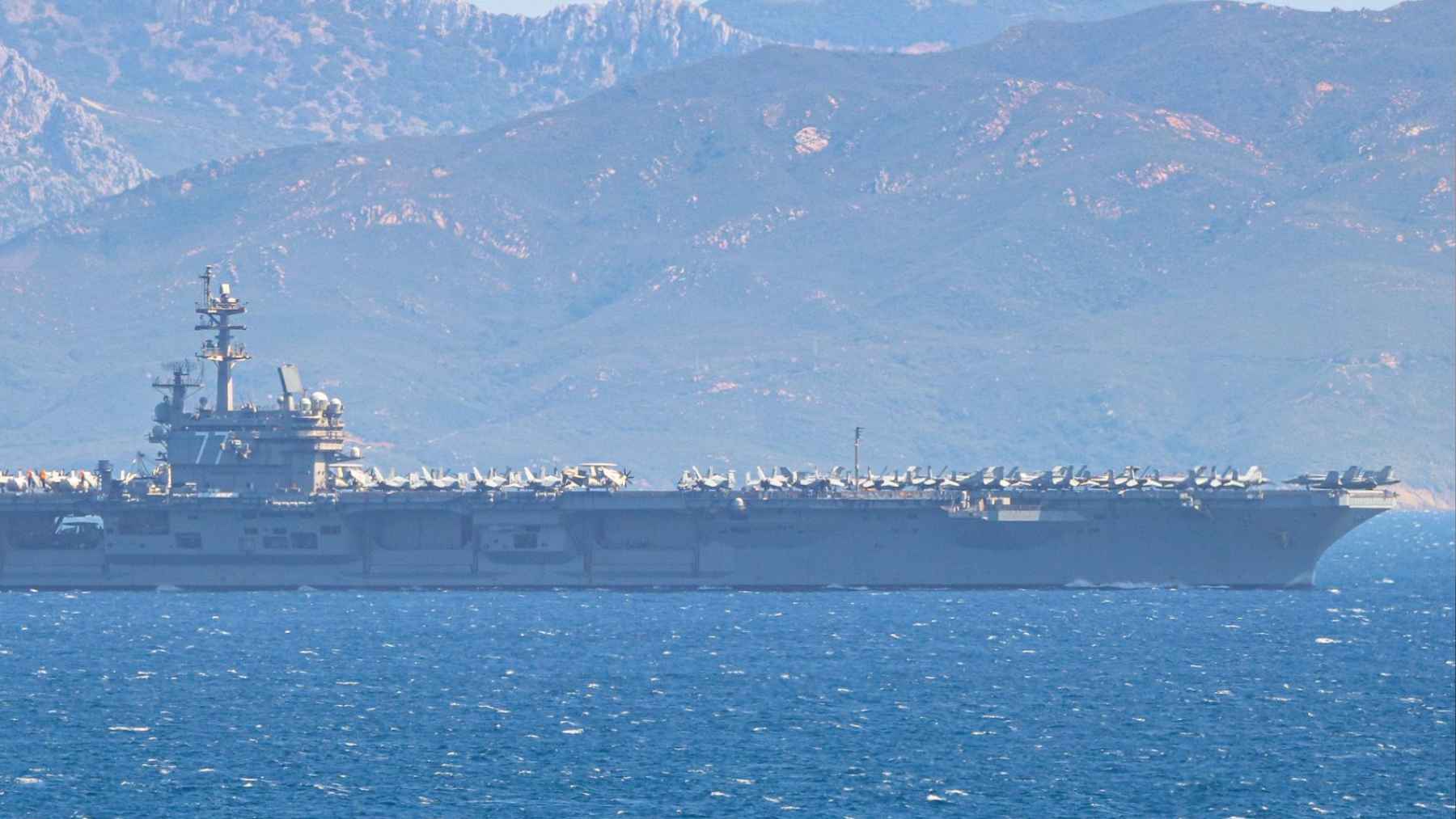
The USS George H W Bush transits coastal waters after completing COMPTUEX, the Navy’s final pre-deployment exercise.
The flight deck tally
A carrier is not just a ship – it is also a busy airport that moves. Carrier Air Wing 7, made up of nine squadrons and about 2,400 sailors and aviators, played a central role in the training.
Over 28 days, the air wing flew 1,586 sorties, meaning 1,586 operational flights, according to the official announcement. The same update reported 693 day-arrested landings and 682 at night, the cable-assisted landings on a moving deck that pilots train for relentlessly.
Capt. Martin Fentress Jr., who led the air wing, described the biggest challenge as “the tyranny of distance,” referring to how hard it is to assemble people and aircraft from many locations into one unit. In his view, solving that problem is part of what makes a deployment work.
Escorts around the carrier
Calling it a carrier strike group matters because the carrier rarely operates alone. The surrounding ships provide layers of defense and support, from tracking aircraft to screening for submarines and helping keep the sea and airspace around the carrier under control.
In this case, the escort includes four Arleigh Burke-class guided-missile destroyers, USS Gonzalez, USS Mason, USS Ross, and USS Donald Cook. They are built around the Aegis combat system, a radar-and-missile network designed to detect threats and coordinate defensive fire.
Spain’s frigate alongside
One notable feature of this workup was the participation of Spain’s frigate Blas de Lezo, which integrated with the carrier group for the exercise. A January 15, 2026, update said the ship sailed from Ferrol for the United States and expected the deployment to last about two months, including transits.
The frigate’s commander, Commander Pedro Ramos, called the deployment “a significant milestone in our operational cycle” and said it was an opportunity to strengthen training and capture lessons for national doctrine. In simple terms, it is practice for operating far from home, with less time to fix problems and more pressure to get decisions right.
Interoperability is the core idea here – meaning different navies can operate together using shared procedures and compatible equipment. When ships can share data and work to the same plan, the group is harder to surprise.
Five F-100s at sea
Spain has highlighted a broader milestone as well, with all five of its F-100 Álvaro de Bazán-class frigates deployed at the same time in early 2026. Keeping so many ships sailing at once is not just a matter of crew endurance – it also pushes planning, maintenance, and logistics onshore.
A February 6 statement described the F-100s as escorts of more than 6,000 metric tons, roughly 6,600 U.S. tons, and mapped their missions across allied operations that range from Orion 26 to Standing NATO Maritime Group 1, Eagle Eye, and Steadfast Dart 26 in the Baltic Sea.
The same statement pointed to a mid-life modernization program budgeted at 3.2 billion euros, about $3.69 billion, running through 2036.
That tempo makes the class a familiar sight in multinational drills, but it also increases wear and tear. For planners on both sides of the Atlantic, it is a reminder that readiness depends on shipyards and spare parts as much as it depends on sailors.
What comes next
COMPTUEX completion does not automatically mean an immediate deployment, but it does put the strike group in the category of forces that can move when ordered. Walker said the group was “ready to deploy today,” and the carrier’s commanding officer, Capt. Robert Bibeau, said the crew had trained to high standards to be ready when called.
For now, the firm facts are about training and certification, not a published sailing order or destination. Open-source observers and some media reporting have suggested the group could be preparing for a Middle East deployment, as another carrier, USS Gerald R. Ford, has pulled into Souda Bay, Greece for maintenance after operating in the Red Sea.
The official press release was published on U.S. Fleet Forces Command.