America has been searching for some time for new sources to revolutionize our energy landscape, with the oilfield problem still unresolved (not to mention nuclear). However, a group of experts has put a seemingly impossible idea on the table that could be the definitive one: they want to open the Apocalypse Mine for the first time. The problem? It’s not in one spot but spread all over the country and hundreds of meters below your feet. There are those who fear that what we are about to tell you will happen.
America, ready to open the Apocalypse Mine: It could end wrong, but there’s energy for millennia
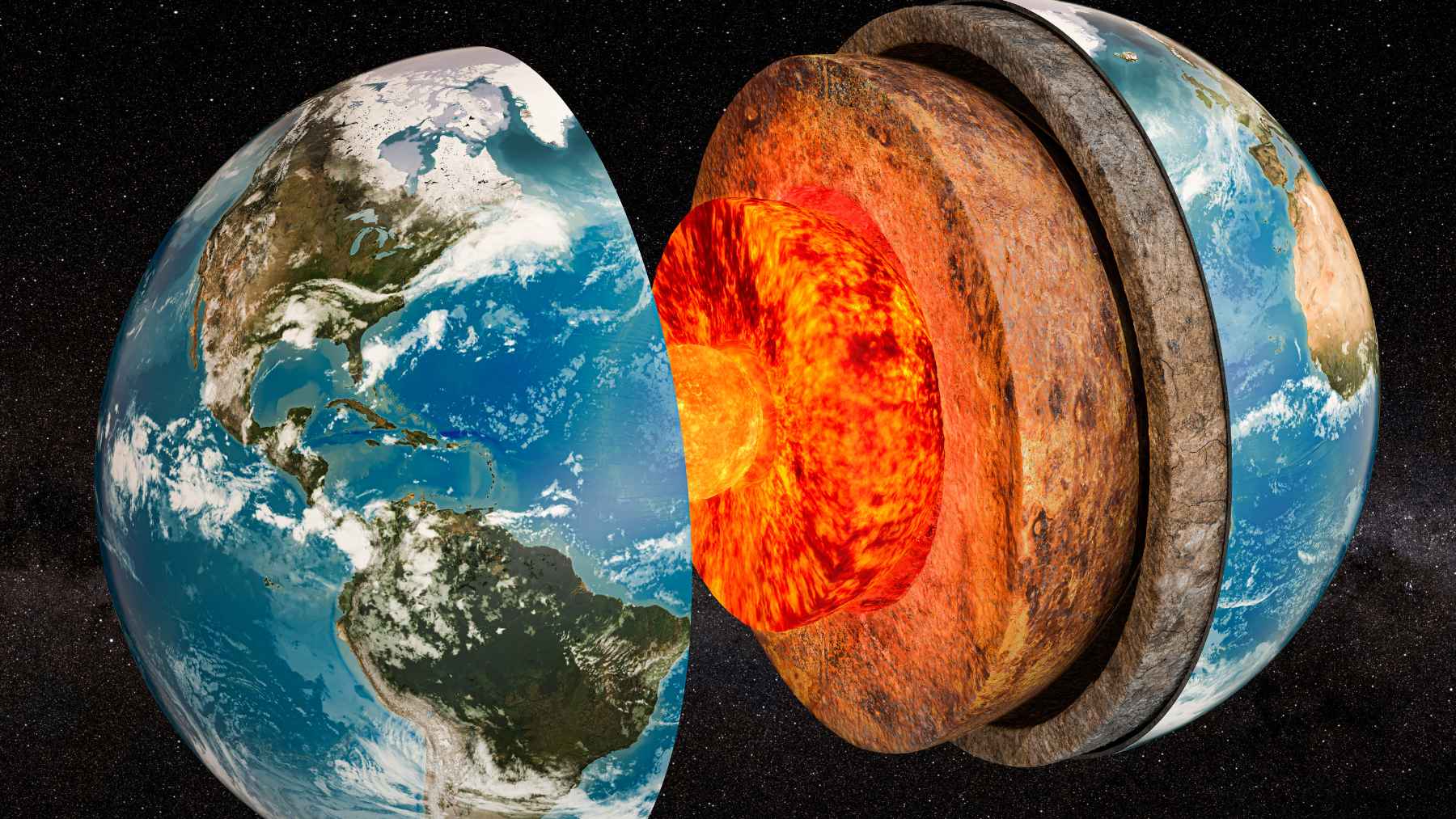
The United States Geological Survey (USGS) has come up with such an incredible forecast in concern with the prospects of subterranean hydrogen resources. In an unpublished report they suggested that there might be as much as five trillion tons of hydrogen locked in the earth’s crust.
Such a large number points to the fact that natural hydrogen can go a long way in supplying the world’s energy needs for several centuries. For context, the present global hydrogen production is around 90 million metric tons per year. These figures can be multiplied by the estimated underground reserves, which point towards a possibly revolutionary source of energy.
Four states (and projects) to revolutionize underground hydrogen extraction in America
Several projects are currently underway to explore and exploit America’s underground hydrogen resources:
- Nebraska Project: Natural Hydrogen Energy did a 3. Sixty-tree-meter and a 4-kilometer-deep well near Geneva, Nebraska, in 2019. This well could be close to deep faults that might extend to shallow iron-rich mantle source rocks. The exact quantities of production are not stated.
- Department of Energy Initiatives: The team will receive $20 million in grants from the U.S. Department of Energy for an effort spread across 18 teams from laboratories, universities and private companies. These grants seek to nurture techniques for getting affordable, renewable hydrogen fuel from deep resources.
- MIT Research: The research group led by Iwnetim Abate, an Assistant Professor at MIT, was granted $1. 3 million grant to investigate the conditions under which hydrogen can be produced most efficiently subterranean. This is with the view of enhancing efficiency for large scale production along the parameters including catalysts, temperature pressure and pH.
- ARPA-E Funded Projects: It’s the likes of Colorado School of Mines, Texas Tech University, the Los Alamos National Laboratory, among others, together with the Koloma that benefit from the advanced research projects agency’s (ARPA-E) grants. These projects include proposing and using industrial oil and gas for hydrogen generation.
Two regions will decarbonize the entire country: Experts, on top of what has been located underground
While comprehensive state-by-state data is not yet available, geologists have identified two promising regions in the United States:
- Eastern Seaboard: Hydrogen potential can be traced to a depth of 10 to 20 Kms from the Eastern Seaboard. Here, the iron-rich mantle rocks are found to exist at a depth of roughly 10 kilometers from the sea floor. Hydrogen that is generated by these rocks may be moving up and towards the shore through permeable sediments.
- Midwest: Perhaps another hotspot location is in the Midwest region, where a volcanic rift did not open in North America a billion years ago. Igneous intrusions at this event brought iron-rich mantle rocks near the surface in a regional zone from Minnesota to Kansas.
What could we expect in the future? “It looks promising”, according to scientists
The future of underground hydrogen extraction in America looks promising, with several initiatives and plans in the pipeline. The U.S. Department of Energy (DOE) has recently commenced an extensive three-year survey of the possibility of underground hydrogen storage in the United States.
Expansion of study areas is also quite relevant. Originally confined to three areas: the Gulf Coast, Midwestern, and Rocky Mountain regions, the Department of Energy has broadened its research to the Pacific Northwest and Appalachian regions. This expansion will generate a better estimate of the country’s possible storage of hydrogen.
This project (or rather, the sum of several projects) highlights the future of renewable energies in our country, and we can literally say that they are flowing underground in enormous quantities. Geothermal energy is not the only one going in the opposite direction to photovoltaics (literally speaking), but now we can also extract hydrogen from the ground. The colors? There is talk of starting with white or gray, as well as gold, which has the peculiarity of being incredibly cheaper and therefore cost-effective.