Have you ever walked home on “autopilot” and barely remembered the route, then felt totally on edge when you took a different path the next day? Our brains handle those two situations very differently, and scientists have now pinned down where that switch lives.
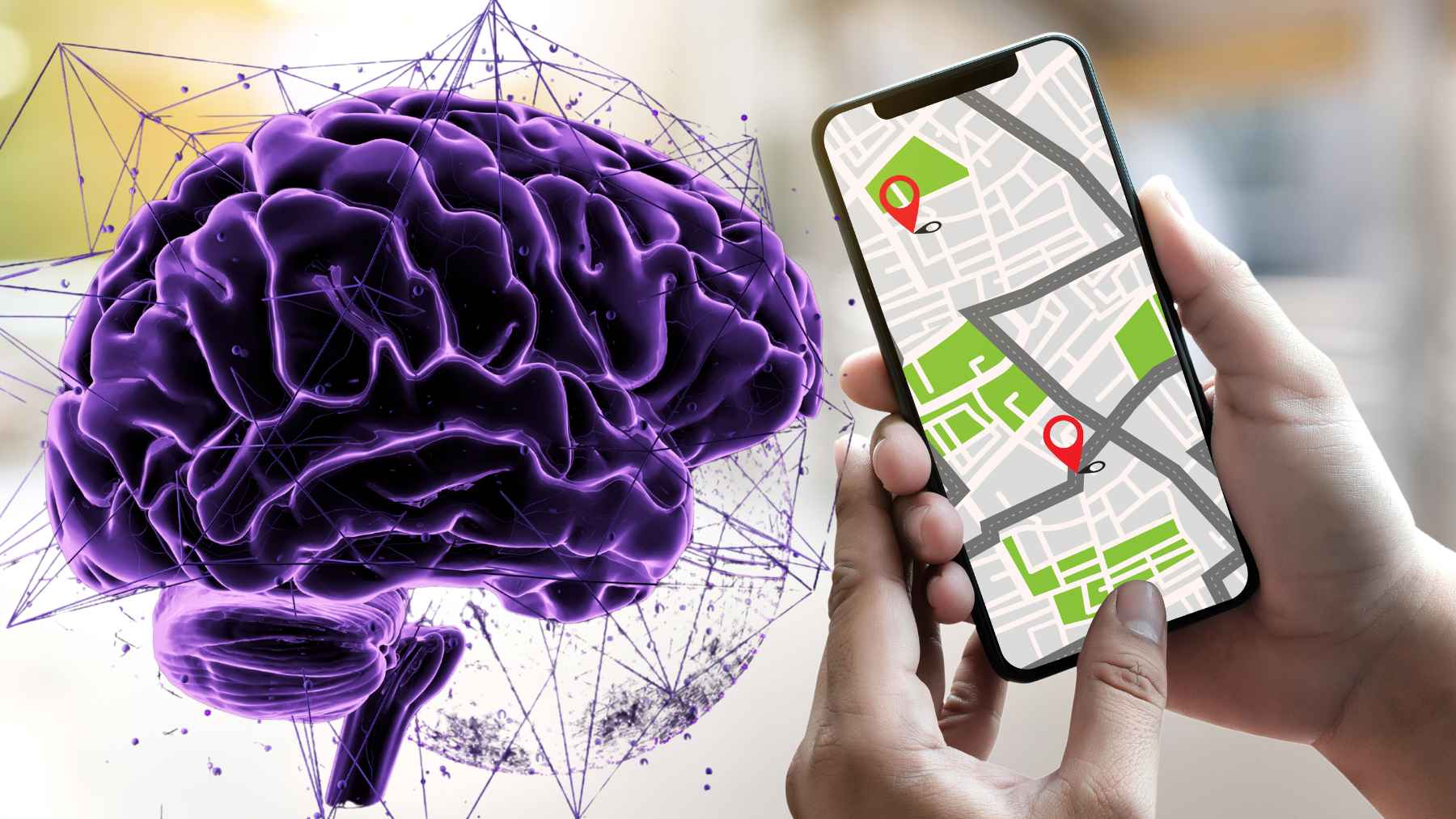
A new study from Fudan University, published in Nature Communications, shows that the human brain uses a finely tuned navigation system that continuously tracks how familiar or new a place feels while we move through it. At the heart of that system sits the hippocampus, a seahorse-shaped structure already known for its role in memory and spatial maps.
Crucially, the same network is among the first to be hit in Alzheimer disease. Other research has shown that spatial disorientation often appears early in the illness, long before some people receive a formal diagnosis. That makes this new work more than a cool brain fact.
It touches everyday independence, from finding your way to the grocery store to feeling safe crossing a busy plaza.
An internal compass with a sliding scale
The team calls it a “graded encoding” of spatial novelty. In simple terms, the hippocampus does not flip between two rigid modes, familiar or unfamiliar. Instead, activity shifts smoothly along its length depending on how well we know a place.
In the front part of the hippocampus, brain activity was strongest when people moved through well-learned areas of an environment. Further back, toward the posterior end, activity ramped up when participants entered sectors that were new to them. Between those two ends, the researchers found a continuous transition rather than a hard border.
Think of it like a dimmer switch rather than an on off button. As a street, forest path, or building layout becomes more familiar, the “novelty” signal gradually slides forward in the hippocampus. When you head into new territory, the signal drifts back again, nudging the brain to pay closer attention and update its internal map.
Virtual reality inside a powerful scanner
To probe this system, the scientists used ultra-high-field 7 Tesla functional MRI while volunteers navigated a custom built virtual landscape. Fifty six healthy adults between twenty and thirty seven years old steered themselves around a circular grassy arena with digital landmarks such as trees, buildings, and mountains, collecting objects and memorizing where they were hidden.
The environment was divided into 100 hexagonal sectors. For every step a participant took, the team calculated a “spatial novelty score” that combined how often that sector had been visited and how long it had been since the last visit. Early visits to a sector counted as highly novel. Later revisits, after some wandering, counted as increasingly familiar.
As people learned the layout, the novelty score dropped, and their behavior shifted. In newer parts of the arena they tended to slow down, pause, and rotate more often, as if looking around to gather information before moving on. Anyone who has stared at street signs at a confusing intersection will recognize that feeling.
A whole-brain navigation network
The hippocampus was only one piece of the puzzle. When the team mapped activity across the entire brain, they uncovered two broad streams that responded differently to novelty and familiarity.
Visual regions and areas involved in attention and control lit up more strongly for novel sectors. In contrast, parts of the somatomotor system and the so-called default mode network, which supports internal thoughts and memory, showed stronger responses in familiar spaces.
These patterns formed large-scale gradients that radiated outward from the posterior medial cortex, a hub that helps link scenes, memories, and spatial context. In other words, the brain seems to organize space along smooth familiarity lines, from local, fresh details to broader, well-learned surroundings.
Why this matters for Alzheimer and everyday life
In Alzheimer disease, the hippocampal formation and nearby hubs in the posterior cingulate and precuneus are among the first regions to show structural damage and disrupted connectivity. At the same time, clinical studies have repeatedly found that trouble with spatial navigation, not just forgetting words, is a common early sign of the disease
Put side by side, these findings suggest that when the subtle novelty gradients in this network begin to break down, people may lose the smooth shift between familiar and unfamiliar space. A neighborhood that once felt effortless to cross can suddenly seem confusing.
Getting to the market or the park may demand constant conscious effort instead of running quietly in the background.
In practical terms, researchers hope that tasks similar to this virtual reality experiment could one day support earlier and more sensitive screening. Carefully designed navigation tests might detect small changes in how the brain handles new and familiar places, even before obvious memory lapses appear.
That would not cure dementia, but it could give families and clinicians more time to adapt homes, design safer routes, and keep people connected to their usual streets and green spaces.
For the rest of us, the study is a reminder that our sense of place is not automatic. It is the result of a delicate, energy-hungry system that constantly weighs novelty against familiarity while we walk, cycle, or drive through the world. Every time you turn a corner and instantly know where you are, that gradient in your hippocampus has done its job.
The study was published in Nature Communications.