The emerging powers (including China) have taken a step forward in the ecological transition, although this has meant intense competition against America. Just look at the almost open war between Tesla and BYD, which is now taking on a new dimension. This is the Chinese invention with which they are going to store energy using gravity, which defies the laws of the universe with its 100 MWh of power, and some countries have betrayed us along the way.
China is going to take the lead in renewable energy: This is how it will accumulate it in its “bunker”
Energy Vault, a leading energy storage firm that has distinguished itself globally for its innovative approach to utilizing gravity for energy storage, has achieved a fantastic feat in the Chinese market with its gravity-based energy storage system. Gravity is one of those technologies that can be beneficial for humanity to start a new era of storing and transferring renewable energy.
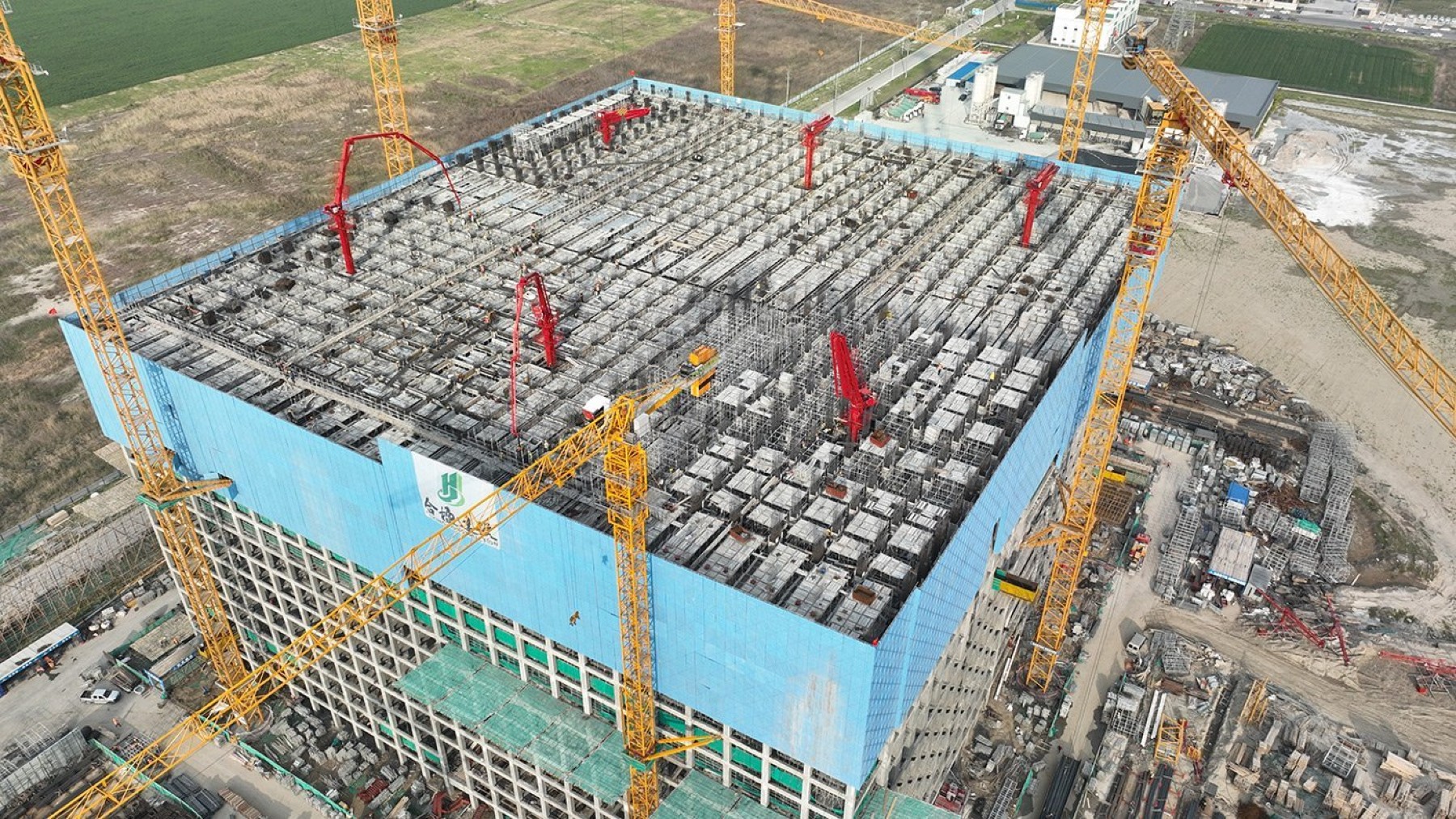
In particular, Energy Vault made the relevant announcement in May 2024, announcing that it had commissioned and connected the first commercial gravity energy storage plant in Rudong, China. The particular type of system is the world’s first gravity-based 25MW/100MWh, non-pumped hydroelectric project of such scale, cooperatively developed with China Tianying (CNTY) and Atlas Renewable.
At the end, the Rudong project is unique in that it can generate 25 MW of power, have a storage capacity of 100 MWh, or even electrify 3,500+ homes for four hours. The results indicate substantial development that Energy Vault has achieved regarding gravity storage systems.
100 MWh of renewable energy in a colossal battery: This is how it defies the laws of the universe
Moreover, the company has recently placed a 400 MWh battery energy storage system (BESS) order for a project in Australia that will be tied to the New England Solar project at 720 MW in ACEN Australia. This project consists of two equal 50MW/100MWh and 150MW/300MWh projects, indicating the potential and flexibility of the gravity storage systems offered by Energy Vault.
There are, however, challenges that have been associated with Energy Vault, having its gravity storage technology criticized for not being efficient or practical. However, to these issues, the company has responded with its latest EVx design, whereby it encompasses the lifts in a building, and in the making of the concrete blocks that it uses, instead of new concrete, it utilizes ash.
Furthermore, Energy Vault has reported achieving increased round-trip efficacy in its system, with optimization of a required 80 percent as opposed to the 75 percent offered beforehand by its first model, known as the EV1. This is important for increasing the efficiency of the technology platform and maintaining its sustainability and market viability.
The Energy Vault project, in detail: Why should America be concerned (and you, too)
In particular, Chinese investors have not left Energy Vault’s successes unnoticed, and now the company is preparing for further internationalization. The firm has entered into a licensing relationship with CNTY which originally lasted for 7.5 years but has been expanded to 15 years for the deployment of planned projects across China through the EVx technology.
In other parts of the world, Energy Vault has unveiled collaborations and orders, such as a 400 MWh BESS order for a project in Australia, which was highlighted earlier in the current article. This global expansion indicates the increased need for gravity storage technology and how Energy Vault is capable of adjusting its technology to meet global markets and needs.
To be more precise, the application of Energy Vault’s gravity storage system in China has even greater implications, as it can help the country meet its strategic climate targets. China’s plan to achieve carbon neutrality by 2060 thus entails the integration of extended-duration energy storage solutions such as the gravity battery into the country’s energy mix.
At this point, and with a critical analysis, we do not believe that China’s gravity battery will end up being a threat in itself, but it will make it difficult for us to lead the large-scale self-consumption market in cities. We have not even been able to do so in the domestic sphere, with proposals such as the Tesla Solar Roof that have been relegated to the background or with wind turbines that have not caught on with consumers beyond our country.