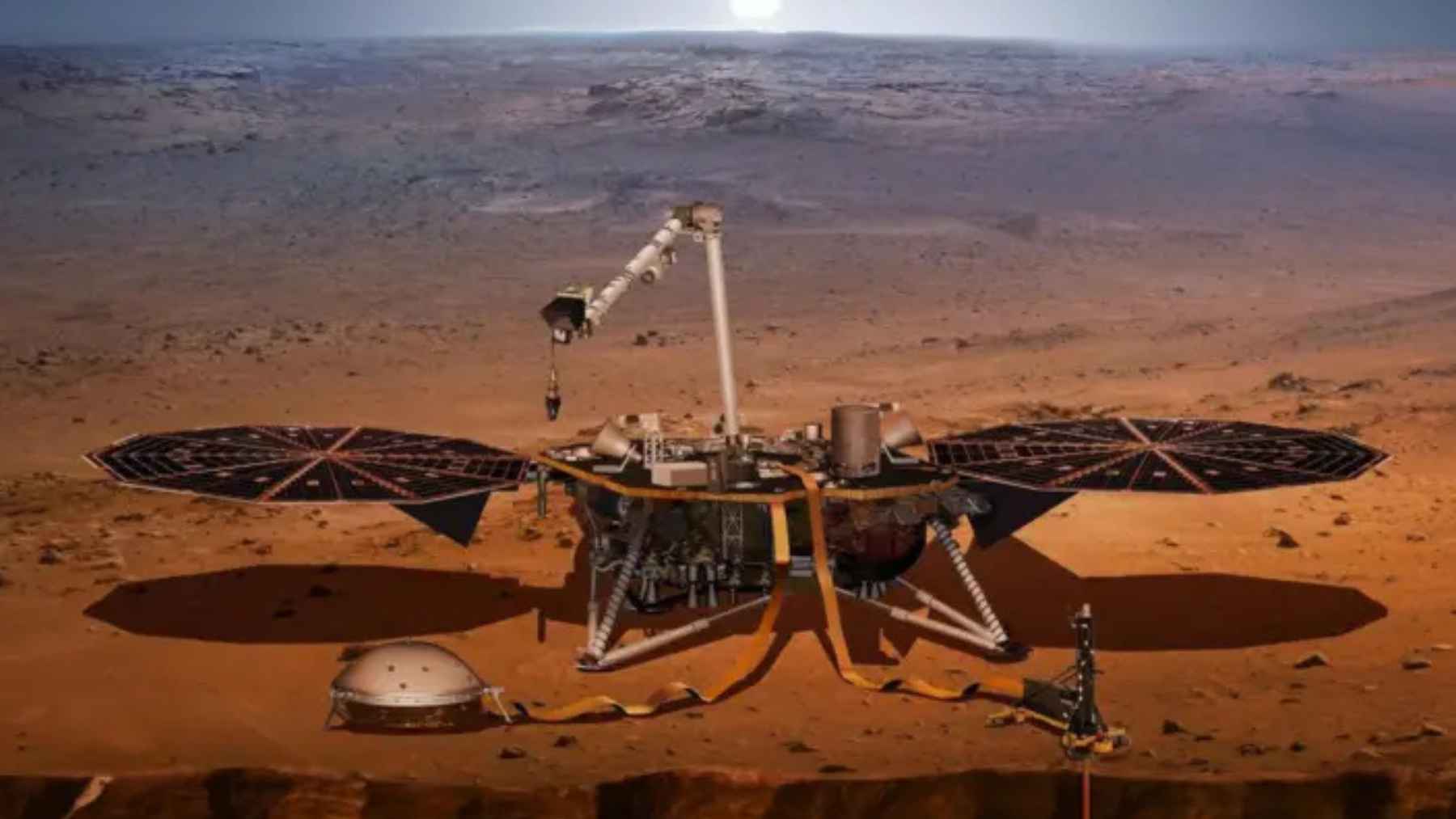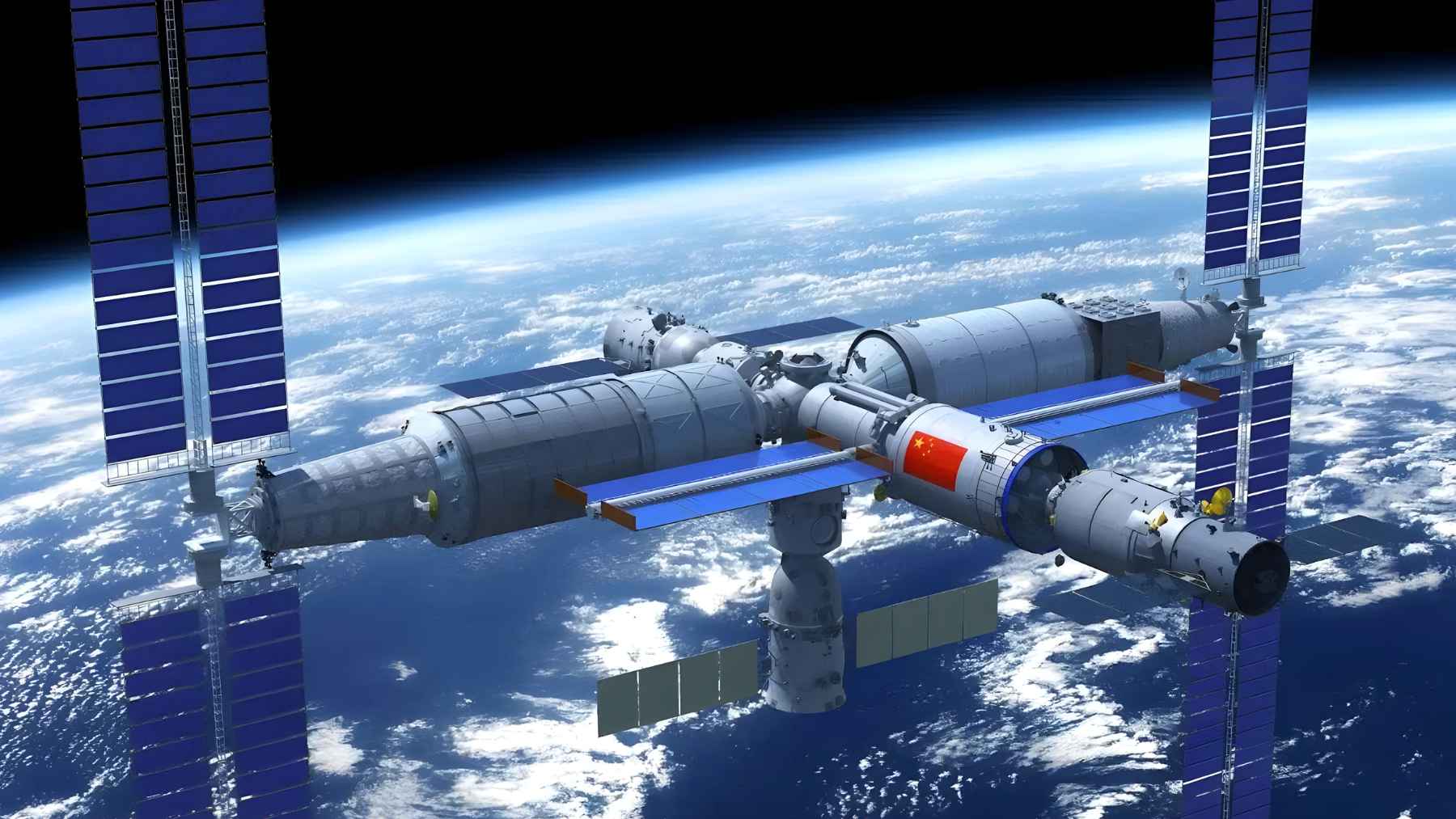
What if the next big mining rush does not happen in the Amazon or the deep sea, but on the Moon and in the asteroid belt? That is the vision behind a new century-scale roadmap promoted by China for exploiting resources across the solar system by around the year 2100.
The initiative, known as Tiangong Kaiwu, outlines how space water ice and strategic minerals could feed both a booming space economy and long-term development back on Earth.
At the heart of the proposal is a simple claim: there are plenty of resources out there. According to figures presented by Chinese scientists, the solar system holds roughly 1.3 million known asteroids.
Early economic estimates suggest around 700 near Earth objects could each contain materials worth over 100 trillion dollars, and about 122 are considered technically and economically suitable for early mining. Water ice is just as important as metal, since it can be split into oxygen and hydrogen to provide air, fuel, and drinking water without hauling everything up from Earth.
From a 1637 handbook to a space resources roadmap
The name Tiangong Kaiwu comes from a 17th century encyclopedia of crafts and technologies that documented how people transform natural materials into tools and products. Chinese space scientists borrow that title to signal a continuity of ideas. Materials are born in nature. Human skill turns them into civilization.
In 2023, academician Wang Wei and colleagues at China Aerospace Science and Technology Corporation presented Tiangong Kaiwu as a long-term development concept. It was later summarized by China Space News and carried on the website of China National Space Administration as a three-step vision of prospect, extract, and use.
On paper, the roadmap moves in four big waves. By around 2035, the focus is detailed resource surveys of the lunar poles and nearby small bodies, plus early technology demonstrations.
By mid century, the plan calls for pilot extraction of lunar south pole ice and volatile-rich, near-Earth asteroids, together with the first refueling and resupply nodes in cislunar space. Around 2075, activity would extend to Mars and the main asteroid belt, with more processing in orbit.
By about 2100, Chinese scientists imagine a network of supply stations and transport routes linking the Earth Moon system, Mars, and even the Jovian region into a single resource grid.
Logistics is central to this blueprint. Lagrange points, the gravitationally balanced zones between bodies such as Earth and the Moon or the Sun and Mars, would host depots where spacecraft refuel and cargo is transferred.
The roadmap also mentions a gigawatt-scale, space-based digital infrastructure that would combine communications, computing, and space debris tracking, turning orbital space into a kind of industrial corridor.
A response to Earth’s resource and climate crunch
Tiangong Kaiwu is not presented only as a prestige project. In the official write up, Wang Wei argues that space resource development can ease “resource scarcity, energy crises, and environmental pollution” and inject new momentum into sustainable development on Earth. That claim lands in a world already struggling with how much material we dig up.
The United Nations Environment Programme reports that global extraction of natural resources has tripled over the past five decades and is projected to rise another 60 percent by 2060 if current trends continue. Resource extraction and processing already account for roughly half of global greenhouse gas emissions and over 90 percent of biodiversity loss and water stress.
At the same time, the clean energy transition needs huge volumes of metals. The International Energy Agency estimates that mineral demand from clean energy technologies could triple by 2030 and roughly quadruple by 2040 on a net-zero pathway.
Demand for lithium alone may grow more than fortyfold, with strong increases for nickel, cobalt, copper, and rare earth elements that go into batteries, wind turbines, and electric motors.
Seen from this angle, harvesting water and metals from lunar craters or near Earth asteroids sounds like a tempting way to protect forests, mountains, and rivers on Earth while still keeping the lights on and electric vehicles rolling. Proponents often argue that mining one metallic asteroid might replace many open pit mines on land.
New frontiers, familiar risks
Yet there is a catch. Moving heavy industry off planet does not automatically make it green. Every launch that lofts mining hardware or tankers into orbit burns propellant and leaves a footprint in the upper atmosphere.
Recent studies warn that soot and other rocket emissions in the stratosphere could warm the air and slow the recovery of the ozone layer if launch rates climb steeply.
There is also the growing problem of orbital congestion. Space agencies already track around 40,000 pieces of debris larger than a softball, alongside thousands of active satellites.
A more industrialized cislunar space, packed with tankers and processing stations, would add to that crowding. Without strict rules on disposal and cleanup, space mining could feed into the same Kessler-style cascade of collisions that experts are warning about today.
On top of the physical impacts come legal and governance questions. The Outer Space Treaty says no country can claim sovereignty over celestial bodies, but national laws in places like the United States and Luxembourg already allow companies to own the resources they extract in space.
Tiangong Kaiwu adds a powerful state-backed player to that emerging resource rush. For environmental regulators, the question is simple. Who will set and enforce rules that keep a solar system wide economy from repeating the worst habits of terrestrial mining?
A green promise that will need green rules
For now, Tiangong Kaiwu is a roadmap rather than a fully-funded construction plan. It reflects a clear strategic direction from Chinese space scientists and industry leaders who see water ice and asteroid metals as the backbone of a future space economy, and as a way to support long-term sustainability at home.
Whether that promise holds will depend on choices made in the coming decades. Cleaner launch technologies, rigorous debris mitigation, and binding environmental standards for off world mining will decide if space resources truly help relieve pressure on Earth’s ecosystems or simply export extractive habits into the sky.
The official statement on the Tiangong Kaiwu roadmap was published by the China National Space Administration.