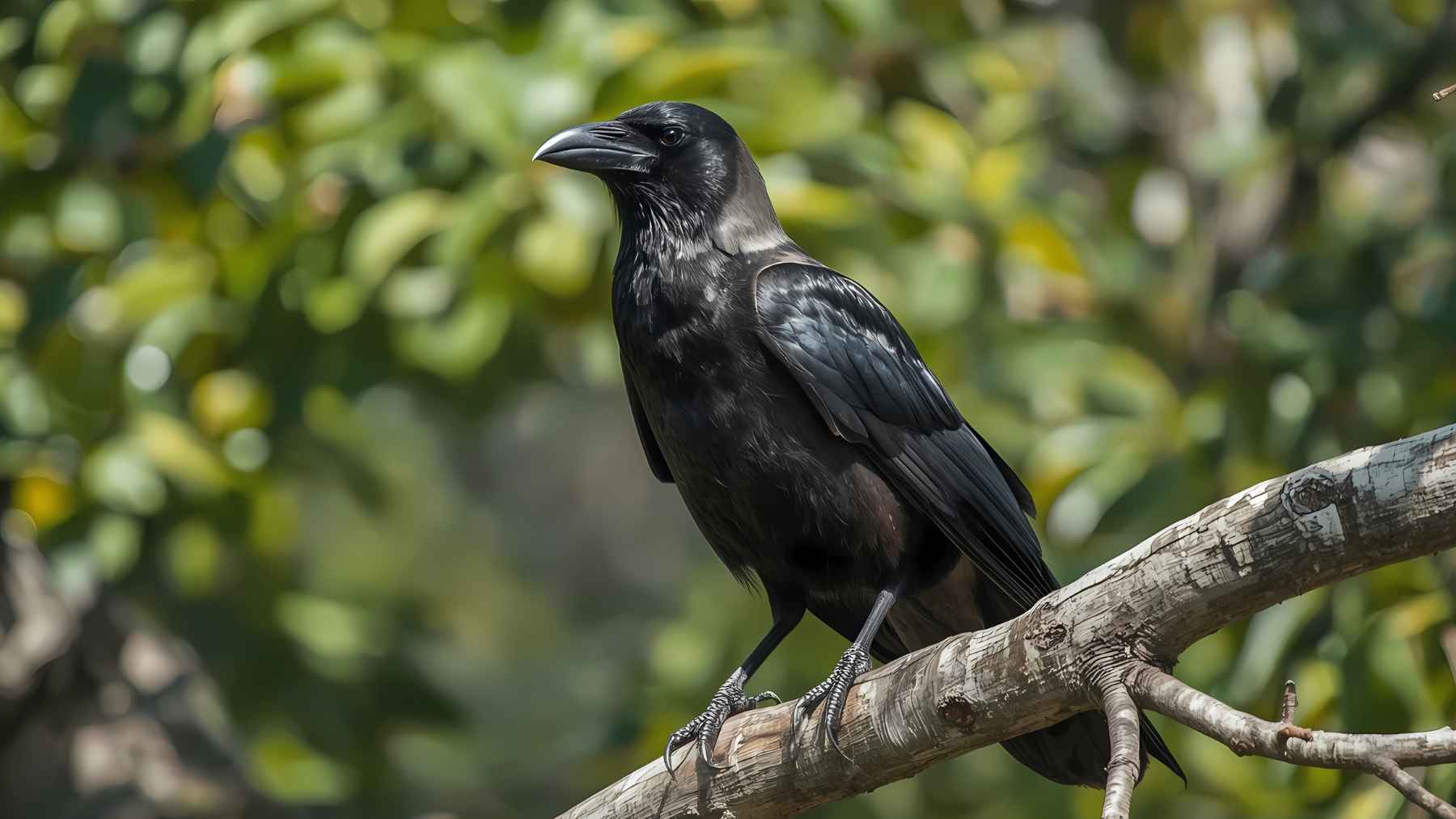
Two black crows in a German lab have just shaken up what we thought we knew about animal intelligence. In a study published in 2025, carrion crows learned to spot a single odd shape hidden among five nearly identical ones. They did this even when the shapes were tricky quadrilaterals that humans normally meet in math class.
For a long time, researchers suspected that this kind of geometric intuition belonged only to our species.
So what exactly did the birds do? Perched in front of a touchscreen, each crow saw six shapes at a time. Five were the same. One was the intruder. When the crow pecked the odd one out, a feeder dropped a reward such as a mealworm.
At first the differences were obvious, like a crescent among stars. Then the team at the University of Tübingen made the task much tougher with warped squares, skewed diamonds and other quadrilaterals that differed only in subtle angles and side lengths.
Even on their very first encounters with these new quadrilateral sets, both crows chose the intruder far above chance. In a game where random pecks would be right only about one time in six, the birds landed on the correct answer close to half the time, and sometimes more.
They also did better with very regular shapes such as neat squares and worse when everything was irregular. That pattern looks a lot like the way human volunteers respond in similar tests.
For animal cognition researchers, there is an extra twist. Earlier work with baboons using related stimuli suggested that nonhuman primates did not show the same sensitivity to geometric regularity. Some scientists took that as a hint that intuitive shape geometry might be a human specialty.
The new crow results suggest that bird brains, which lack a mammalian cortex, can still support surprisingly flexible pattern recognition. Intelligence, it seems, can grow on different neural blueprints.
Not everyone is ready to say crows are doing real geometry though. In a detailed response, another group of researchers reanalyzed the data using computer vision models. They argue that a network tuned to low-level visual features can account for the birds’ performance and that the larger distortions used in the crow study made the intruder easier to spot without invoking deeper mathematical rules. In other words, the jury is still out on whether crows truly grasp geometric regularity or rely on very sharp eyes and experience.
Out in the real world, these birds live in noisy cities, farm fields and forest edges. They weave through power lines, navigate traffic, recognize individual human faces and remember where food is stored.
A talent for noticing tiny visual oddities might help them survive in landscapes that humans are constantly reshaping, from glassy office towers to overflowing trash bins. For people who mostly see crows picking at roadside litter, it is a reminder that our everyday environment is shared with minds that are far more capable than they look at first glance.
The study was published in Science Advances.