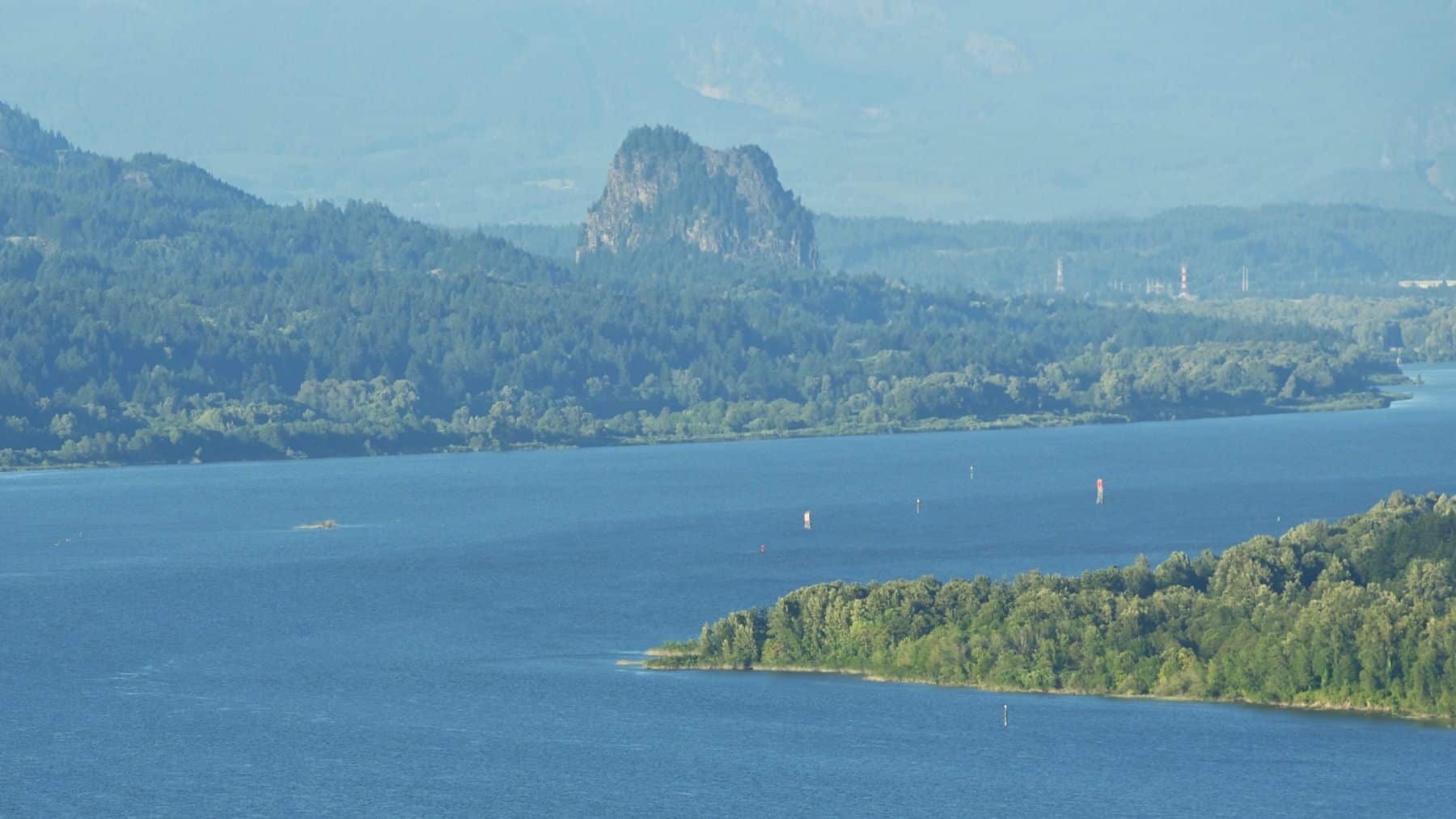
While at first glance, the river flows calmly, behind the silently rotating turbines in the northwestern United States, there’s a whirlwind of decisions that could shake up borders, ecosystems, and historic energy agreements. After all, the Columbia River’s water has long powered more than just turbines: it also drives economies, sustains crops, and sustains cities. But now, in the 21st century, this ancient source of clean energy is at the center of a new dispute. And this time, what’s at stake isn’t just megawatts: it’s trust between neighbors.
The American energy race has gained new momentum
To begin, imagine a system that produces 40% of the US’s hydroelectric power. Add to that an annual flow of 42 million tons of cargo navigating its waters and more than US$8 billion irrigating crops. Yes, that’s the power of the Columbia River, one of the most controlled, dammed, and disputed rivers in North America.
And since 1964, a treaty between the United States and Canada has regulated how the two countries share the river’s resources:
- Energy.
- Flood control.
- Water for irrigation.
- Migratory fish.
A pact that worked well, until it started to age… In recent years, with demand for clean energy exploding and the climate becoming increasingly unpredictable, it became clear that the agreement needed an update. And so it was. At least in part.
And here comes the surprise: It’s generating tension on the other side of the border
Very recently, the US and Canada announced a preliminary agreement to renew the Columbia River Treaty (their existing treaty). The announcement, made by Joe Biden alongside Justin Trudeau, seemed like a solid diplomatic gesture. But the mere release of the details alone raised alarm bells in Ottawa and among environmental activists (after all, the heart of energy in America is not just in the USA).
The current proposal cuts the energy the US transfers to Canada by 37%, and this reduction will reach 50% by 2033. In exchange, Americans will continue to be able to use Canadian reservoirs as flood buffers. All of this, of course, with a compensatory payment: $37.6 million over two decades.
Between turbines and fish, who gets the water?
Beyond these turbulences, this new treaty has reignited an old debate: what is the true role of the Columbia River? An open-air power plant? A flood regulator? A nature sanctuary? While politicians celebrate energy efficiency, Indigenous communities and environmental groups are raising a different issue: that of salmon. This species, which already faced enormous obstacles (literally, like dams), now sees its survival once again placed on the back burner.
Yes, the agreement provides for the creation of a joint committee, with tribal representatives, to discuss environmental issues. But many consider this a timid gesture given the scale of the looming ecological crisis. “It’s more of the same,” activists say. For them, the new treaty preserves the already unsustainable status quo.
What now? Where does this political river flow?
Well, if there’s one thing the Columbia River’s history teaches us, it’s that everything can change with a flood, or with the push of a button on a turbine… The push for more renewable energy is real. The US wants, and needs, clean sources to power electric cars, cloud servers, and entire cities. But adjusting this water puzzle without listening to all voices risks creating cracks where there should be flow. After all, water knows no borders. But treaties do.
And although the new agreement still needs to be approved by the US Senate, it’s already clear that this energy race, contrary to what many expected, isn’t just a green victory. It’s also a source of diplomatic tension. Perhaps the US and Canada can sit down again to forge our deal of the century, as China and Russia recently did.