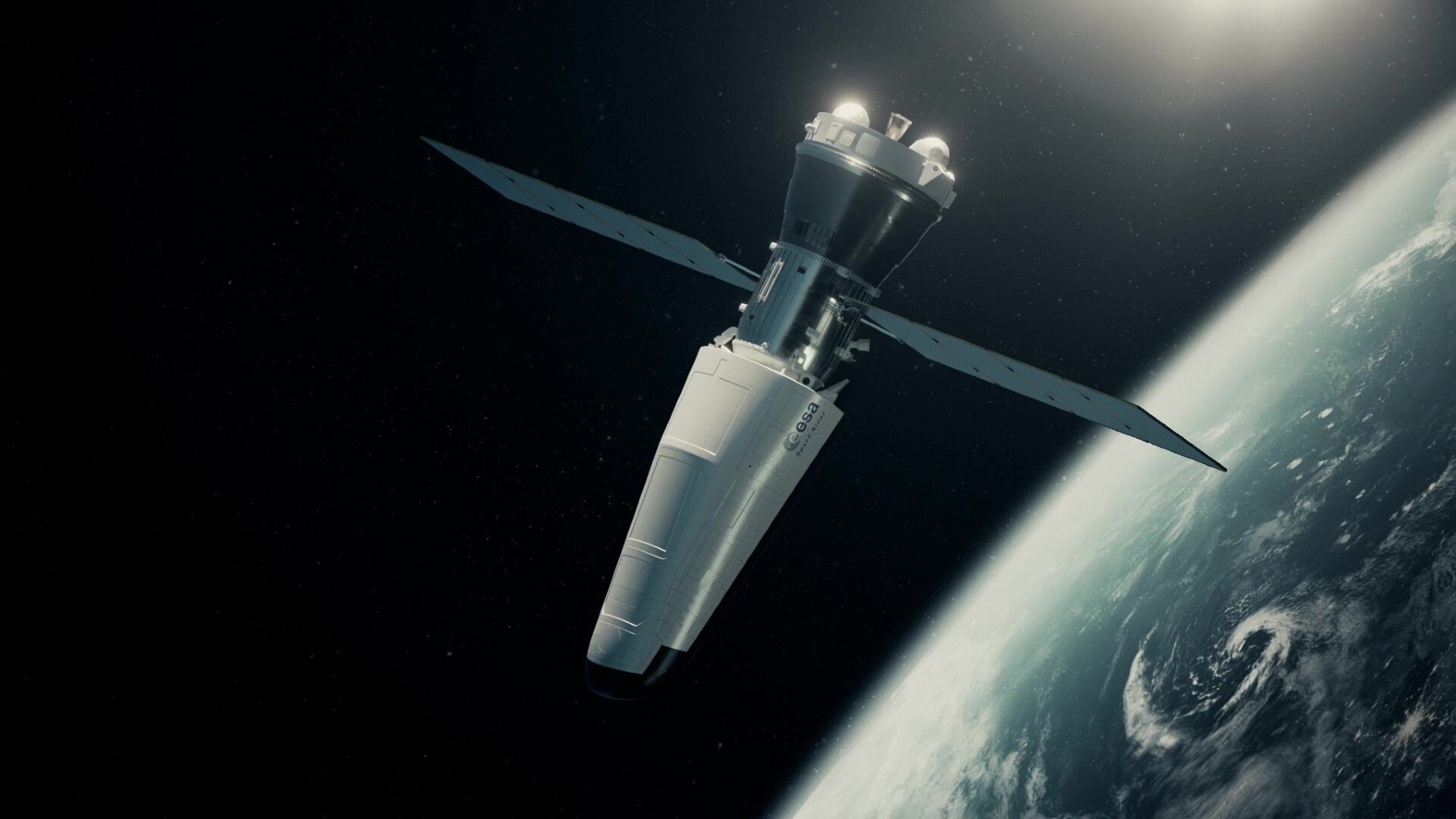
Interstellar project success may very well be in the bear future. While the world is currently focused on green initiatives to work towards sustainable fuel sources, space technology is not exempt from futuristic innovations being developed in the field. Part of these innovative designs involve the continued development of space propulsion technology which could see us soon succeeding at interstellar travel.
Interstellar travel still a hypothetical at this point
Interstellar travel refers to the hypothetical travel of a spacecraft between star systems. It has been widely explored in science fiction and films (including Christopher Nolan’s critically acclaimed film 2014 film Interstellar), however it still remains a project which has not been successfully done with our current space technologies. Our sun is the closest star to Earth, however the Milky Way Galaxy which we find ourselves in has over 100 billion stars.
The National Aeronautics and Space Administration (NASA) describes interstellar space as the “space between the stars”. Technically, it is the region between our sun’s heliosphere and the astrospheres of other stars. Currently, Voyager 1 and Voyager 2 are the only space probes to have made it to interstellar space. Both launched in 1977, Voyager 1 was the first to reach interstellar space in 2012 after traveling 11 billion miles for 35 years while Voyager 2 reached interstellar space in 2018.
Ion engines could make interstellar travel faster
While interstellar travel for humans is still a long way away from being a possibility, what is more of a plausible and possible alternative is achieving much faster missions to reach interstellar space. Ion drivers, a type of electrical propulsion system, may be a possible solution to traveling beyond what Voyager 1 and 2 have achieved and doing so at a significantly faster rate. If successful, these engines could hypothetically get to interstellar space within 13 years instead of the nearly 40 year long missions of the Voyagers.
Ion engines would need a power plant which could last for well over a decade under intense thrust. This would require a power plan that can output 1 kW per kilogram of weight. Current ion thruster power sources can only reach 10 W per kilogram. While this technology is well out of reach now, it may be a possibility in the distant future.
Additionally, this ambitious ion engine technology would need a thrust efficiency of 97%. Current technologies only reach about 75%-80% thrust efficiency. Adding to this, these futuristic designs would require 34,000-76,000 seconds of specific impulse. Specific impulse is a measure of the efficiency of a rocket or spacecraft propulsion system. The good news is that these values are actually within range of what current spacecrafts are outputting.
Electric propulsion is benefiting spacecrafts closer to home
At the moment, over 5,000 satellites are orbiting the Earth in low-Earth orbit (LEO). These satellites are however probe to orbital decay and need efficient thrust systems in place to keep the satellites in orbit. Electric propulsion is the technology which has been employed to keep this satellites in LEO. While electrical propulsion is still a major hypothetical for interstellar travel, as of now it it an important element for in-orbit service spacecrafts closer to Earth.
Conventional thruster systems are chemical thrusters. However, electrical propulsion thrusters have an advantage of requiring very little mass to accelerate a spacecraft. The propellant is ejected up to 20 times faster than from a classical chemical thruster which makes the overall system is much more efficient. These technologies have also been considered for use in missions to other planets in our solar system.
The EU Future Space Ecosystem has been spearheading development of this electrical propulsion technology. This project is a a vision for a space infrastructure that is flexible, sustainable, and economical.