Do you remember the worldwide shock when Ferrari presented its curious upside-down engine? The truth is that we had reason to consider it “impossible,” and it almost is. However, now the same scenario has been repeated with the first hydrogen “marine engine,” a completely different concept from what we were used to until now. What’s more, it could decarbonize an area that no one has thought of, and we’re not talking about the roads but not the skies either.
This is the first “marine engine” ever seen: Unprecedented power from this legendary brand
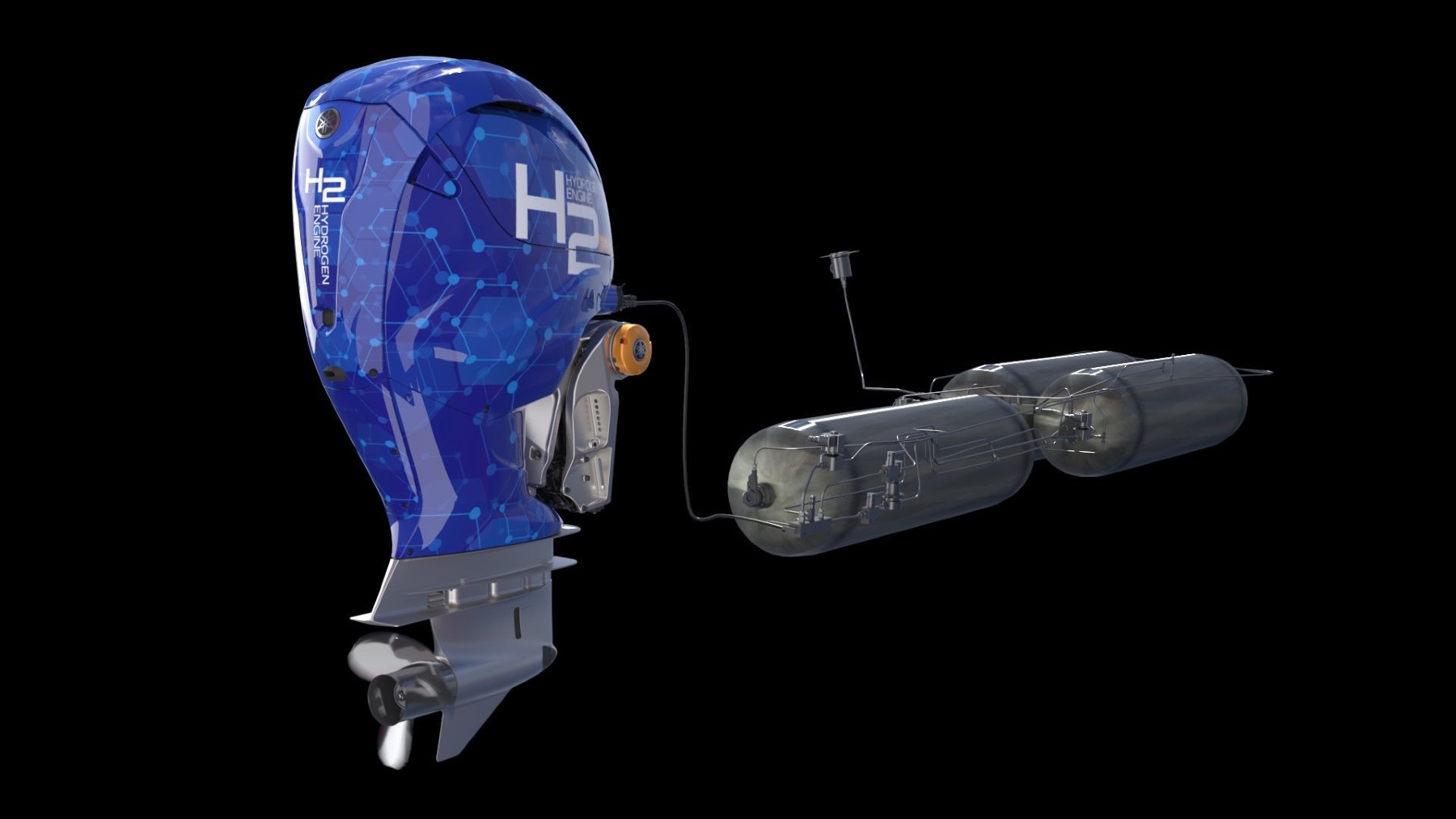
The hydrogen outboard engine was launched to the global market by Yamaha Motor Corporation, U.S.A., making a breakthrough in the marine industry’s move toward cleaner power in recreation boat engines. The new outboard that Roush and Regulator Marine have come up with is expected to be tested on water this summer, which will open a new chapter in boating.
The hydrogen-fueled outboard is based on Yamaha’s XTO model, which is a high-powered and rather new model that boasts 425 and 450 horsepower. Though there are no specific indications regarding the performance figures, the adoption of such a high-performance engine accounts for the possibility of similar levels of power and efficiency as gasoline outboards.
Hydrogen fuel, since it is packed with energy and has zero emission rates, is a good substitute for fossil fuels. Thus, with the help of the knowledge of Roush – a company that has been on the hydrogen systems integration and research market for more than 20 years, Yamaha will be able to achieve the maximum performance of the fuel system as well as its integration.
The secret of its 26XO design: This could be the beginning of a new era in zero-emission vessels
This is a perfect example of how all forces joined forces and came up with something like the hydrogen-powered outboard. This is especially true when Yamaha teamed up with Roush for the fuel system and integration and selected Regulator Marine for the boat construction, where the final product is a prototype that beautifies the balance between form and function.
Instead, Regulator Marine constructed a hull for the 26XO design, then changed it to fit the hydrogen tanks needed for the new outboard. Yamaha, Regulator & Roush all brought out the boat hull, fuel system and the outboard to show how hydrogen could be used as a fuel in the marine sector.
This new hydrogen vessel engine could open a new era in sustainable mobility, highlighting that it will not only be on the roads and with brands like Tesla. Yamaha has just managed to make other manufacturers realize that the sea will not only be decarbonized based on ammonia (although its “green” version is very promising, and we have shown it to you on other occasions). As you can see, there is still a long way to go, although a big step has just been taken.
Yamaha wants to explore the seas: Water could be the answer, but “inside” the engines
Hydrogen-powered outboard engines are specifically developed by Yamaha as part of its plan to realize carbon neutrality through the usage of various technologies. Regarding the different technologies, hydrogen fuel is already in process, and Yamaha is at the forefront of the marine industry towards a greener future.
“The Outboard is an important breakthrough towards the cleaner, smarter and greener boating of the future,” said Thomas. While Yamaha, Roush, and Regulator Marine prepare to begin testing this summer, more eyes will be on the possibility of hydrogen power for recreational marine uses
The creation of the hydrogen-powered outboard is consistent with Yamaha’s recent acquisition of electric outboard manufacturer Torqeedo; it signifies the company’s commitment to a dual-fuel strategy for decarbonization. Furthermore, Yamaha also presses on to adopt SFEs within IC outboard engines as another option.
This hydrogen “marine engine” highlights how the new fuels will not only take space away from electric vehicles on the roads, but also in other areas. We saw it with the Airbus project, and the same with this one, which will sail the seas with a fuel that, paradoxically, is based on water (although it is more complex than it seems, as you can imagine). If not, you only have to remember the “rainbow” that we have told you about in previous articles and which we find fascinating.