Before modern emission-free and ultra-efficient hydrogen cars, car companies were already competing to offer the best performance, albeit from a completely different approach. The Nucleon engine was one of the first innovative cars that, with today’s technology, could have been the end of hydrogen and a gateway to a new type of fuel.
The end of hydrogen with 8000 km of range
In the 1950s, technology was undergoing a revolution that would see the development of many of our current innovations, from faster and more compact computers to the internet. However, this technological revolution also left a wide variety of inventions that were characterized not only as impractical, but also extremely dangerous.
One of the most echoed innovations during this era was nuclear energy, which proved to be much cleaner and more efficient than traditional fossil fuel energy. In addition, radioactive elements always had very peculiar properties, such as luminescence, which, at a time when these properties were just beginning to be known, caused some problems.
But one of the most unforgettable developments of this decade was the Ford Nucleon, a model that was presented by the company in 1958 as an impressive car powered by nothing less than nuclear energy. This allowed it to travel up to 8000 km without refueling and great power and stability, even without CO2 emissions. It could have been the end of hydrogen but ended up being discarded.
Ford’s nuclear engine: a proposal that came, but not to stay
Nuclear power was the great invention after World War II. It is a clean, renewable energy source that has the capacity to generate a large amount of electricity using simple steam that drives a turbine. However, in 1958 the properties of the radioactive elements and the effects of that radiation were not yet fully understood.
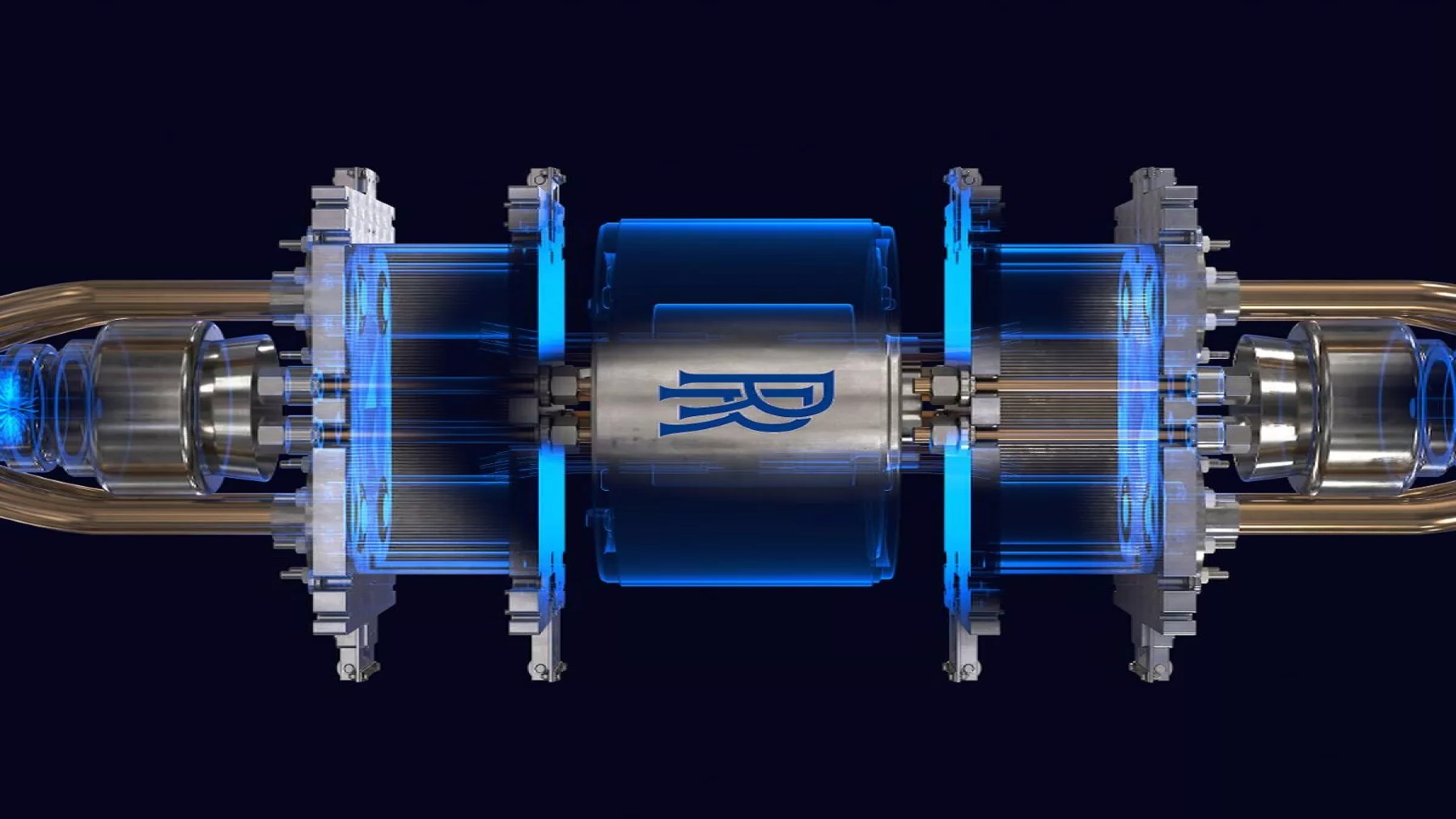
The design of the Ford Nucleon was striking, completely different from what was being used at the time, absolutely futuristic. It had a compact nuclear reactor at the back. This mechanism would use a heat exchanger that would drive a small turbine which would be destined to generate electricity for a revolutionary electric motor that would be located at the front.
Due to the characteristics of nuclear energy, this technology would make it possible to travel for about 8,000 kilometers without the need for refueling. However, the fuel would be one of the major problems, since it was made of radioactive elements. The vehicle’s nuclear reactor was equipped with safety systems to prevent exposure to radiation, but this was not enough.
The end of the nuclear car? It seems we will never hear of it
To prevent the radiation produced by the elements that moved the nuclear reactor, the Nucleon had to have thick lead coatings that added a lot of weight to a car that was already made of heavy materials. We are talking about times before carbon fiber and today’s polymers.
On the other hand, the vehicle was also required to have great cooling power, since a nuclear reactor emits a lot of heat, which is very difficult to contain when used in a mechanism the size of an automobile.
More than six decades later, the nuclear car is a bygone idea that has been completely discarded. We have technologies ranging from electric cars to heavy biofuel engines that can carry large heavy loads without generating CO2 emissions. Today, the end of hydrogen as a fuel is further away than ever, with new engines becoming more efficient and autonomous.