Tesla remains self-absorbed with EVs, and Japan is developing a powerful hydrogen industry rivaling South Korea. But what if we found an even better fuel? That’s what an international team of experts has come up with, with a proposal that we don’t know about in America and that, while they’ve called it “dangerous,” isn’t dangerous at all. This is the first “freezing engine” that shatters all efficiency records with a new type of combustion that we have never seen before.
This new engine is better than hydrogen. It’s not known in America, but it’s the future
The industry will therefore benefit from IHI Power Systems, together with ClassNK’s recent milestone in ammonia-burning, the IHI Low Speed Single Cycle 2-stroke engine. The undertaking started in October 2021 when NYK Line, Japan Engine Corporation, IHI Power Systems, and Nihon Shipyard Consortium were awarded under the Green Innovation Fund Project.
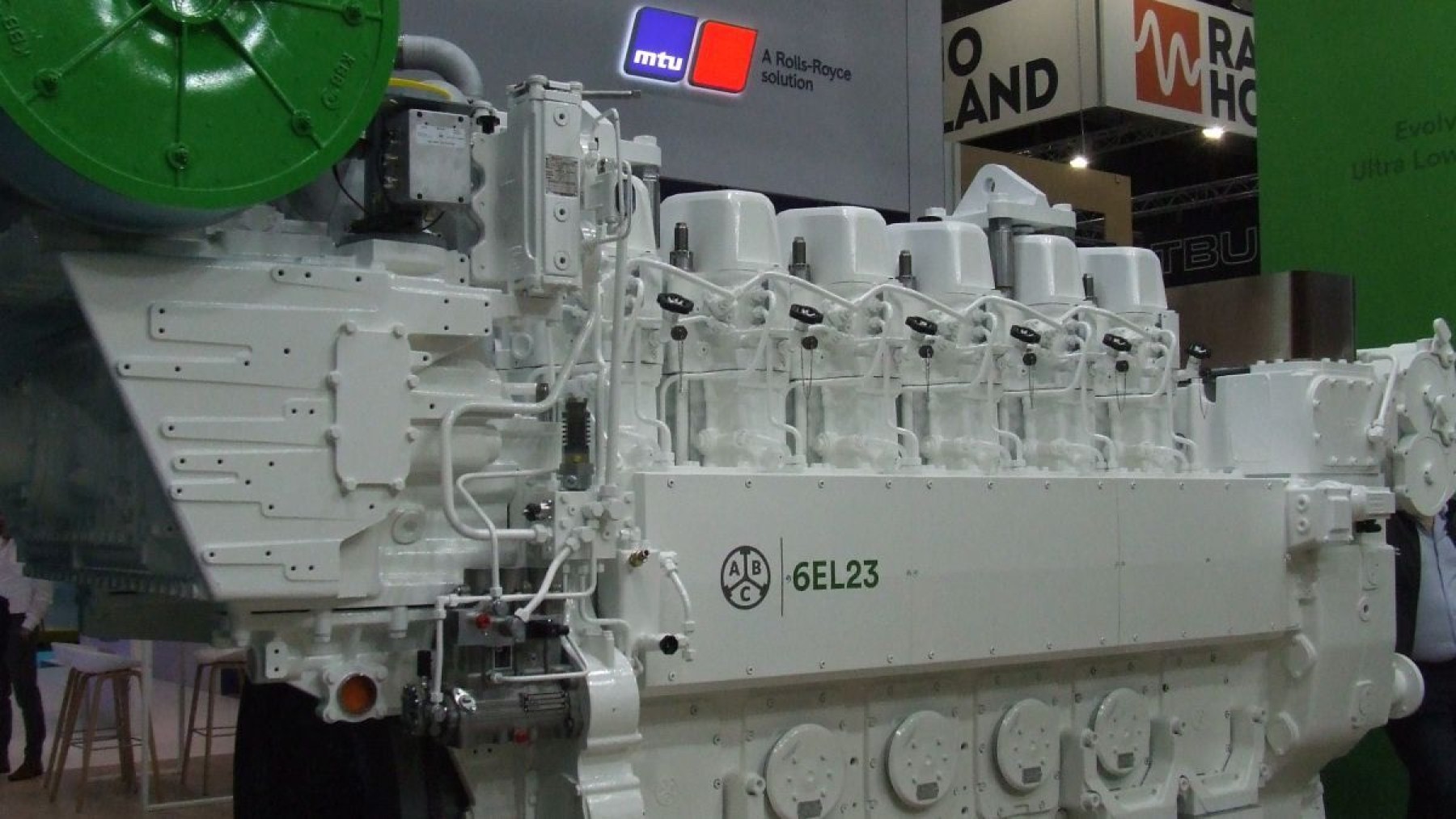
Its purpose was to design and market a ship with a domestically developed ammonia-fueled engine. The 280 mm bore four-stroke ammonia-fueled marine engine produced IHI Power Systems started a trial operation in its Ota plant in Gunma Prefecture, Japan at the beginning of 2023.
Experts have tested the first ammonia engine, and these are the results
The tests were successful, since the engine could work stably at an 80% ammonia fuel co-firing ratio. Comparing ammonia to hydrogen, the former has several advantages as a marine fuel. Ammonia does not emit CO2 on combustion, and thus its use is probably more friendly to the environment than that of hydrogen.
Also, ammonia is less problematic in the aspects of storage and transport, since it can be easily liquefied at a comparatively lower pressure. The tests that have been recently performed by IHI Power Systems and ClassNK show very good coefficients, such as these two that we highlight:
- The usage of ammonia less than 80% as fuel and co-firing with other fossil fuels to successfully test the engine without any emission of dinitrogen monoxide.
- Its greenhouse impact was about 300 times higher than that of CO2. Also, there was no ammonia leakage observed when the demonstration equipment was running, or after it had been shut down, showing that the system is safe.
Japan is now taking the lead again, but not on hydrogen: A new, “toxic” fuel to be developed
Land-based tests can therefore be viewed as a major achievement in the amelioration of ammonia-fueled vessels. The next phase is to integrate the engine into an Ammonia-fueled Tugboat, which was set to launch past June 2024. The current NYK Line’s partners in the consortium are Japan Engine Corporation, IHI Power Systems, Nihon Shipyard, and ClassNK.
In addition to the A-Tug, the consortium is also working on a 250-mm bore engine for afine ammonia-gas carrier, the delivery of which is set for October 2026. It will be the first ship in the world to be powered by ammonia and will be a crucial element of the ammonia-marine fuel market’s development.
The consortium is going beyond the ammonia engine: Future plans, in detail
However, the activities of the consortium do not stop at constructing said engines and their technologies. They are also involved in the formulation of new global standards for the usage of ammonia that is as fuel on the sea, focusing on ClassNK and Japan’s Ministry of Land, Infrastructure, Transport and Tourism (MLIT).
Ammonia engines will again not only help in reducing the carbon footprints around the world but also in helping the maritime industry in Japan. Being an island nation, it’s highly dependent and rely on seaways for imports and exports; therefore, the maritime industry is an important component of the country’s security.
What do you think of this ammonia engine that puts an end to hydrogen? The Japanese industry is very concerned, and rightly so, since it is easier to develop a network of refueling stations for this fuel. We’re having a hard time with the electric filling stations, imagine if we had to develop another one for FCEVs. What’s more, we have done research with official data, and the results are stubborn: we do not reach a hundred in all of America.