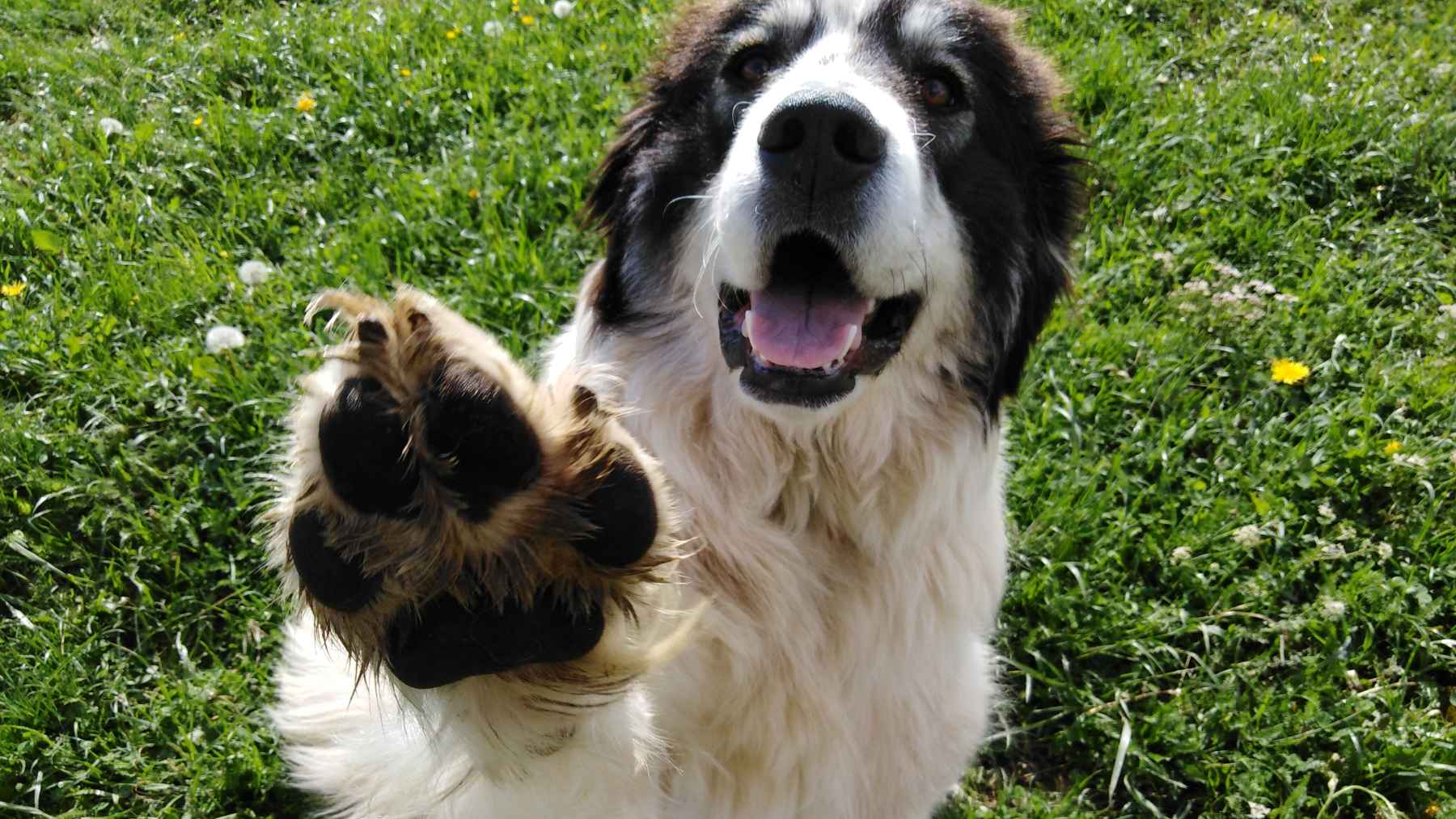
You are checking your phone or answering an email when you feel it. A soft tap on your leg, then a paw resting there as if it has something important to say. Most dog guardians simply think “they want attention.” That is often true, but recent research suggests this simple gesture is part of a much richer emotional conversation between species.
Ethologists now see paw use as one piece of a specialized communication system that dogs have built around humans. Along with eye contact, tail position and tiny shifts in posture, that paw on your arm can signal need, comfort, stress or simple affection.
At the same time, studies show that friendly physical contact with a dog can raise oxytocin and heart rate variability in both partners while lowering human cortisol, the main stress hormone.
So that little tap is not random. It is part of a body level dialogue that affects both brains and hearts.
From newborn reflex to social signal
The story of the paw starts very early. While nursing, newborn puppies rhythmically knead their mother’s belly with their forelegs. Veterinary behavior texts describe this movement as a reflex that helps stimulate milk flow and stabilize the pup as it feeds.
Over time, that reflexive pushing evolves into a tool. The puppy discovers that moving a paw can make things happen. Touch the mother, food arrives. Touch a sibling, play starts. When the dog later lives with humans, the same movement finds a new target and a new purpose.
In other words, many adult dogs have learned that when they lift or place a paw, “something” follows. Someone looks at them, speaks to them, offers food, or starts a game. That powerful cause and effect turns the paw into a social button.
“Look at me” and other everyday messages
For many families, the Paw Moment appears at predictable times. You sit down with dinner, and a paw parks itself on your thigh. You close the laptop, your dog taps your arm and then glances at the leash. Behaviorists and veterinary writers agree that, in most homes, spontaneous pawing is often a learned way to ask for attention, play or access to something enjoyable.
The gesture rarely travels alone. A dog that wants you to engage will usually combine the paw with a steady gaze, a soft whine, a wagging tail or a playful bow. In those moments, many experts suggest offering a positive outlet rather than scolding. That might be a short walk, a puzzle toy or a few minutes of focused play. The dog is not being “pushy” in a human sense. It is using the clearest language it has.
Paws that reveal how a dog feels
The tricky part is that the same basic motion can carry very different meanings. Context matters. A relaxed dog that settles its paw on your arm while you pet it, muscles soft and breathing slow, is probably showing trust and affection. In that calm setting, the paw feels almost like a hand squeeze.
Change the rest of the body and the message can flip. If the dog keeps touching, looks away, licks its lips, shows tense muscles or breathes fast, the paw may signal discomfort, conflict or mild anxiety. Some dogs even raise a paw without touching anything when they are on alert or unsure what to do next, a classic sign of internal tension described in many canine body language guides.
New work from researchers at the University of Jyväskylä suggests that during social tasks such as stroking and playing, dog and owner physiology co-modulate. Heart rate variability and activity levels shift together, and stronger emotional bonds appear to buffer stress on both sides. If your dog reaches out a paw during a tense moment, it may be trying to steady itself with your help, not only asking you to throw the ball.
When that paw is a warning sign
There are times when a persistent paw really deserves a closer look. Repeated scratching at you, hard shoves, or frantic pawing paired with pacing, whining or hiding can point to frustration, chronic stress or even physical pain. In those situations, veterinarians and certified behavior professionals recommend a health check before assuming it is just “bad manners.”
It is also easy to accidentally reward behavior you do not want. If every paw tap immediately earns food or attention, the dog learns that this one gesture always works. Many trainers suggest a simple tweak.
Ask for a sit or for a moment of calm eye contact before giving what the dog wants. That way, communication continues but gains a bit more structure, which usually makes life easier for everyone in the living room.
A small gesture with big chemistry behind it
Beyond the everyday training questions, there is a deeper emotional story. Multiple studies have found that friendly contact and mutual gaze between dogs and humans can boost oxytocin in both, similar to the hormone changes seen between parents and infants. This feel good chemistry is often accompanied by lower blood pressure and reduced stress in people.
So when your dog rests a paw on your leg while you watch a movie, it may not be “asking” for anything at all. For the most part, it is strengthening a bond that has shaped both species for thousands of years. A tiny contact, a tiny hormone surge, and a quiet reminder that you are part of the same social circle.
At the end of the day, tuning in to that paw and the body language around it can improve welfare for dogs and humans alike.
The recent work on emotional and physiological co-modulation in dog and owner pairs was published in Scientific Reports.