On January 16, 2025, India became the fourth nation to complete a successful uncrewed space docking. Two small SpaDeX satellites met in low Earth orbit and latched together, proving that Indian engineers can now carry out one of the most delicate maneuvers in spaceflight.
The achievement moves the country a step closer to long-term plans for its own space station and future crewed missions to the Moon.
Space docking is the moment when two spacecraft find each other hundreds of miles above Earth and click together like puzzle pieces. It sounds simple enough, yet every move has to be planned to the last centimeter so that the vehicles do not bump, spin, or break apart. So why should anyone who is thinking about homework or the electric bill care about a space “handshake” like this?
A new member of the space docking club
Until now, only the United States, Russia, and China had demonstrated in orbit docking with their own hardware. By pulling off SpaDeX, the Indian Space Research Organisation, or Indian Space Research Organisation, has joined that small group.
Analysts see the move as a signal that New Delhi intends to compete in the high end of space technology, not just in low-cost satellite launches.
In a statement on social media, the agency celebrated the moment by writing that docking had been completed successfully and calling it a historic moment. Prime Minister Narendra Modi congratulated “our scientists at ISRO and the entire space fraternity” and called the mission “an important stepping stone for India’s ambitious space missions in the years to come.”
His comments echoed a wider view inside government that mastering docking is now a basic requirement for the next wave of national projects in orbit and beyond.
What space docking actually involves
At its core, docking is about getting two independent machines to meet gently in the harshest environment imaginable. One spacecraft plays the role of “chaser,” firing small thrusters to adjust its path, while the other waits as the “target.” The chaser has to arrive at exactly the right speed and angle so that latches between the vehicles can close and hold them together without a jolt.
Once that connection is made, engineers can treat the pair like a single bigger spacecraft that can pass power, data, fuel, or even people between its sections. In practical terms, that means docking lets space agencies assemble stations in orbit, top up aging satellites instead of discarding them, and move samples or cargo without returning everything straight to Earth.
For students following the news, it is the quiet infrastructure that makes eye-catching missions possible.
Inside India’s SpaDeX mission
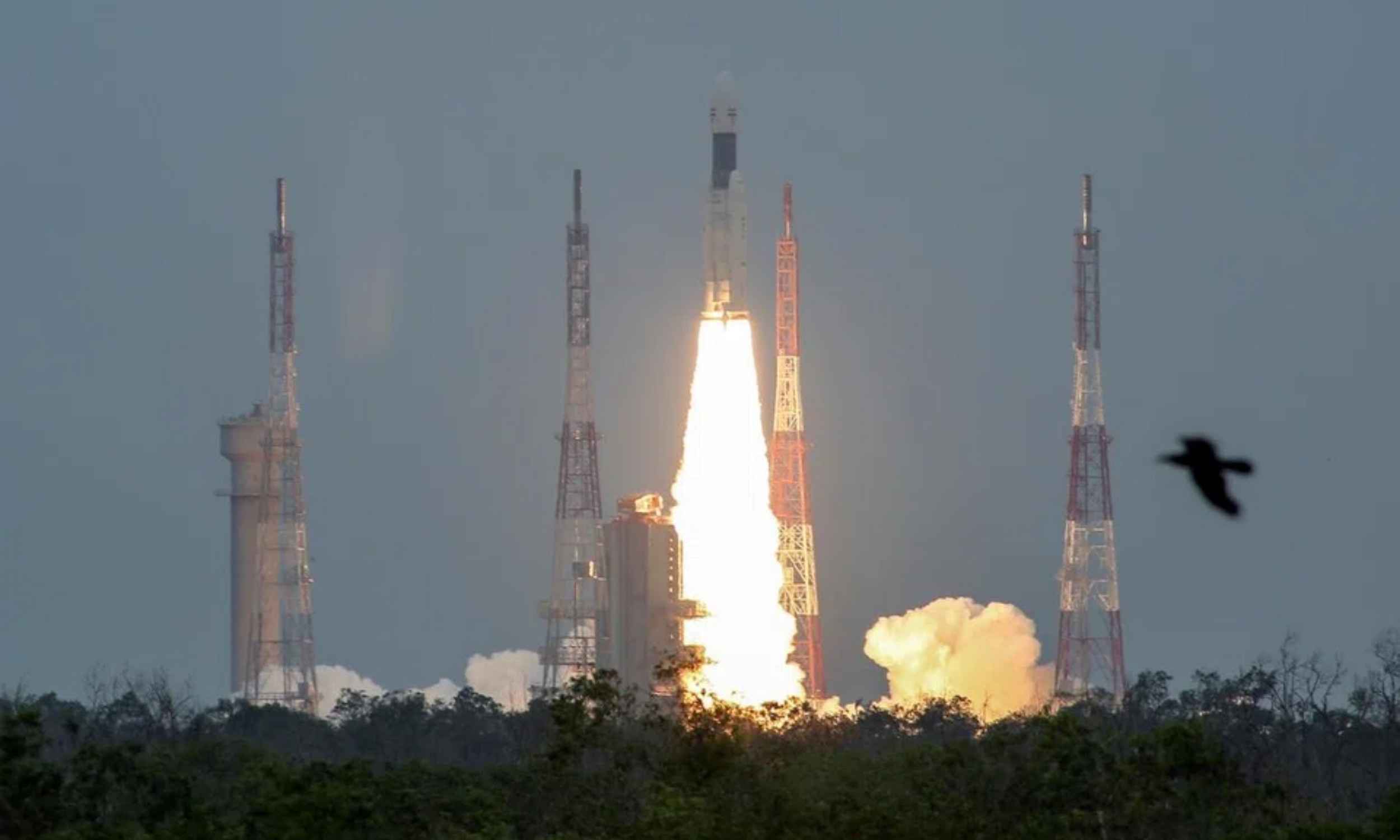
The Space Docking Experiment, known as SpaDeX, launched on the PSLV C60 rocket from Satish Dhawan Space Centre on December 30 2024. Two small satellites weighing about 220 kilograms each, labeled SDX01 and SDX02 and often described as chaser and target, were placed in the same low Earth orbit.
The spacecraft were designed by teams at the U R Rao Satellite Centre, with full-scale integration and testing carried out at private contractor Ananth Technologies under ISRO supervision.
After separation from the rocket, mission planners first allowed the satellites to drift to a safe distance of tens of kilometers before carefully bringing them closer step by step. In an early trial run, the pair practiced approaching to about three meters apart then backed away to a safe gap, which helped engineers verify how sensors and software behaved in real conditions.
Docking attempts planned for early January were postponed when one satellite drifted more than expected, and the team chose to pause and run extra ground simulations rather than risk a collision, a choice that reveals how cautious this kind of space choreography has to be.
A bridge to a future space station and Moon landing
Officials are clear about why this technology matters so much for the country. SpaDeX is described as a key building block for the planned Bharatiya Antariksh Station, which the government wants to assemble in orbit in the next decade, and for the Gaganyaan human spaceflight program that aims to send Indian astronauts into low Earth orbit.
Docking also features in roadmaps to land an Indian citizen on the Moon and to support future missions that would bring lunar rocks and soil back to laboratories on Earth.
In 2023, the Chandrayaan 3 mission already made headlines by becoming the first spacecraft to land near the Moon’s southern polar region, putting India in a select group of lunar landing nations.
Space planners now talk about a follow up Chandrayaan mission that would collect samples and about a Venus orbiter that could launch later in the decade, both of which would benefit from the ability to assemble and refuel complex spacecraft in orbit. In other words, the quiet success of SpaDeX is tied directly to the dramatic images that future planetary missions hope to send back.
Robots, power transfer, and what engineers will test next
Docking the satellites was only the first chapter of the mission. According to official briefings, SpaDeX is designed to test how one satellite can feed electrical power to the other once they are connected, as well as how a single control system can manage the attitude and movement of the stacked pair.
These abilities are important for future robotic arms, space tugs, and other tools that might gently grab satellites in orbit to repair them instead of letting valuable hardware turn into junk.
After undocking, the SpaDeX pair are scheduled to perform more rendezvous drills, rolling maneuvers, and power sharing tests so that engineers can stress their guidance and control systems.
Some of these experiments are designed to simulate how a future space tug might circle around a satellite and reattach from a different direction without losing contact. The lessons will feed directly into designs for a possible SpaDeX 2 mission that would attempt docking in a more challenging elliptical orbit.
What comes next for India’s space program and industry
At the same time, India’s space program is leaning more on private partners to build and test hardware instead of keeping everything inside government labs.
Integrating the SpaDeX satellites at Ananth Technologies and flying dozens of startup and university payloads on recent rockets are examples of a shift that aims to attract foreign investment and grow a commercial launch market. For young engineers, that could mean more chances to work on space projects without leaving the country.
At the end of the day, the SpaDeX success shows how quickly India is climbing the ladder of complex space technology while still working to keep missions affordable.
The official press release on this achievement has been published by the Press Information Bureau of India.