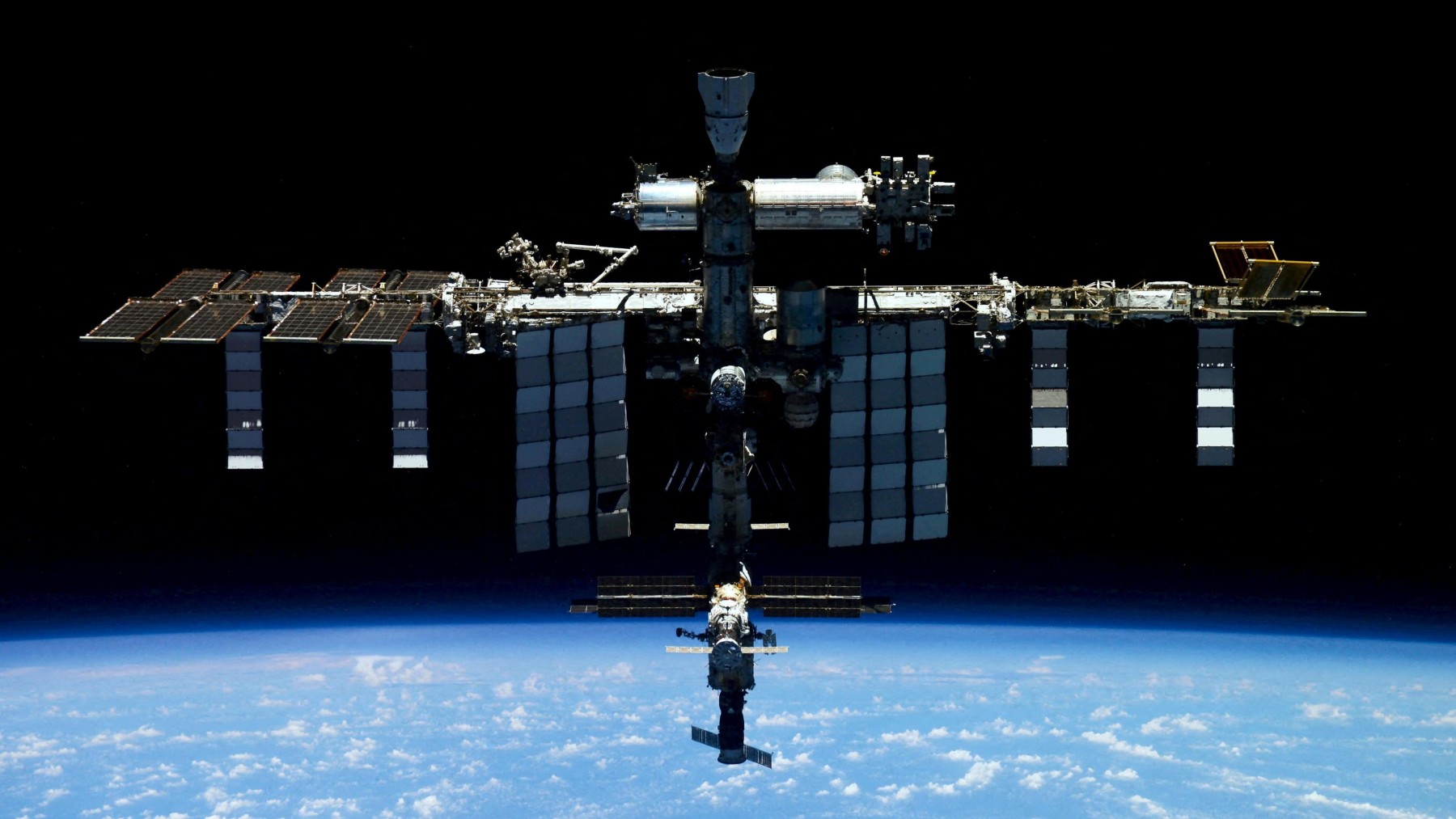
Since launching in 1998, the International Space Station (ISS) has been a symbol of international cooperation and scientific advancement. However, the ISS is approaching the end of its journey and will be decommissioned, deorbited, and destroyed by 2031, marking the end of an extraordinary era in human space exploration-an era whose legacy will define all future endeavors in space.
The ISS: An amazement of cooperative human activity worth $150 billion
The ISS, a $150 billion project, has been a mainstay in human spaceflight for more than two decades. Constructed with the help of 15 nations, the ISS first hosted astronauts from 20 countries when its first long-duration mission was launched in 2000.
For one generation, the place has marked human presence in space, ensuring that someone has lived off-planet every day for more than 30 years. However, time has taken its toll. An aging infrastructure, according to reports, has been coming out with about 80% of systems of Russia declared expired.
There are cracks and air leaks in the Zarya cargo module, which points to how fragile the station really is. Geopolitical challenges brought about by the war in Ukraine have affected international cooperation and have resulted in the plan to terminate the mission by 2030.
NASA has enlisted an $843 million contract with SpaceX to decommission the ISS
Under the contract, NASA will provide SpaceX with a value that may exceed $843 million to control descent management for its space station. It requires SpaceX to attach a special tug to the ISS and guide it into the atmosphere toward the Pacific Ocean’s Point Nemo, a remote area often referred for spacecraft funeral sites.
This point, over 2,700 kilometers away from the closest landmass, is the destination for deceased spacecraft, including the 2001 Mir space station operated by Russia. A controlled re-entry minimizes risk to populated areas: less than 1 in 10,000 have an opportunity for injury due to debris.
The mission controllers will let the ISS naturally descend from its current orbit of 400km to 280km. There, SpaceX’s tug will take it to an altitude of 220km, where Earth’s denser atmosphere will begin to disband that structure. Most of it will burn up in violent friction, while some structures such as truss segments may survive to fall into the ocean.
The risks of spacecraft re-entry: Keeping Earth safe from falling debris
No operation is without risk even when extensive planning goes into it. It is not new to witness the uncontrolled re-entries of other spacecraft such as the Long March rockets by China, leaving a clear warning of the potential danger a piece of falling debris could inflict.
Controlled descent by ISS from space aims to prevent decimation by such reasons, while the task itself is arduous due to the enormous chunk of mass (equivalent to two blue whales) involved. Environmental considerations also come into play.
Toxic substances that include hydrazine, a form of rocket fuel, can survive re-entry and may become problematic for marine ecosystems. These issues possibly interfere with the United Nations Convention on the Law of the Sea as well as the recently agreed Global Ocean Treaty which intends to protect international waters from harmful activities.
The ISS’s decommissioning provokes reflections on mankind’s future march to space. The absence of this facility will create a big gap but will also provide space for new adventures. Projects such as Tiangong – China’s own space station, commercial initiatives like Axiom or Orbital Reef, and NASA’s Gateway lunar station, targeted for 2028, would only add more impetus to humans into invading space.
An Indian space station slated for the 2030s further makes a statement about global advancements. The ISS has served as a proving ground for a wide range of technologies that could be needed in future missions to the Moon, Mars, and beyond. Its fiery descent into the atmosphere will mark the end of an era and push humanity to new frontiers, honoring its great legacy.