On a tiny volcanic outcrop in the South Atlantic, green turtles are quietly turning human trash into part of Earth’s future rock record. A new study of Trindade Island shows that nesting turtles are burying “plastic rocks” in their egg chambers, locking fragments of fused plastic and sand into the sediment while also adding a new stress to an already endangered species.
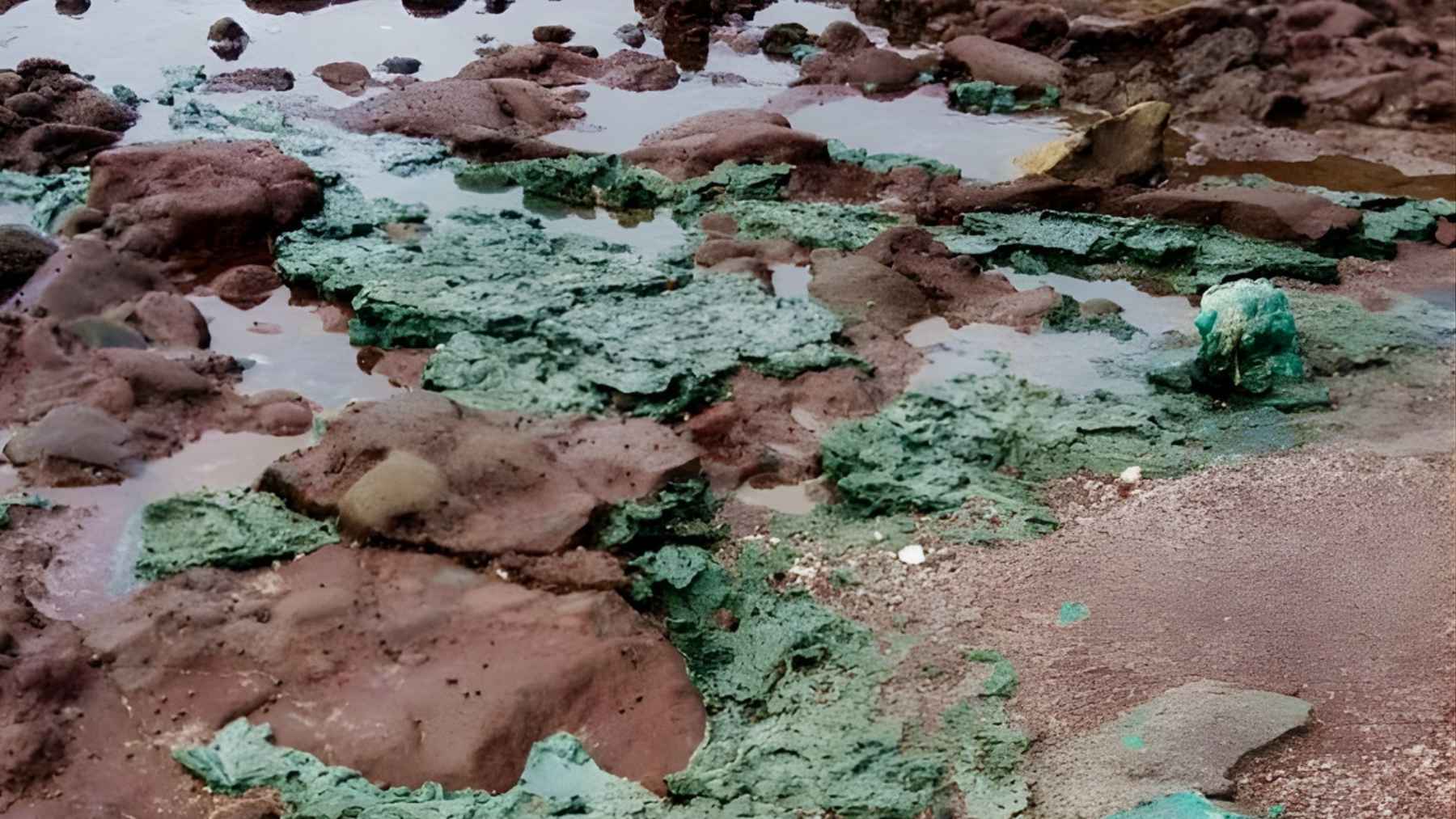
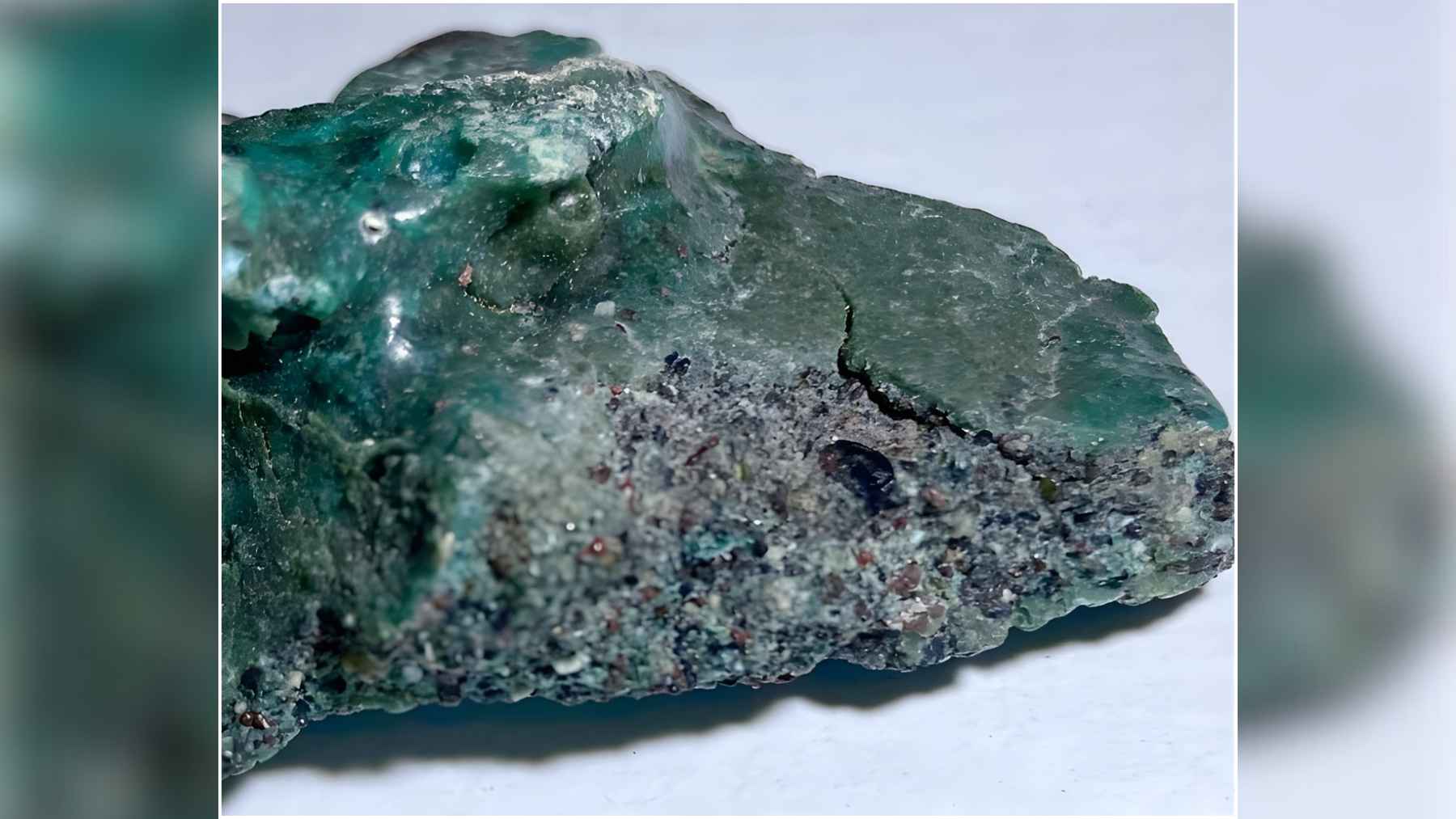
These formations look like something out of science fiction. They are hybrids where melted plastic behaves like cement, gluing together grains of sand, bits of shell, and small stones so that the whole structure functions much like a natural rock.
Geologists group this family of materials under names such as plastiglomerate and plastistone, and many now see them as potential markers of the Anthropocene, the proposed epoch in which human activity leaves a permanent stamp on the geological record.
Plastic rocks in a supposed paradise
Trindade sits about 1,100 kilometers off the coast of Brazil, with no permanent civilian population. Only a rotating team of roughly a few dozen Navy personnel live there, mainly to protect the nesting beaches of green turtles. Yet even here, far from traffic jams and city lights, plastic pollution has arrived.
Researchers first spotted bright green plastic fused to the rocks of Parcel das Tartarugas, one of the island’s main turtle beaches, in 2019. Over five years of monitoring, an outcrop that once covered about twelve square meters lost close to half of its area as waves chipped away at it.
Those chips did not disappear. They broke loose and drifted along the shore, turning up on six different beaches and piling along the high tide line in clusters of a few dozen pieces per square meter.
Turtle nests as accidental sediment traps
The most unsettling detail is where many fragments end up. The study shows that the shallow pits dug by female green turtles act as natural traps for these plastic stones. Inside the nesting depressions, scientists counted up to roughly one plastic fragment for every square meter of sand, buried as deep as ten centimeters, right where eggs are laid and hatchlings later dig their way out.
Lead author Fernanda Avelar Santos notes that one requirement often mentioned for recognizing a new geological epoch is the presence of human-made materials preserved within sediment. She explains that plastic stones sitting under turtle nests for long periods create “a potential accumulation point for the next million years” because the material is shielded from waves and wind.
In other words, a behavior turtles have followed for millions of years now helps bury a signature of the plastic age. You can picture a female hauling herself from the surf, scraping out an egg chamber in warm sand that looks perfect to her, unaware that she is also tucking away a lump of melted fishing rope.
From fishing nets to future fossil
Chemical tests in the new research and earlier work on the island point to a very specific source. Most of the fused material is high-density polyethylene, the same polymer used in many maritime ropes, laced with copper-based dyes that give the rocks their distinctive green color.
This combination links the plastic stones directly to fishing and shipping gear that drifts in on ocean currents, snags on rocks, and eventually melts in beach bonfires or under intense tropical heat.
Once melted, that rope behaves much like natural lava would. It flows around loose sand and pebbles, cools, and hardens. Later, as waves and weather wear the surface, tiny fibers and splinters break off, adding microplastics to the water and sand.
The study’s detailed measurements of fragment shapes suggest a full “life history” for each piece, from fresh angular shards near the nests to more rounded pebbles that have tumbled in the surf far from the original outcrop.
A warning that reaches far beyond one beach
For the turtles themselves, the long-term effects of nesting inside plastic-altered sand are still being investigated. Conservation scientists already know that nest temperature, humidity, and gas exchange can decide whether embryos survive and, in species such as green turtles, whether hatchlings emerge male or female.
Other studies warn that microplastics in nests can change sand temperature and moisture, raising the risk of skewed sex ratios and lower hatch success.
So even a few green flecks in the sand have outsized importance. At the end of the day, they hint at two problems at once. One is immediate, since every new stress on nesting beaches piles on top of climate change, coastal development, and bycatch.
The other stretches across geological time, since these stones could persist in layers of rock long after today’s plastic bottles and grocery bags have crumbled out of sight.
For the researchers and funders behind the work, the message is practical as well as symbolic. The team, supported by Fundação de Amparo à Pesquisa do Estado de São Paulo (FAPESP) and based at São Paulo State University (UNESP), argues that better management of fishing gear and coordinated cleanup of priority beaches are urgent steps, especially on wildlife refuges like Trindade where every nest counts.
The uncomfortable truth is that if plastic can weave itself into the geology of a guarded island, it can do the same on any coastline where waves break and people leave trash behind.
The study was published in the Marine Pollution Bulletin.