The ZEV (zero emission vehicle) industry has taken a giant step forward with a new fuel that proves EVs are not the only option for the future. A group of engineers has just unveiled the KHD engine, which uses a fuel predicted 100 years ago and is based on water. The most curious thing of all? It reduces its emissions by 99%, and the remaining 1% is exclusively water vapor. In America, we hardly know about it, but we are about to be “overwhelmed”.
This fuel was predicted 100 years ago, and experts have hacked it: This new engine is not an EV
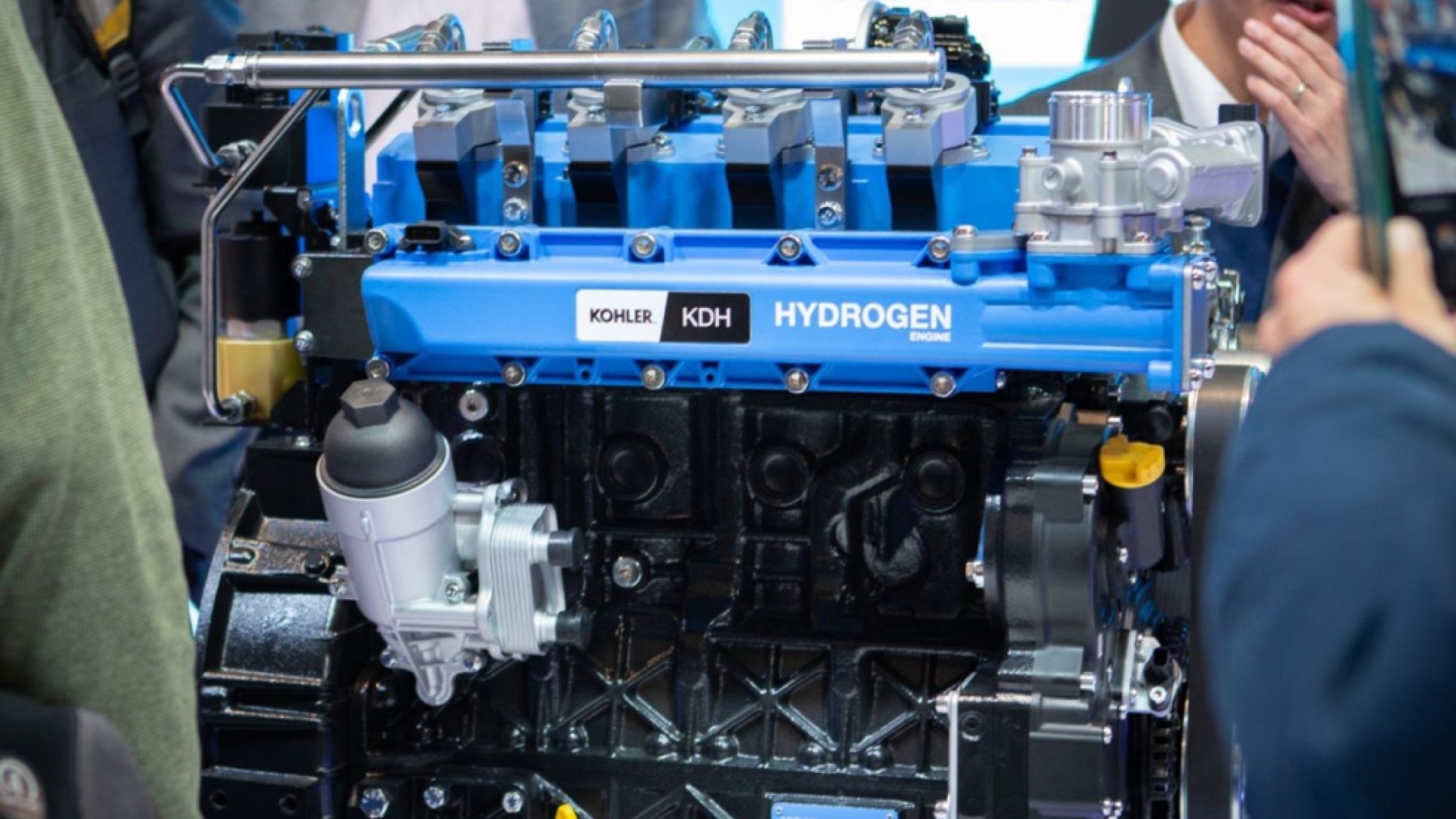
Kohler Engines still recently released its latest innovation, the Kohler Direct Injection Hydrogen (KDH) engine, an innovation that can be considered as a game changer in terms of renewable energy systems. This new hydrogen engine was introduced at the Agritechnica fair in November 2023, providing the opportunity to develop the change for the decentralization of the engines’ emissions.
The KDH engine primarily has its foundation on the KDI 2504 TCR diesel engine, but instead of using diesel, it uses hydrogen as the fuel; thus, minimizing the emission of carbon. Key performance specifications include:
- Max Power: The maximum power of this kind of engine is 4 kW (approximately 74 horsepower) at a speed of 2,600 rounds per minute.
- Max Torque: 315 Nm at 1500 r/min
These numbers prove that the KDH engine is configured to generate absolute efficacy at par with that of the conventional diesel engines in the matter of horsepower and torque to ensure that it is capable of addressing the need of sundry applications without being inferior or suboptimal in terms of performance.
Combustion and zero-emissions at the same time? The secret is the latest DI technology
The KDH engine uses DI technology, which yields a great performance because it optimizes combustion. Another advantage of DI technology over PFI is that it has no incidence of backfire. This technology makes the transient response and drivability of the engine in the field operations the same as those of the diesel, thus maximizing the productivity of the output.
Kohler’s innovation on the KDH engine is just one of the many exemplifications evidencing the company’s focus on technology that aims at improving energy quantity while at the same time minimizing environmental issues. The feasibility of engines also makes it possible to ensure that they come as a drop-in, which implies that they can be used directly in the existing systems and mechanisms.
Some keys to understanding the KHD hydrogen engine: From its performance to future plans for commercialization
This compatibility is a great benefit to OEMs because it means there is no need to redesign the compartments of the vehicles’ engines and a rather easy transition to hydrogen fuel. KDH engine is designed in such a way that, if driven together with an after treatment system, the emission levels of the engine are almost negligible.
It also minimizes particulate matters, nitrogen oxides and hydrocarbons to primarily zero to meet probably the most demanding emission standards, including EU Stage V in the use of hydrogen as a fuel, besides assisting in making the combustion process cleaner, there are global efforts to reduce greenhouse gases.
Kohler Engines has brought the KDH engine at an advantage point to release it in the market commercially. Currently, the company is working very well with OEMs in a way that it introduces the hydrogen engine production timetable in the market. This includes providing assistance with the proof-of-concept evaluation, anticipating obstacles to share and outlining the implementation strategies.
This is not only the first KHD hydrogen engine, it is also one more prototype to be added to those developed by Yamaha or Toyota. The idea of using water as fuel was a prediction of more than a century, and there were several attempts that ended up frustrated. However, it is now a reality that is going to skyrocket its popularity, while at the same time it could sink that of EVs, a movement that we in America fear due to the caliber of our industry.