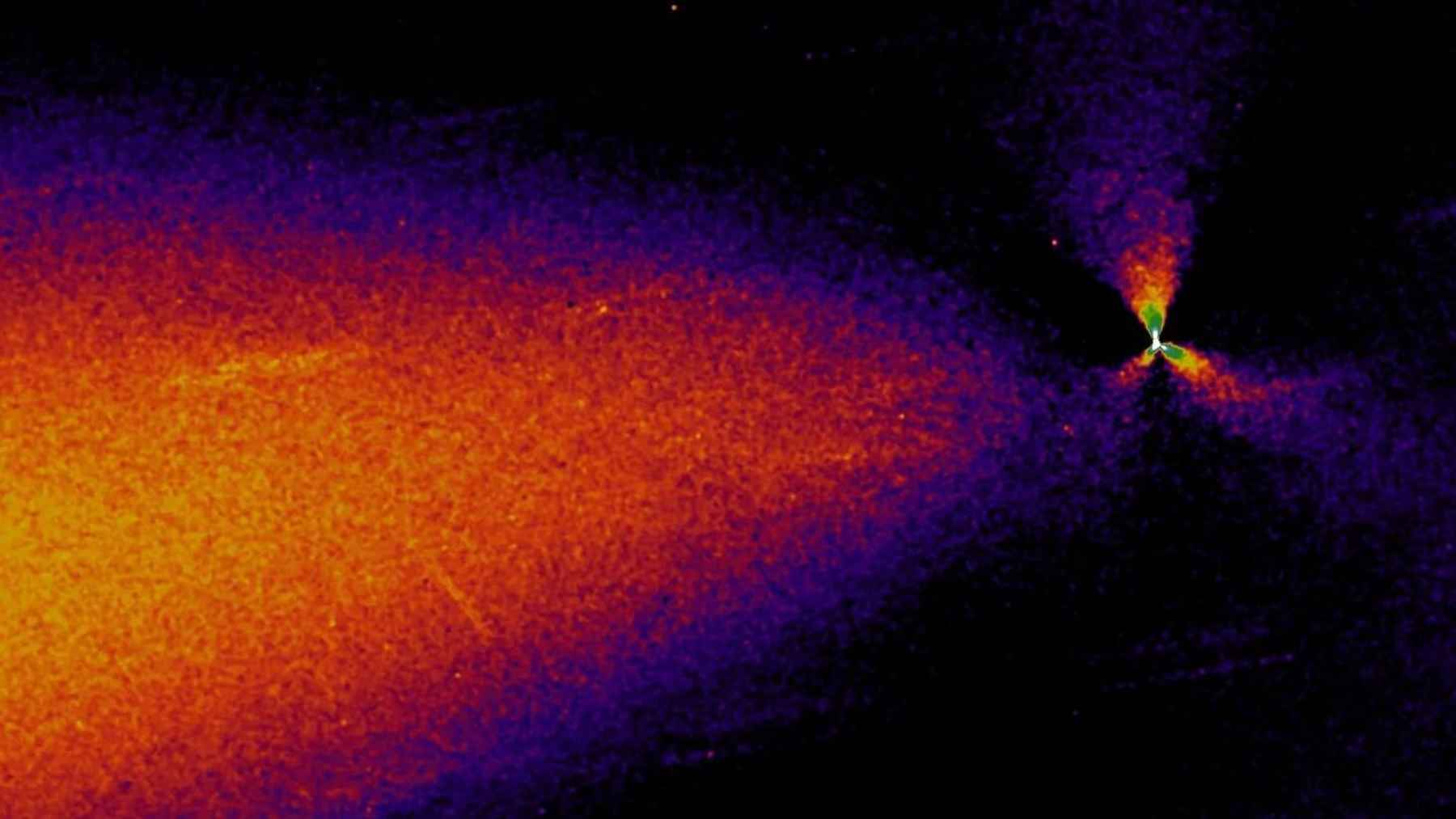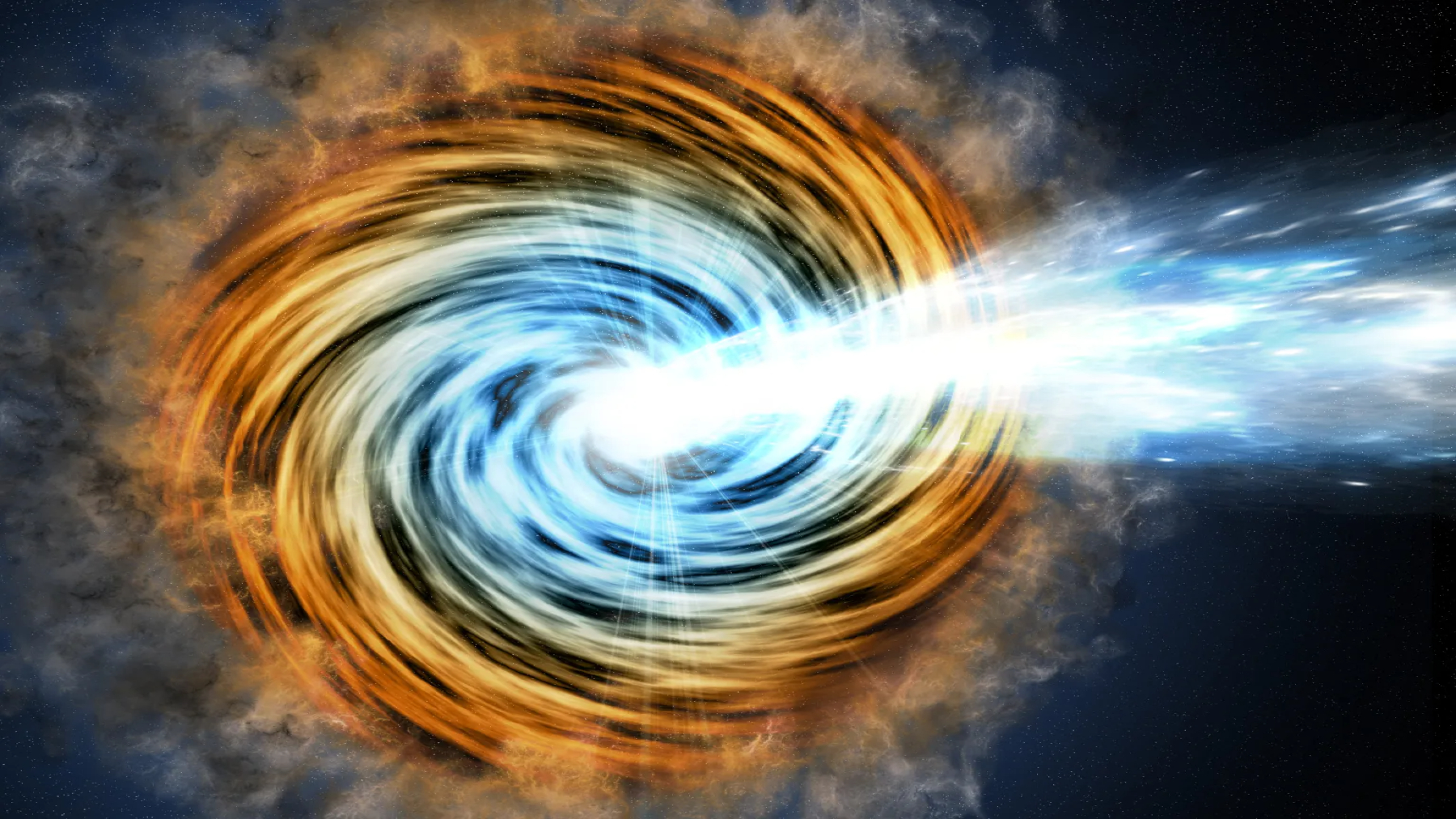
A significant breakthrough made by Fermi Gamma-ray Space Telescope is the discovery of the most distant gamma-ray blazars known. High-energy dominated galaxies characterized by the presence of supermassive black holes that expel jets of particles and light. This discovery presents challenges to the understanding of the early universe by providing evidence that could explain evolutionary history of black hole formations.
The Fermi mission clarifies the enigma of high-energy blazars
Blazars are extravagant galaxies that are believed to be powered by supermassive black holes and radiate enormous particle jets that travel at close to the speed of light. High energy emissions in these sources are indeed due to material that is heated up in an accreting disk before going into the black hole.
A blazar becomes apparent, often even in gamma rays, in cases where the jet is directed towards the earth. Although Fermi’s Large Area Telescope does manage to make observations of z-blazars at considerable redshifts, locating them is proving difficult; the light from the most distant z-blazar embarked on its journey epoch when the universe was 1.4 billion years old.
“These distant blazars host some of the most massive black holes known,” said Roopesh Ojha, an astronomer at NASA’s Goddard Space Flight Center. “And how they developed so early on is in conflict with what we currently expect of black hole evolution, so it is important to find even more of these objects.”
Recent findings: Five Gamma Blazars identified in the era of the early universe
Due to their frequently faint nature, even in the extreme light so to say, high energy light it is difficult to find very distant blazars. Nevertheless, in 2015, Fermi LAT team used Pass 8 thus enhancing their capabilities this time making it more sensitive to lower energing thus increasing the odds of detecting these monsters of the universe.
Under the direction of Vaidehi Paliya and Marco Ajello of Clemsons University Research team, Blazars carried out another study on the catalogue of quasars containing 1.4 million’s and looking for the most brilliant radio sources. As a result of this, five new gamma-blazars have been discovered and their ages correspond to the period of when the universe was about 1.4 billion years old to 1.9 billion years old.
Monstrous black holes in the early universe: The riddle solved
The distances of these blazars expose incredible mysteries related to black holes at early epochs. Two of these newly identified blazars house black holes more than one billion solar masses, which presumably formed at a time when the universe was relatively young.
The phenomenon is complicated by the fact that such supermassive black holes are not presumed to exist, as it is a mystery how they would have had the time to grow quickly to such an extent. Dario Gasparrini from the Italian Space Agency noted, the large sizes of these black holes are perplexing, and they challenge understanding on how these structures formed.
If growing habitable zones existed around the black holes at the blazar’s core, the accretion disks must be always at work within great limits, tens of billions of stars, more than 2 trillion times the brightness of the sun, illuminated the black holes’ active jets.
The evidence hints that the supermassive black holes and galaxies had likely existed much earlier than what the scientists predicted. Therefore, this offers a different understanding in the context of the formation of black holes and galaxies in the history of the universe.
The Fermi Gamma-ray Space Telescope of NASA has conducted investigations in space and has uncovered some facts about the earliest existing supermassive black holes. With the continued search for more blazars, researchers remain hopeful that the added discoveries will contribute to a better understanding of the forces that govern the universe.