Ancient lakes on Mars might have survived for decades under delicate “shields” of ice, even while the planet’s air stayed far below freezing. That is the picture emerging from a new climate study that uses real data from NASA’s Curiosity rover and an advanced lake model.
The work helps resolve a long-standing puzzle about how liquid water could persist on a very cold Red Planet.
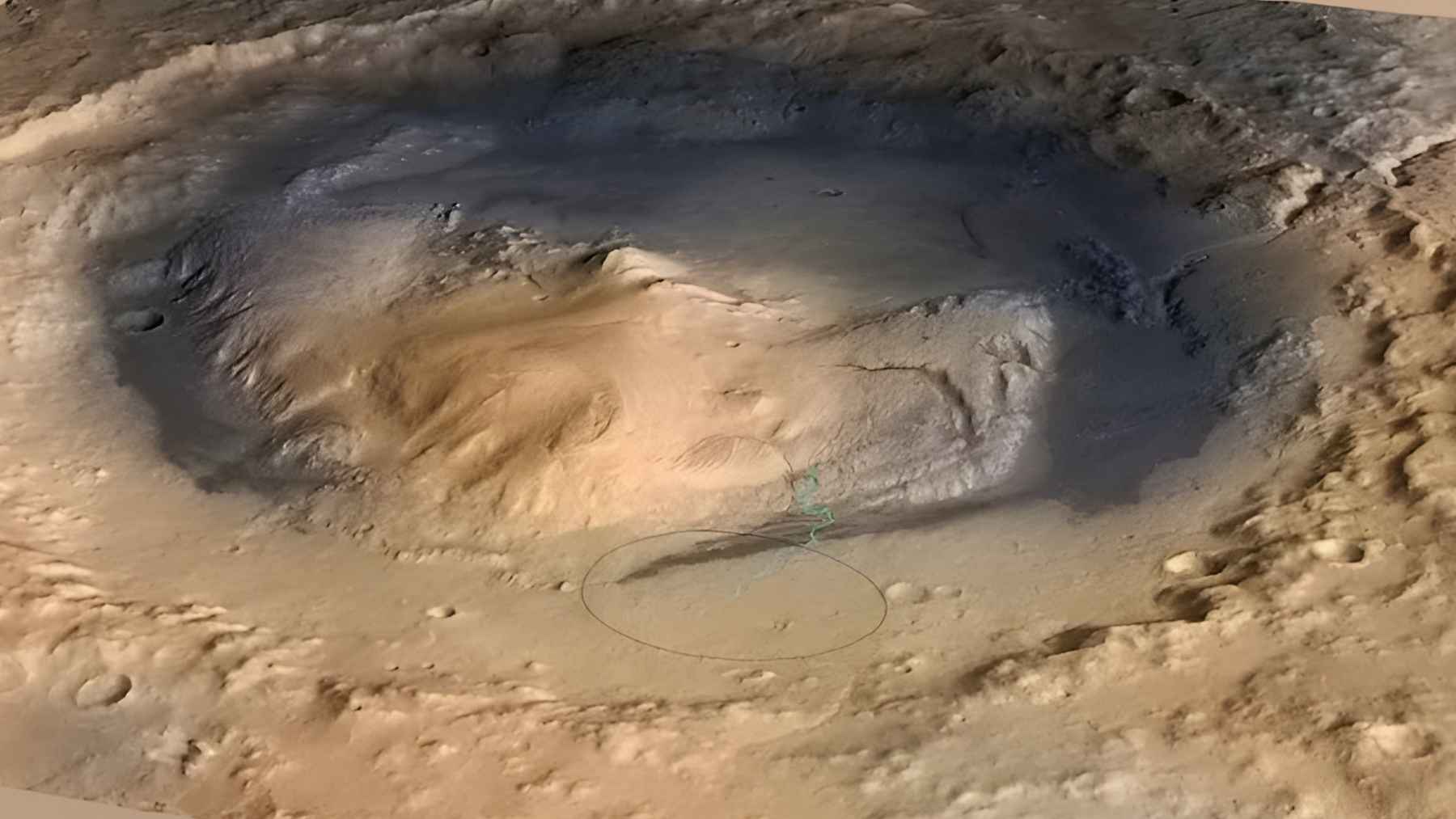
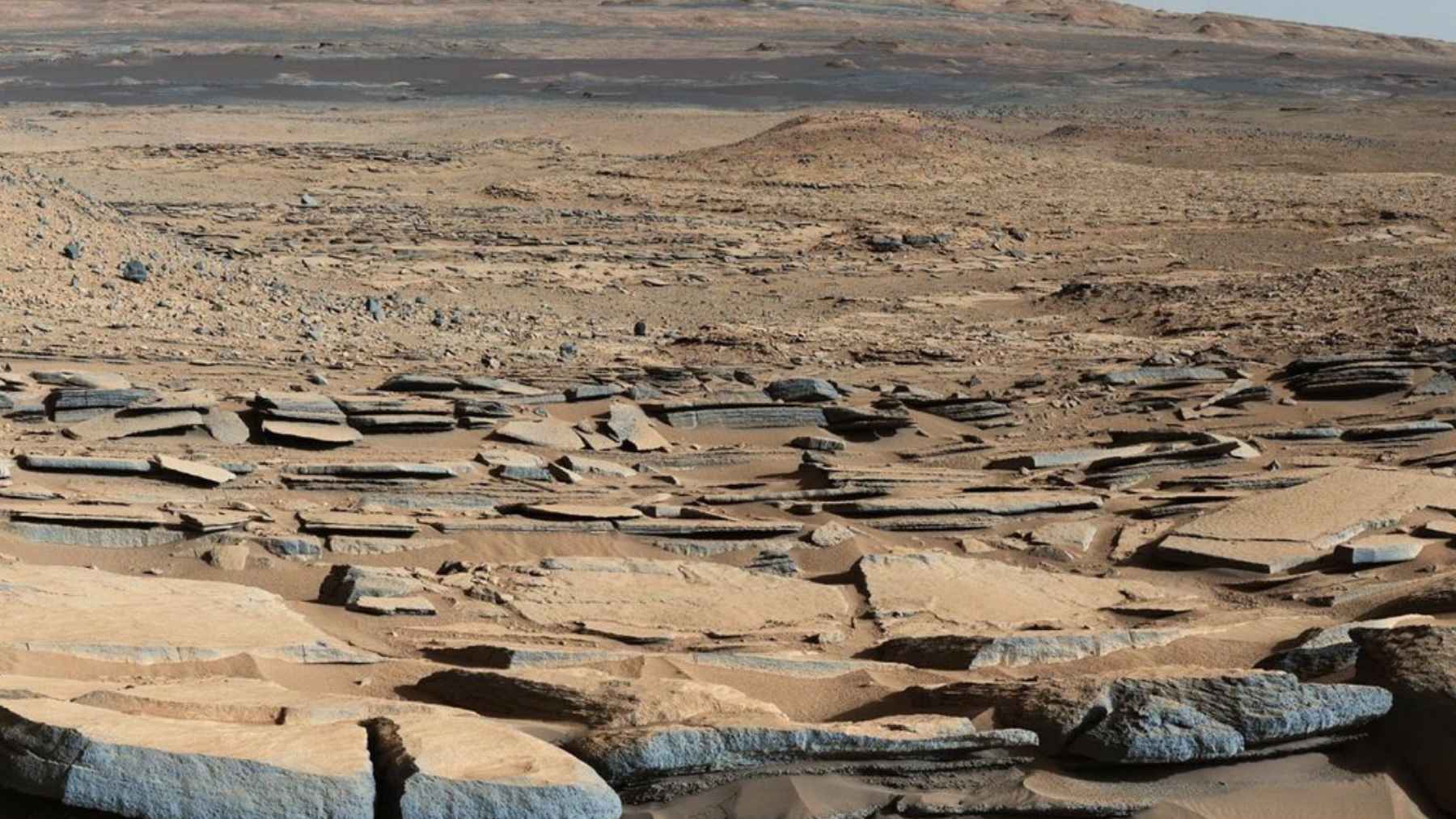
Today Mars looks dry, dusty and frozen. Yet its surface still carries the fingerprints of water that once stayed put for a long time. You can see old deltas, carved channels and broad lake beds, especially around Gale Crater, where Curiosity has been exploring for more than a decade.
At the same time, most climate models say early Mars received weaker sunlight and had a thin carbon dioxide atmosphere, which should have locked the planet in deep cold. So how did all that liquid water hang around?
Ice lids that act like natural blankets
The new study, led by Eleanor Moreland at Rice University, suggests that many ancient Martian lakes did not need warm air above them to stay liquid. Instead, they may have grown a thin sheet of ice in winter that worked like a natural insulating blanket.
In the simulations, the lake surfaces froze only slightly during the coldest seasons, then the ice partly melted away in the warmer months. Over time the total water depth barely changed, even while average air temperatures stayed below the freezing point.
Co-author Kirsten Siebach describes this seasonal cover as a kind of shield that wraps the lake during winter and then relaxes again when sunlight strengthens. The ice protects the deeper water from losing too much heat and from evaporating into the thin Martian air.
Because the cover is relatively thin and temporary, it would leave very little trace in the rocks we see today, which matches what rovers actually find on the ground.
If that sounds familiar, it is because something similar happens on Earth. Many northern lakes freeze on top each winter while fish and other life continue in the dark liquid below. The Martian version would be colder and more extreme, but the physics is surprisingly relatable if you have ever walked past a frozen pond and known there was still water moving under the ice.
A climate model rebuilt for Mars
To test this idea, the team did not simply imagine lakes by hand. They adapted an existing Earth climate framework called Proxy System Modeling, which is usually used to reconstruct past environments from proxies such as tree rings or ice cores.
Mars has no trees and we have not drilled polar ice cores there, so the researchers turned to a different record. They used the chemistry and textures of rocks and minerals measured by Curiosity in Gale Crater as stand ins for an ancient climate archive.
On top of that framework, they built a new tool named Lake Modeling on Mars with Atmospheric Reconstructions and Simulations, shortened to LakeM2ARS. The model accounts for Mars gravity, weaker sunlight billions of years ago and a carbon dioxide rich atmosphere.
Then the team ran 64 different scenarios, each one representing a slightly different version of a Gale Crater lake about 3.6 billion years in the past. Every simulation followed the lake for 30 Martian years, roughly 56 Earth years, to see whether the water would stay liquid or freeze solid.
In some cases the lake locked up completely in winter. In others, a thin seasonal lid formed that limited both freezing and evaporation. Those “ice shield” runs produced lakes that could remain stable for decades as long as regional climate conditions did not swing wildly.
Why there are lakes without big glaciers
One nagging problem in Mars research has been the lack of obvious glacial scars around ancient basins. If thick permanent ice had sat on those lakes for ages, scientists would expect to see more moraines, grooves or other heavy erosion. Instead, Gale and similar craters preserve smooth shorelines, fine sediment layers and mineral deposits that look more like calm, long-lived lakes.
Thin, seasonal ice fits that picture. It acts gently on the landscape, so it can help a lake survive without bulldozing the surrounding rocks. In practical terms, the model shows a way for early Mars to be cold for the most part yet still host pockets of quietly persistent water.
What this means for habitability
For astrobiologists, water that stays put is always interesting. Lakes under light ice covers would have been shielded from harsh ultraviolet radiation and the worst of the temperature swings.
On Earth, microbes thrive in similar protected settings beneath Antarctic ice and inside high mountain lakes. The new results do not prove that life existed on Mars, but they do extend the window of time and the range of conditions that could have supported it.
The research team now plans to apply LakeM2ARS to other basins across the planet, checking whether the same pattern appears elsewhere. If similar “ice shield” lakes turn up in multiple regions, it would strengthen the case that even a chilly early Mars could sustain year round liquid water in many places, not just in one famous crater.
At the end of the day, this Martian story is also a reminder of how sensitive climates are to small physical details, such as a few centimeters of ice. A thin cover can mean the difference between a frozen desert and a hidden, long-lived lake.
The study was published in AGU Advances.