NASA focuses on advanced AI and robotics to find life on icy moons such as Europa, Jovian, and Enceladus, Saturnian. Most likely, these so-called ocean worlds possess subsurface oceans, rendering them prime candidates for meeting the essential elemental compositions for the presence of life: water, energy, and stability.
Hidden waters of Europa: Our earth holds less water mass compared to the true ocean worlds
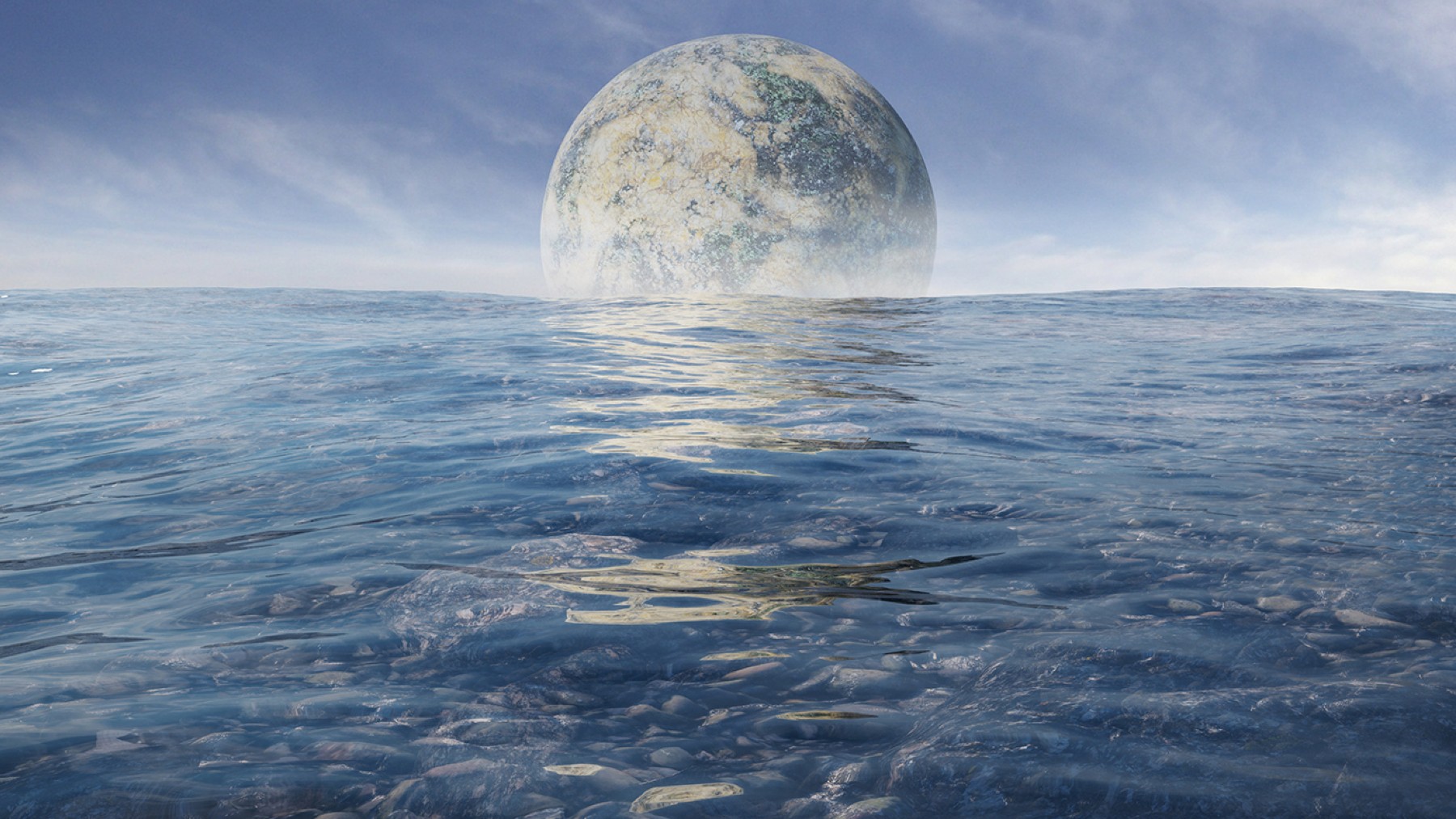
Europa and Enceladus are prime candidates for exploration, thanks to their amazing geological and chemically distinct units. A thick icy mantle covers the surface of Europa, and it is thought that under that blanket there are oceans with twice as much water as all Earth’s oceans combined.
Similarly, Enceladus with its icy shell, has been known to jet water vapor and organic molecules through geysers, indicating a possible habitable condition below the crust. While such moons are fascinating, they also present very nasty challenges to exploration due to their low temperatures and massive radiation alongside their deep subsurface oceans. AI-enabled robotics comes in as a transformative answer.
NASA set out to pioneer two transformational platforms for exploration. The first was the OWLAT_Ocean Worlds Lander Autonomy Testbed. The second was OceanWATERS. The projects were collaborative efforts with NASA’s Jet Propulsion Laboratory (JPL) and Ames Research Center.
These platforms replicate the environment that ocean worlds must possess and then test the capability of autonomous robotic systems in such environments. OWLAT, a physical testbed, simulated the conditions of an extremely low-gravity environment so that robots could perform their tasks, such as traversing icy ground, drilling through thick ice, and collecting samples. The system is intended to test advanced robotic arms and sensory systems capable of identifying, characterizing, and preserving potential biosignatures-markers of chemical or biological activity that indicate life.
OceanWATERS is a virtual platform that deals with software simulations. It tests algorithms for making decisions, allowing robots to operate individually. This is vital during missions to ocean worlds, where delays in communications with Earth may stretch from minutes to hours and robots must make real-time decisions without human input.
ARROW and COLDTech have been the powerful force to initiate innovation in ocean world expedition
Among the diverse areas of investment are programs like ARROW (Autonomous Robot Research for Ocean Worlds), which deals with supporting autonomous robots for ocean worlds, and COLDTech (Concepts for Ocean Worlds Life Detection Technology) which envisages and develops other technical instruments for the search for life, both of which have assembled robotics, AI, and planetary science experts to meet the special challenges associated with autonomous exploration.
The ARROW program is intended for the development of tools and algorithms that improve autonomy for robotic spacecraft and planetary vehicles. Examples include systems that avoid obstacles through navigation, sampling methods that prioritize high-value data, and machine learning techniques applied to environmental data to discover biosignatures. Meanwhile, COLDTech investigates the design of instruments that would work in very cold and low-pressure conditions.
AI: Reimagining horizons in space explorations by NASA
AI lends a hand in NASA’s exploratory efforts by making capability advances such that robotic explorers can achieve more tasks that are impossible for humans or traditional robots. AI algorithms have processes for wide vectors of data that can identify the patterns and anomalies related to life or habitability.
AI-derived systems also enabled those systems to prepare for new challenges, maximizing the chances of mission success and scientific value. The aim of NASA’s endeavors in space exploration is to check if there is life outside the Earth in those ocean worlds.
Finding a sign of life beyond this planet would redefine biology and where humans are in the universe; even negative results would further our understanding of planetary conditions for habitability. It is indeed the technology, and the lessons learnt from robotic missions that will guide future human exploration of ocean worlds.
NASA’s next Europa Clipper mission will fly by Europa in high-resolution stretches, while future landers may be able to bore through Europa’s ice or sample the geysers from Enceladus. With AI-powered exploration of ocean worlds, NASA now advances technology while broadening the avenues of understanding about life in the universe, hope offering such long-elusive answers.