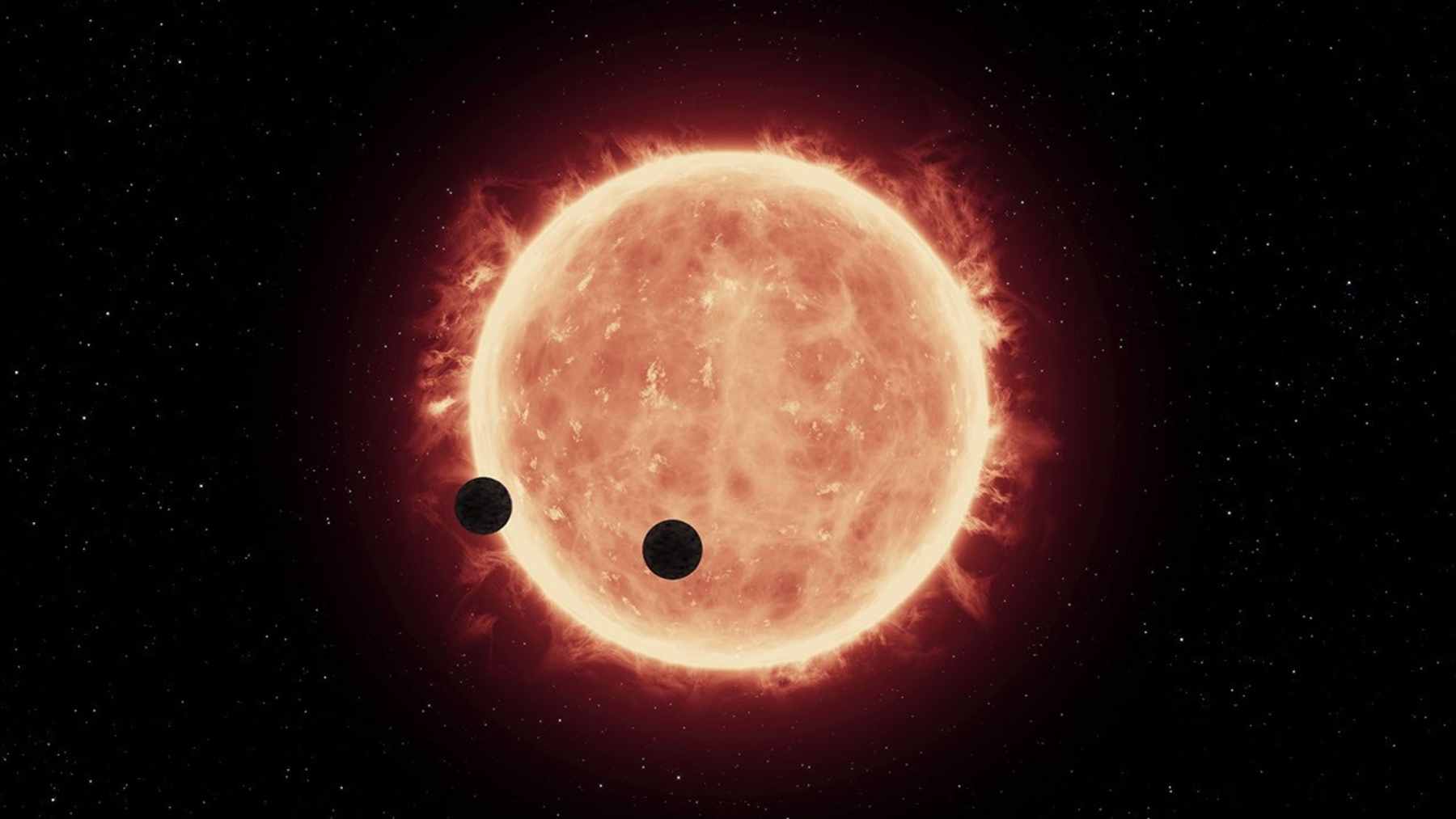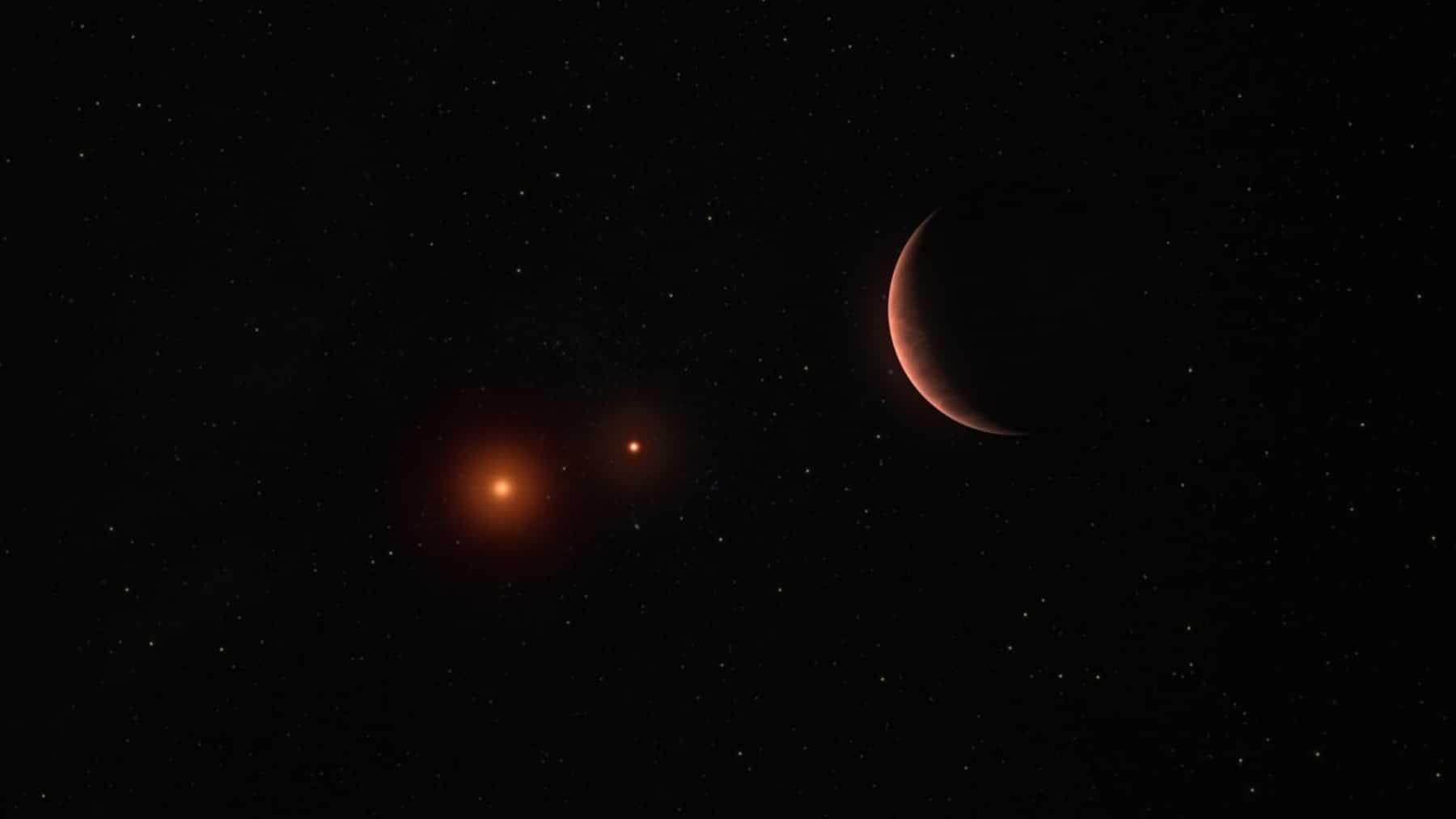
What if we told you that a planet nearly the size of Saturn was found orbiting a star so small that, until recently, no one thought it could form such planets? It sounds like the stuff of science fiction, but that’s exactly what happened with NASA’s recent discovery: a gas giant, named after data from NASA’s TESS mission, is orbiting a tiny star, a red dwarf with just 20% the mass of our Sun.
A star too small to harbor a giant — or so we thought
Well, the discovery, published in Nature Astronomy, not only surprised astronomers but also shook up some of the most established theories about planetary formation. This is because the planet that was discovered shouldn’t exist. Yet it’s there, steady and peacefully orbiting about 238 light-years away, in the constellation Leo.
To understand better, we first need to start with the star. TOI-6894 is a red dwarf, one of the most common stars in our galaxy, but also one of the dimmest and least massive. Astronomers have always assumed that this type of star simply wouldn’t have enough surrounding matter to generate a giant planet. After all, the smaller the star, the less gas and dust available in its protoplanetary disk. And no matter, no planet, right?
Wrong. That’s because the planet found there, TOI-6894b, has a radius slightly larger than Saturn’s but only half its mass. In other words, it’s a low-density planet, which places it among the “fluffiest” gas giants (literally). The most impressive thing? This is the smallest star known to harbor a planet of this size. This begs the question: if a star as small as this one managed to form such a large planet, perhaps there are many more giant planets out there than we thought… We were simply looking in the wrong places.
When theories don’t account for reality
The discovery of TOI-6894b has exposed a silent crisis in astronomy: our models don’t explain everything (an example of this is these hidden galaxies, which can shatter all current models). The most widely accepted model for planet formation is core accretion. In this model, a rocky core slowly grows until it attracts enough gas to become a giant. But this process requires time, stability, and, above all, a large amount of available material, something small stars don’t typically offer. How did TOI-6894b form? Astronomers come up with two hypotheses:
- One is an intermediate version of the core theory: the planet grows slowly, without entering the famous “runaway gas collapse”.
- The other idea is: the disk around the star may have become gravitationally unstable and collapsed directly into a planet.
The icy atmosphere that could set science on fire
If the formation process is already intriguing, the planet’s atmosphere is a chapter in itself. Unlike “hot Jupiters,” those gas giants with extremely high temperatures, TOI-6894b is cold, with an estimated temperature of around 420 Kelvin (approximately 150°C). This makes it an ideal candidate for studying the atmospheres of exoplanets with rare chemical compounds. Scientists are hoping to find clear signs of methane, which would be unusual in itself. But most exciting is the possibility of detecting ammonia (NH₃), something never before confirmed on an exoplanet.
This planet could be our first “natural laboratory” outside the Solar System, with an atmosphere dominated by carbon, nitrogen, and oxygen. And guess who’s keeping an eye on it? Yes: our famous James Webb Space Telescope. Observations are already scheduled, and the coming months promise answers, or even more questions. It appears it will have another mission, in addition to this most recent one, where it discovered a star factor.