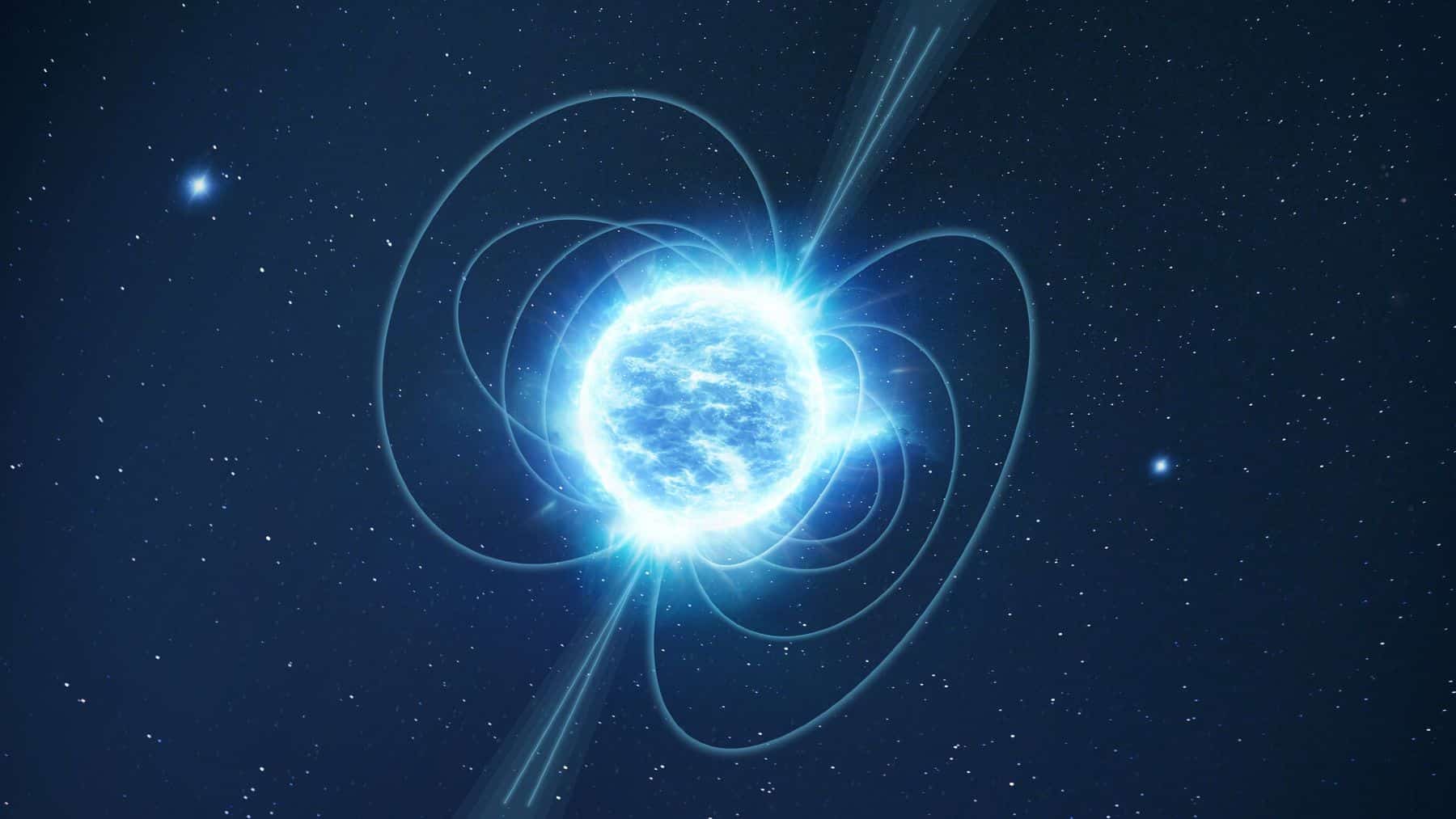
Neutron stars are the densest objects in the universe after they form from supernova crashes of massive stars. These mysterious bodies have fascinated researchers throughout the last several decades, yet new research efforts have shed light on their birth processes and attributes. Scientists recently revealed astounding discoveries about neutron star masses, illuminating ways that contradict our previously accepted knowledge. The scientific discoveries create essential opportunities for astrophysicists to explore previously unknown territories.
The birth mass function of neutron stars
Neutron star scientists must thoroughly understand their birth mass function (BMF) to explain their creation mechanisms. The BMF explains the distribution pattern of neutron star masses during their initial birth period. Scientists have focused on studying the BMF through 90 neutron stars bound in binary systems. Analytical studies show neutron stars tend to follow a power-law distribution pattern whose maximum mass occurs at 1.27 solar masses before their intensity rapidly recedes.
The earlier assumption based on Gaussian distributions placed the 1.4 solar mass point as the distribution center for neutron stars. The newly discovered understanding of neutron star initial mass distribution demonstrates that these objects were created in a broader range of possible masses than scientists previously imagined. The improved mass distribution model transforms scientific predictions regarding the behavior of extraordinary objects.
Features that distinguish recycled and non-recycled neutron stars
A binary system differentiates neutron stars according to their recycled and non-recycled characteristics. The mass acquired from their companion stars makes recycled neutron stars spin rapidly. The mass acquisition process that defines recycled neutron stars determines their general operations. Non-recycled neutron stars maintain their original form due to missing substantial mass changes after their initial formation.
The study applied probabilistic corrections to compensate for mass growth in recycled neutron stars. The researchers obtained better birth mass measurements by incorporating this factor into their calculations. The precise determination of birth masses between recycled and non-recycled stars proved necessary for investigating the formation models of neutron stars.
The scientific community needs these classifications to provide an extensive knowledge of neutron stars’ physical properties. Neutron stars interact with their double-star companions to reveal information about their lifecycles and developmental patterns. Studying different types of neutron stars improves scientists’ understanding of the natural progression of such exotic stellar bodies throughout their life cycles.
How are these new discoveries shaping future astrophysical research?
The improved knowledge about neutron star BMF guides discoveries in astrophysical research. The distribution pattern of neutron star masses creates significant consequences, significantly impacting gravitational wave detections. The detection of such waves helps scientists study the planet-shaped formation examples where these objects exist. The updated model provides scientists with better tools to read gravitational wave information accurately.
Better knowledge about neutron star masses helps researchers make more accurate predictions concerning the evolution of massive stars at their end. The changing perception of neutron star properties is essential to creating precise models of stellar death, especially for giant stars. Advanced technological discoveries will increase our understanding of the universe and potentially create revolutionary astrophysical discoveries.
What’s next for neutron star research? The future of astrophysics
Recent discoveries have created research opportunities regarding neutron star masses. The latest scientific findings allow researchers to better understand the fundamental connection between the BMF and the initial mass function of massive stars. Scientists investigating massive star evolution will better understand the transformation of stars into neutron stars and their interactions with other space objects.
New discoveries enable scientists to study the birth conditions of neutron stars through additional research. The interaction between neutron stars with companions and their environments produces valuable scientific insights into space phenomena occurring in extreme settings. The knowledge obtained will aid scientists in exploring cosmic phenomena and basic cosmic governing forces.