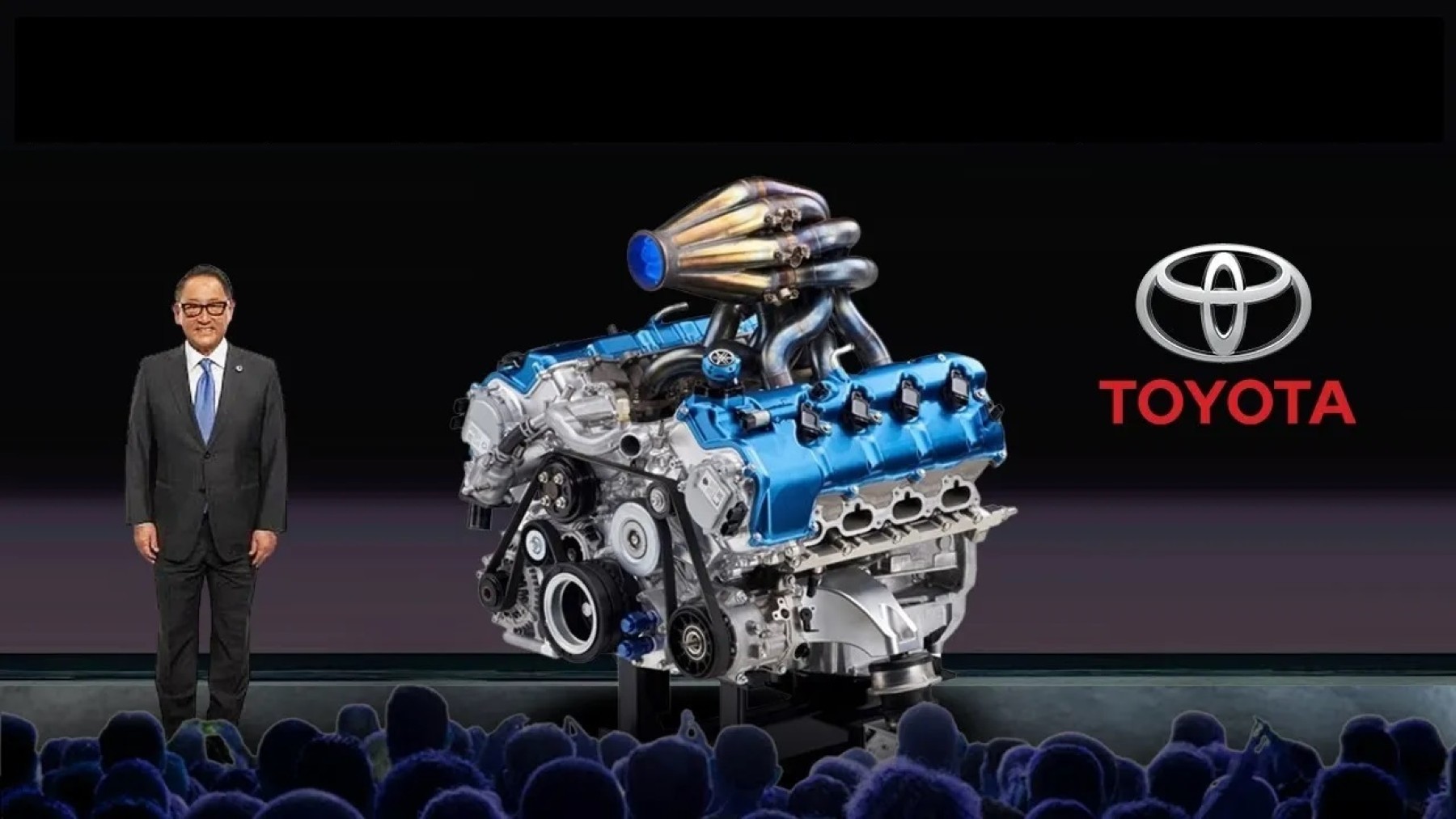
Those who promised that Tesla was going to bet on a fuel other than gasoline are closer to seeing their ideas materialize. This new hydrogen engine will not be for the legendary brand, but it will mark a historic change. The reason? It has an unprecedented type of injection and 40% thermal efficiency, with two liters that guarantee a range different from what we are used to.
New hydrogen engine to revolutionise transport: neither American, nor German
Recently, the researchers from the companies Hyundai and Kia have invented a never-seen-before 2-liter hydrogen combustion engine which show carbon-free combustion and impressive power output, comparable to diesel engines. The engine utilizes direct injection of hydrogen gas precompressed, not as precondensed diesel.
This new engine, through this breakthrough,will outperfom gasoline engines in almost all performance criteria. By means of the hydride-combs and storage systems which have better sealing and cooling abilities, the researchers managed to deliver more power from hydrogen fuel.
The principal reaches an energy conversion rate exceeding 40% – more than double the one of a standard gas engine. Thermal efficiency is, in fact, a percentage of the useful mechanical power converted from energy of fuel. This allows for low-weight, compact design of the engine with only a 2-liter displacement.
With an aim to make direct injection of hydrogen possible, engineers made this system their priority. Previous hydrogen engines lacked this directly injection. Direct injection does not only address the need to improve the efficiency of burning the hydrogen fuel, but also has a great potential.
Why is this hydrogen engine so different from the others?
The proposed hydrogen engine is endowed with a state-of-the-art direct injection (DI) system, which enables it to have a heating efficiency that beats port injection (PI) engines in terms of efficiency. One injects hydrogen fuel to the combustion chamber (direct injection) compared to the case when fuel is injected conventionally.
Thus it becomes possible to exert precise fuel control at all stages of the system: injecting timing, amount, and location. Instead of fuel being directly injected earlier in the compression stroke, when the air is not as dense, the fuel can be injected later on at the end of the compression stroke.
Direct injection improves thermal efficiency in several key ways:
- Better compression ratio – Employing the cooling assist of the cylinder, direct injection is facilitated so higher compression ratios can be used. This increases thermal efficiency.
- Elimination of pumping loss – Fuel being co-injected directly into the cylinder with compressed charge, not the intake port, implies more power available from the engine as a result of pumping losses reduced.
Direct injection is very important for internal combustion engines in terms of driving its efficiency to the limits of heating processes. This hydrogen motor did not only stand out, but with a remarkable 40% thermal yield it brought a new step towards zero mobility of the future.
The thermal efficiency, enhanced with this new poweful hydrogen engine
The hydrogen engine, as a world’s first, can attain a next generation thermal efficiency of 40%. Modern gasoline engines are very high thermodynamic efficiency engines running around 25-30% thermal efficiency. Diesel engines stand as a top solution with up to 35-40% being rish in a given case.
The hydrogen engine will reach a thermal efficiency of at least 40%, which can be considered as a considerable breakthrough in its technology. This advantage is boosted drastically by greater mileage per kilogram of hydrogen fuel than current hydrogen vehicles.
There are a few reasons the new engine has such high thermal efficiency:
- Through the direct injection mechanism, better management of the fuel-air mixture is achievable, maximizing its burning.
- The high 11:1 of them being compression ratio, which also increases thermal efficiency. The engine tries to squeeze the fuel-air mixture to a smaller volume.
As you can see, this new hydrogen engine aims to be the solution to the EVs that brands like Tesla strive to defend. Who would have thought that we would find something better and more futuristic? It is clear that combustion is not a thing of the past or, to be more precise, only gasoline and diesel (of which we recently found a new type in the United States), not to mention gas.