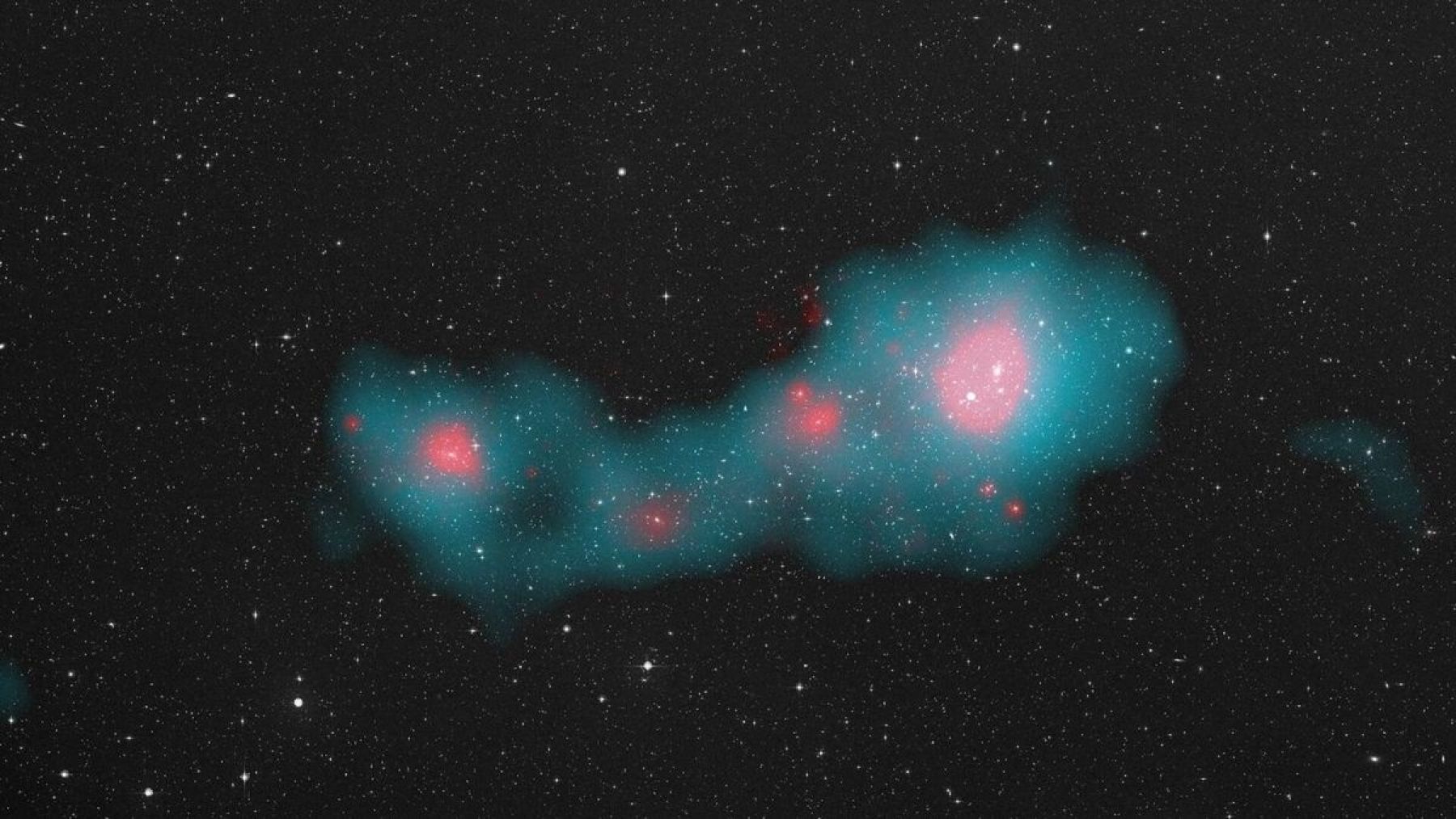
Scientists have discovered Quipu, the largest structure in the universe. Made up of multiple galaxy clusters, this structure creates a vast cosmic superstructure that spans 1.3 billion light years. This structure is named after the Incan system of counting and storing numbers using knots on cords and is as complicated as its namesake. However, its so-called strangeness is much more bizarre; it has a deep impact on the fundamental structure of the universe, shaping cosmic expansion and even distorting our view of the distant universe.
Quipu: The largest superstructure ever found in the universe
Quipu has broken records previously held by superclusters Shapley and Laniākea. Its enormous mass is 200 quadrillion solar masses, and its length is over 13,000 times that of the Milky Way. Other similarly enormous structures, such as the Hercules Corona-Borealis Great Wall, have been disputed as to whether they are connected. However, the Quipu system stands out as it is a clearly defined web of galaxy clusters.
Along with its enormous size, Quipu is one of five newly discovered superstructures that together comprise of 45% of the galaxy clusters, 30% of all galaxies, as well as 25% of known universe matter. These massive cosmic structures challenge our understanding of how galaxies would organize themselves on a large scale.
Quipu’s gravitational influence: Altering measurements, distorting cosmic radiation, and bending light
What makes Quipu strange, however, is not just its size but also its effect on the universe. Scientists found that Quipu’s gravitational influence distorts cosmic radiation, bends light, as well as alters the measurements of the universe’s expansion.
Quipu interacts with the cosmic microwave background (CMB), the afterglow from the Big Bang (just like this most powerful explosion since the Big Bang), in a manner that could change the way astronomers measure essential cosmic parameters.
This effect, called gravitational lensing, distorts light from faraway galaxies, possibly altering our understanding of the distant universe. Quipu, along with its fellow superstructures, also changes the universe’s localized expansion rate, altering Hubble’s constant, the essential measure of how fast the world is growing. This means that wherever Quipu dominates, the standard cosmological vines might be slightly off, requiring astronomers to reconsider how they measure the rate of expansion of the universe.
The Zone of Avoidance: Is Quipu a part of something bigger?
Quipu, for example, though currently significant, is not cosmologically permanent. The universe is continuously expanding, slowly tearing apart these enormous clusters over the course of billions of years. According to scientists, over time, Quipu would eventually fragment into several crumbling components, each no longer tied to a single superstructure. Nonetheless, given its present effects on the cosmic ecosystem, it is an important subject of study.
Additionally, the closeness of Quipu to the Vela supercluster introduces a potential complication. No direct link has yet been found between the two, but astronomers say further research could reveal a vast, connected structure lurking within the Zone of Avoidance, a part of the sky obscured by the dust of our Milky Way.
Quipu is not just a record-breaking superstructure; it is a reminder of how little we understand about the large-scale architecture of our universe. A structure of this enormous size would pose challenges to cosmological theories, and its interaction with light, radiation, as well as cosmic expansion, would add to the complexity of our current models of what space and the universe truly look like.
But as researchers examine these cosmic giants, Quipu has remained a cornerstone in deciphering the grand design of the universe, a reminder that space is more complex and dynamic (just like the Pillars of Creation) than we presumed.