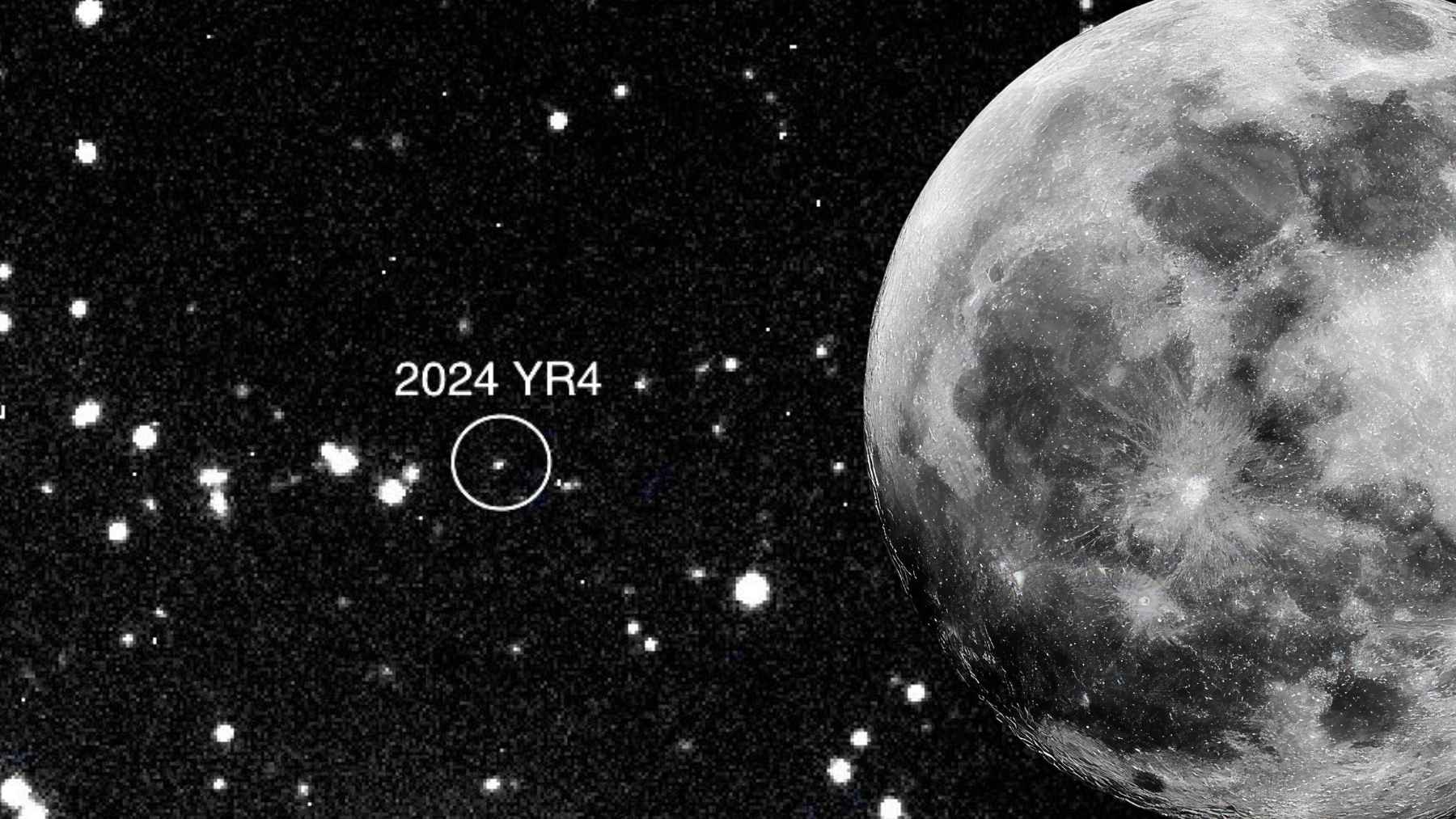
Scientists and stargazers are excited about an unusual space spectacle that appears only during these 80 years. T Coronae Borealis (T CrB) will soon perform a nova, which will enable observers to see it without assistance. This article provides all the essential information about this incredible event.
Experts predict that this star dual eruption occurs every 80 years because of this explained phenomenon.
T Coronae Borealis (T CrB) represents a double star system near the Corona Borealis constellation at a distance of 3,000 light-years. A pair of stellar bodies includes the red giant and the white dwarf. While the red giant cools down and grows bigger, the white dwarf consumes all its available fuel before it starts to become cold.
The white dwarf obtains additional substances that eventually trigger a thermonuclear reaction. This explosion generates a sudden dramatic rise in light brightness which allows people to see the earlier dim star with their unaided eyes.
Historical documentation reveals T CrB exploded in 1787, 1866, and 1946 while different groups of astronomers witnessed this predictable stellar event. Scientists have utilized each Nova explosion to study the phenomena better, improving their forecast accuracy.
You can find the predicted explosion date through this information.
A recent observing campaign indicates T CrB is facing its next outburst. Since September of last year, Franck Marchis from the SETI Institute has observed changes which point to the impending arrival of the much-anticipated explosion. Following the handle of the Big Dipper stars downwards, you will reach Arcturus and locate Vega rising at the northeast horizon.
The American Association of Variable Star Observers recorded the star growing fainter during March and April 2023, thus setting a date for the upcoming April 2024 Nova. However, the explosion failed to materialize. Scientists have calculated through empirical extrapolations that T CrB expects to detonate its nova event on Thursday, March 27, 2025.
Space experts expect T CrB to shine brightly on the night sky for several nights because it could reach the luminosity of the North Star, which ranks as the 48th brightest nighttime bloomer. This historical astronomical event will create special interest for astronomers alongside ordinary star observers.
Want to see it? This is the procedure to locate T Coronae Borealis
From the Northern Hemisphere, viewers will spot T CrB among Corona Borealis about three hours after sunset when the constellation reaches its eastward position. Observation of the spot will become visible one hour later. T CrB lies within the distance between Boötes and Hercules.
View T CrB from a point that divides the Path between Arcturus and M13 Great Globular Cluster in the Hercules constellation. This method will guide you to locate T CrB specifically in the night sky. Obtaining a telescope or binocular equipment will enhance your viewing pleasure, although the explosion can still be seen without any tools.
Scientists and skywatchers view this explosion as a major scientific occurrence.
When T CrB explodes, it creates both a remarkable visual show and a major scientific discovery. Dr. Hounsell, a NASA Goddard Space Flight Center research scientist who studies nova events, believes that observers can enjoy a “once-in-a-lifetime event” to study cosmic phenomena and conduct their own inquiries and data collection.
Such cosmic events enable scientists to study star behaviour and binary star patterns during their entire lifetimes. By studying these processes, scientists develop a better understanding of stellar evolution because they examine thermonuclear explosions in white dwarfs.
Scientists analyze rare exploding stars to make their models about stellar development more precise throughout time. Scientists expect T Coronae Borealis to detonate soon, thus presenting skywatchers of all levels with an exclusive opportunity.
You should monitor the night sky because we are approaching the predicted day for observing this phenomenon, which only appears every eighty years. Astronomers of all experience levels can anticipate unforgettable moments during this upcoming celestial event, which links humanity to the vast active universe. For more information about this possible event, you can check NASA’s official website.