Russian forces have likely used Starlink satellite internet to steer kamikaze drones against Ukrainian helicopters, according to Ukrainian military experts who say they detected a new pattern in a January attack near the city of Kropyvnytskyi. If confirmed, it would mark a major shift in how low-cost drones hunt targets on a modern battlefield.
The same satellite network has helped keep Ukrainian units online since the first days of the full-scale invasion. Now it appears that hardware smuggled through third countries is letting Moscow plug into that very system for its own strikes, raising uncomfortable questions about how civilian tech ends up in a kill chain.
A first test over central Ukraine
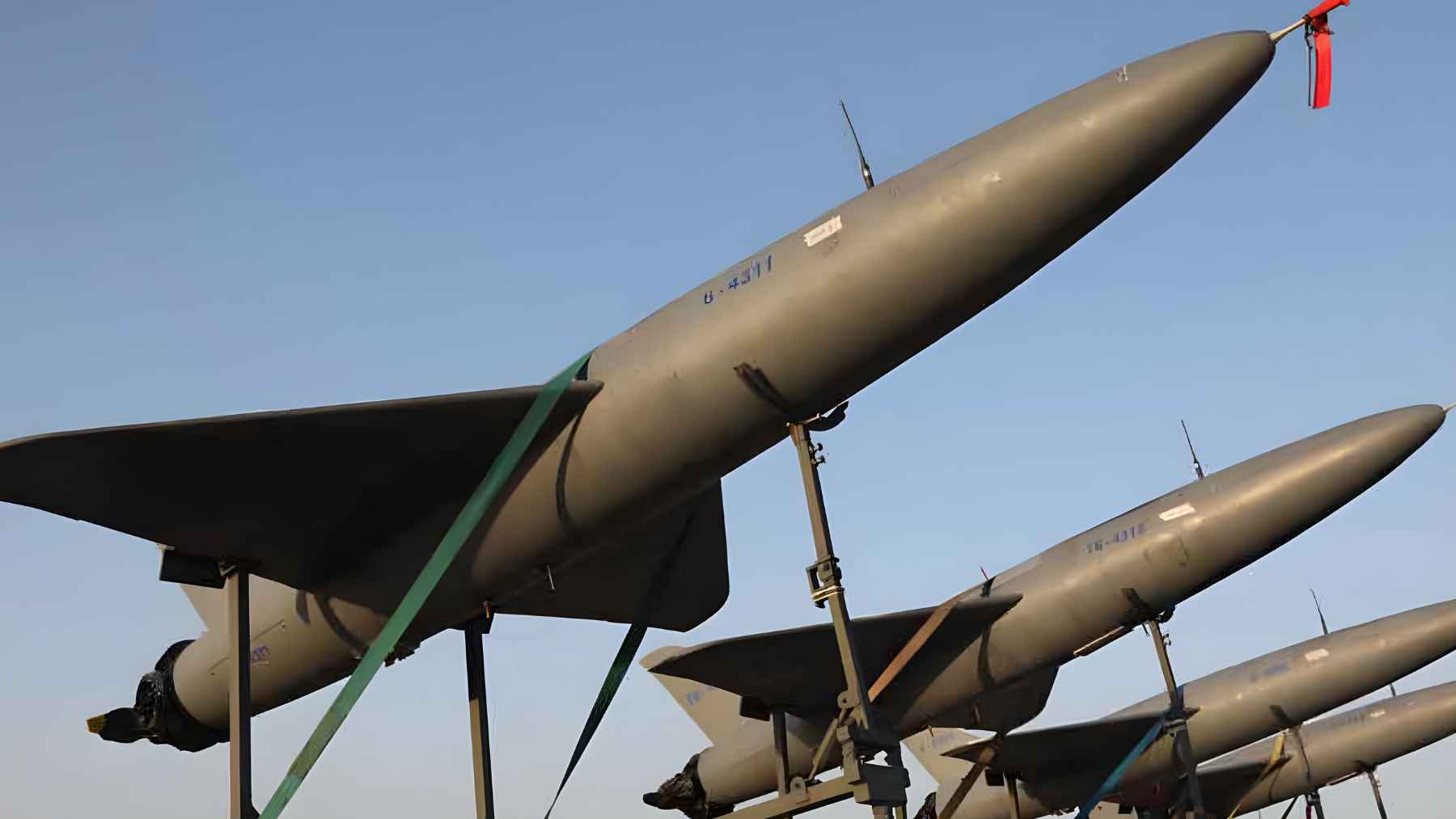
On the morning of January 24, Ukrainian air defenses reported incoming Shahed loitering munitions heading toward helicopters stationed near Kropyvnytskyi, in central Ukraine. Shaheds are slow-flying attack drones loaded with explosives, often called kamikaze drones because they are designed to crash into their targets.
Serhii Beskrestnov, a front-line radio technology specialist who now advises Defense Minister Mykhailo Fedorov on military tech, reviewed data from the strike and saw something he had not seen before.
He reported signs of automatic target acquisition combined with manual steering using live video, but no sign of the usual relay drones that Russian operators use to keep radio contact over long distances.
His conclusion was blunt that the control signal had to be coming from satellites rather than a chain of aircraft in the sky, and that the Shaheds were being flown through Starlink. Outside observers cannot independently verify every detail, yet the account matches months of earlier finds where Ukrainian troops pulled Starlink dishes from the wreckage of Russian drones.
Why Starlink makes kamikaze drones harder to stop
Starlink is a commercial internet service that uses thousands of small satellites in low Earth orbit linked to pizza-box-sized antennas on the ground. In everyday life it is the kind of connection someone might install at a remote house to stream movies or work from a cabin that has no fiber line.
Mounted on a drone, that same dish turns into a high-speed control link. Operators can watch real time video from the drone and guide it over hundreds of kilometers without needing a clear radio line of sight, and the signal does not rely on a nearby relay aircraft that Ukrainian forces can jam or shoot down.
For Ukrainian electronic warfare teams, this is a serious problem. Their jammers were built to interfere with traditional radio links and GPS, not a narrow satellite connection designed to keep working through bad weather and traffic, so experts warn that many existing defenses lose much of their punch when confronted with this kind of link.
Booby-trapped terminals and battlefield scavengers
Ukraine has already seen how far Russia is willing to go to protect these terminals. In one recent case, military engineers examining a downed Molniya loitering munition found a Starlink unit with a hidden secondary explosive charge wired to blow if anyone tried to remove it for analysis.
The main warhead, made up of two Soviet era PTAB anti-tank bombs, had separated on impact without exploding.
Tucked next to the satellite terminal, though, was a separate block of TNT connected to a VZD 3M fuse and an MD 5M detonator, a small package that could easily kill a sapper and destroy any useful electronics.
Open source investigators have also documented Russian units using horses fitted with improvised mounts that carry Starlink terminals and cameras, an image that feels almost absurd until you remember how precious a stable internet link has become near the front.
The Institute for the Study of War has reported that fitting Starlink to Molniya drones may extend their effective range to more than two hundred kilometers, giving Russian operators many more options for hitting command posts or fuel depots far from the front line.
SpaceX under pressure and Ukraine’s next moves
As reports of Starlink guided Shaheds mounted, Ukraine’s defense ministry publicly pressed Elon Musk and SpaceX to shut down any terminals used by Russian forces inside Ukrainian territory.
The company has repeatedly said it does not sell hardware to Russia and that any terminals in Russian hands were acquired through gray markets, but Ukrainian officials insisted that technical blocks were still needed on the network side.
At the end of January, Musk said on his social media platform that steps taken to stop unauthorized Russian use appeared to be working, and Ukrainian officials described early results as real and visible on the battlefield.
The new measures rely on a whitelist of registered Ukrainian terminals and speed limits that make it difficult to use Starlink on fast-moving drones, and Russian bloggers close to the military have described the loss of service as close to a catastrophe for their units.
In practical terms that means the same dish someone might rely on to cut their home internet bill has turned into a strategic asset that states and private companies fight over.
Even if unauthorized Russian access has been sharply reduced for now, military analysts expect Moscow to keep searching for workarounds, while Ukraine races to adapt its defenses and lawmakers debate how much responsibility firms like SpaceX should bear when their networks end up guiding weapons.
The official statement on this issue was published on the website of the Ministry of Defence of Ukraine.