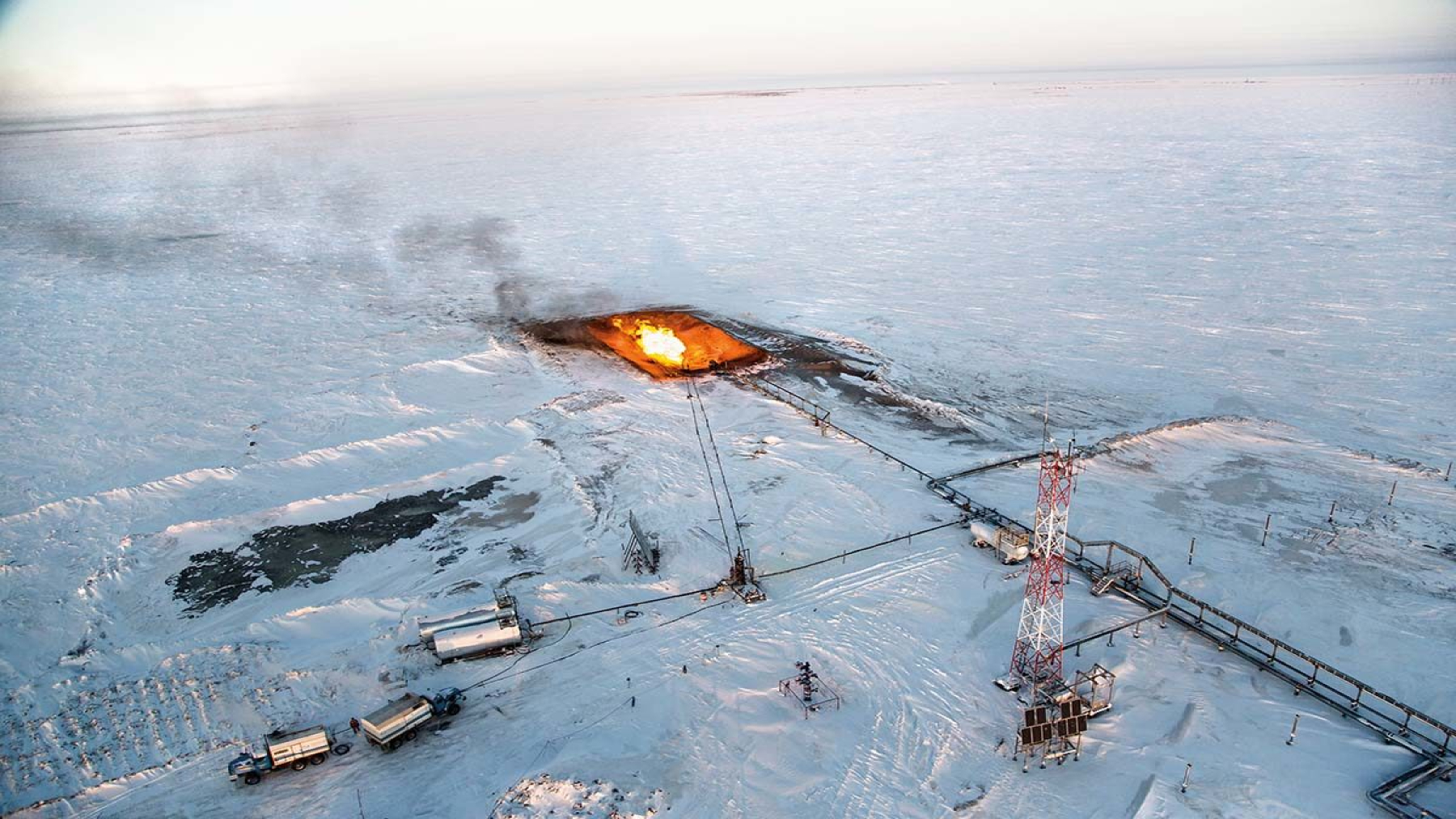
A great layer of treasures, resting beneath the frosty Siberian turf, is the Urengoy oil and gas field. As it holds probably the world’s largest onshore gas and condensate now in the world, this fatefully placed well of hydrocarbons has, indeed, jolted economic life and the dynamics of global energy relations. Discoverable in 1966 and placed to production in 1978, Urengoy would make clear how far has human genius and capacity to reach the untouched resources of the earth reached.
Urengoy Oil and Gas Field: Nuclear powercrement of Russia’s power strategy
The Urengoy Oil and Gas Field is set in the West Siberian Basin, with approximately 16 trillion cubic meters of natural gas within its reserve. It constitutes one of the cornerstones of the Russian energy strategy. Operations in the field were conducted by Gazprom dobycha Urengoy LLC, a division of the state company Gazprom.
In 2021, Urengoy may have accounted for 131 bcm of gas, which is always a staggering figure, particularly at the international level. Urengoy is thought to need significant infrastructure investment supported by the systems that can operate in a cold Siberian environment. The region is predominantly marked by frost and ice that surround these places as well as logistic and operating difficulties. Despite this negativity, it appears, in the operation of its machinery, there has been something.
So, the most crucial transportation artery of natural gas is Urengoy-Pomary-Uzhgorod in Ukraine and further into Europe, and is a 4,400km infrastructure crossing Russia, exporting gas and underpinning Russia’s prowess by exporting gas through its presence in the international route and by creating necessity, particularly through the construction of a pipeline which comes nearer in policy.
Technological improvements accelerate hydrocarbon extraction in Urengoy
Technological innovation has been constantly increasing its scope within the field – the last development was that extra mile. Advanced technologies in drilling, from horizontal drilling and multilateral drilling, have greatly raised the efficiency of hydrocarbon extraction.
Gazprom invested in the best processing facilities so that gas and condensates tended to be processed with high efficiency. Modernization has been necessary, given the depth of the deposits and their estimated production lifespan.
Up-to-date equipment, automatic monitoring systems, and cold-resistance materials guarantee that the field remains productive and can weather even harsh Siberia. These improvements extend operational life, thus relieving Urengoy from risks linked to extreme weather.
Considering environmental considerations, the activities of the company and its importance in the context of the current situation have made the issue of the extraction, processing and transportation of natural gas into one of resource-consumers of the energy market.
The company has installed measures to mitigate methane emissions, and its efforts cover ecosystem rehabilitation projects in which the drilling and infrastructure development severely affect surroundings. All these projects aim to show, as a growing trend, a greater commitment to balancing energy needs with ecological stipulation.
Urengoy’s impact on global energy and international relations: A double-edged sword
The Urengoy oil and gas field represents a cornerstone of Russia; and economic strength, with its development serving to feed long-term contracts with European nations, thereby generating billion-dollar profits that both enrich the state and enhance global energy interaction through the export of energy from Russia.
Undoubtedly, Urengoy is essential to global energy demand management. Its role as an energy giant is deemed both a blessing and a curse. For it could represent the critical ‘highlight’ in the much-talked-about realization that energy intersects with geopolitics.
And then again, varying prices of global energy tend to trade forces more so when there is political tension, occasioned by European nations, into thinking that certain adjustments in production or exports need to be made.
In addition, the transition to green energy globally poses a long-term challenge for fields like Urengoy. When energy demand is met mainly through basic fuels, as in the case of burning natural gas, the reduction of every one of them restricts the dependence by surrendering others.
Thus, to meet the desire for guaranteed energy supplies presented through security of supply, changes appear to be the proper thing to relate to a government energy strategy. The Urengoy Oil and Gas Field squarely rests on the capacity of modern energy production’s scale in converging engineering brilliance with the bountiful resources of the Earth.
Its reserves, as well as significant innovations, have dramatically shaped the Russian energy landscape, and even that globally. The industry’s trends away from the hydrocarbons towards the cleaner energy point to the realism and responsibility that scaling any resource will require to make it sustainable.