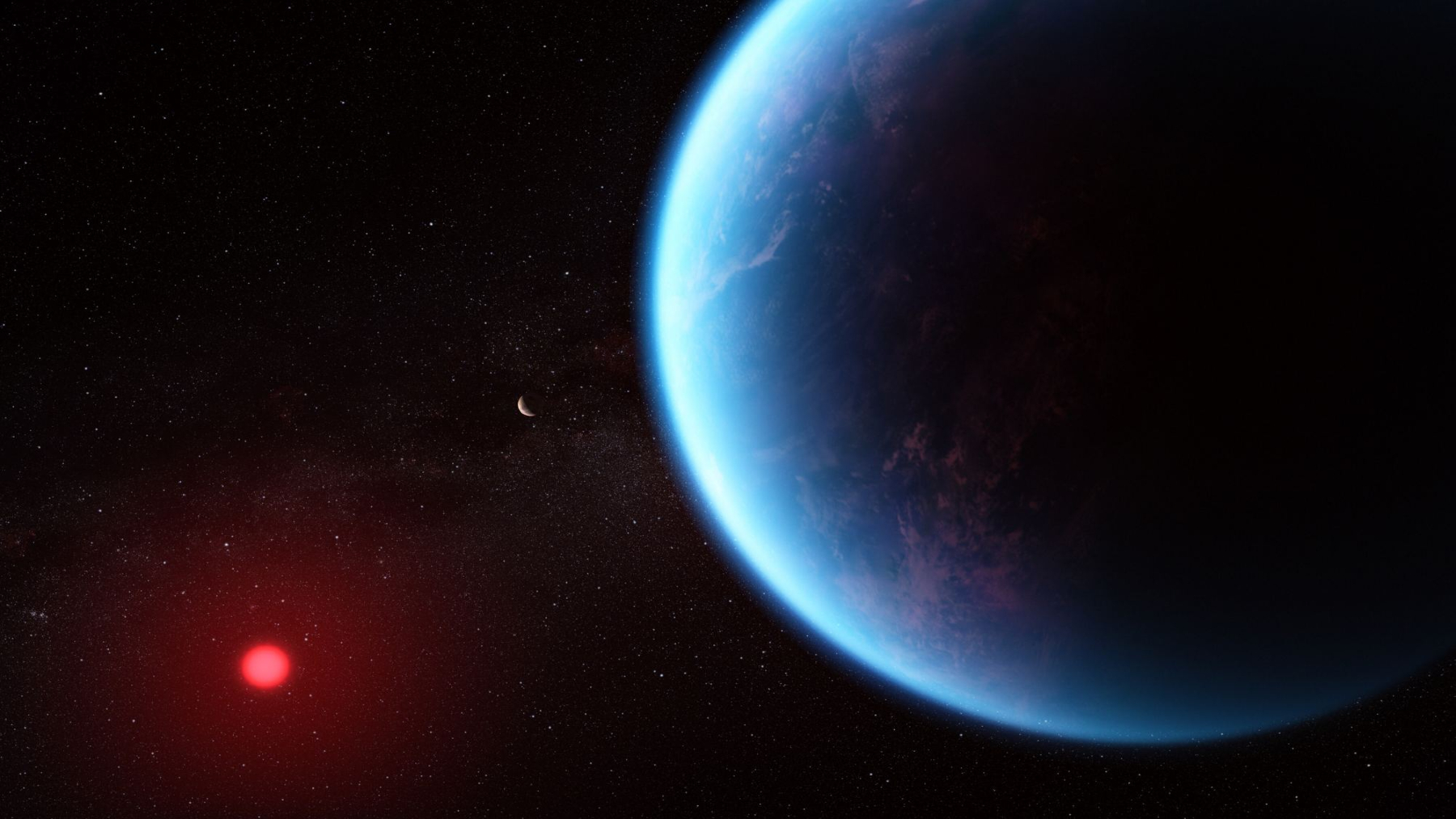
The universe is certainly full of surprises. For instance, just 218 light-years to the northwest in Lyra, a couple of “water worlds” have been found – Kepler-138c and Kepler-138d, where they are largely made of water indicated by researchers from the University of Montreal. This will force us to rethink the understanding that we have of Earth-sized planets.
Re-imagining super-Earths: An original appearance of Kepler-138cd
Kepler-138c and Kepler-138d: that was originally found as Bi (b) as part of a system being examined based on Kepler planetary 2014 year. By then, the primary system consisted of three planets, namely Kepler-138b, c and d. Subsequent studies using Hubble and Spitzer instruments, conducted by NASA, showed that c and d are composed of water predominantly.
As researchers checked how the size and mass compared with standard models of the planets, they found the densities to be much lower than average Earth density, suggesting that up to almost half of the volume of the two planets was light materials: heavier than H or He but much lighter than rock, probably water.
“Originally, we believed that slightly bigger planets than our Earth were like huge balls of rock and metal, the earlier version of our own World, just a little bit more upscale,” explains Björn Benneke, a professor of astrophysics at the University of Montreal. “With our model, we now understand that there seems to be a large fraction made up of water.”.
Water worlds beyond the Earth: Alien mega oceans
These water worlds, despite their title, are not a replica of the Earth, it has mega-oceans on the surfaces, but their properties are utterly different. For example, a planet like Kepler-138d has an average atmospheric temperature of around 80°C (170°F), whereas Kepler-138c surpasses this value.
It is thought that both have extremely thick steam atmospheres. Water can exist beneath such atmospheres possibly as a supercritical fluid, which is a state that exists at very high pressure and temperature and mixes the properties of liquids and gases. Caroline Piaulet, who is the lead author of the study, explained, “Imagine larger versions of Europa or Enceladus, the water-rich moons orbiting Jupiter and Saturn, but much closer to their star. Instead of frozen surfaces, such planets will likely have gigantic water-vapor envelopes.”
It brings a new understanding of the range of planets that we have discovered. Planets like this might not have any possibility for liquid water on rocky surfaces-probably outside its habitable zone-but their compositions are very much water-rich, making them conditionally possible objects in research in the future.
Another is the discovery of Kepler-138e, which has formed within the habitable zone of Kepler-138, but there is still a long way to go before the characteristics of this planet are known because of the absence of any transits observed specifically.
Comparing dark energy survey images to large-scale structure
Two significant additional discoveries-the identification of twin water worlds, Kepler-138c and d, and the existence of water-rich planets-show us that there are many ways for small exoplanets to be different from rocky and metallic planets.
Enticing results have been found, yet neither of Kepler-138c and d is as promising: their similarities to each other are so strikingly close it is as though they are twins (in terms of size and mass). On the other end of the scale lies Kepler-138b, found closest to the star and among the smallest of exoplanets, maybe the size of Mars.
New observatory tools and scientific methods are expected to enable researchers to have access to more water worlds in the regions further away from stars. The advancements that have been made probably are leading to the growth of methods that will determine properties of exoplanets, like the mass detection of the planets in the Kepler-138 system.
This proceeds with the transit timing-variation method such as Holczer et al. 2016; Holczer 2014. Small-time differences are developed by the gravitational interaction between planets in the system. The detection of Kepler-138c and d puts forward a major leap in our cosmic knowledge concerning the array of planetary systems.
These ocean worlds demonstrate both the possibility of life as well as the mystery of planetary formation. They are starting the exoplanet era, which involves groundbreaking exoplanet discoveries, and they will reform the concept of planets and life in the cosmos with modern technologies.