Hydrogen engines have been making waves in terms of futuristic engine solutions. While electric engines still maintain status as the most popular alternative vehicle solution in a climate sensitive world, hydrogen engines are beginning to emerge as a sustainable solution, filling the gaps in industry in ways that electrical engines are not able to do, particularly in the maritime and aviation industry.
Airbus explores hydrogen engine solutions
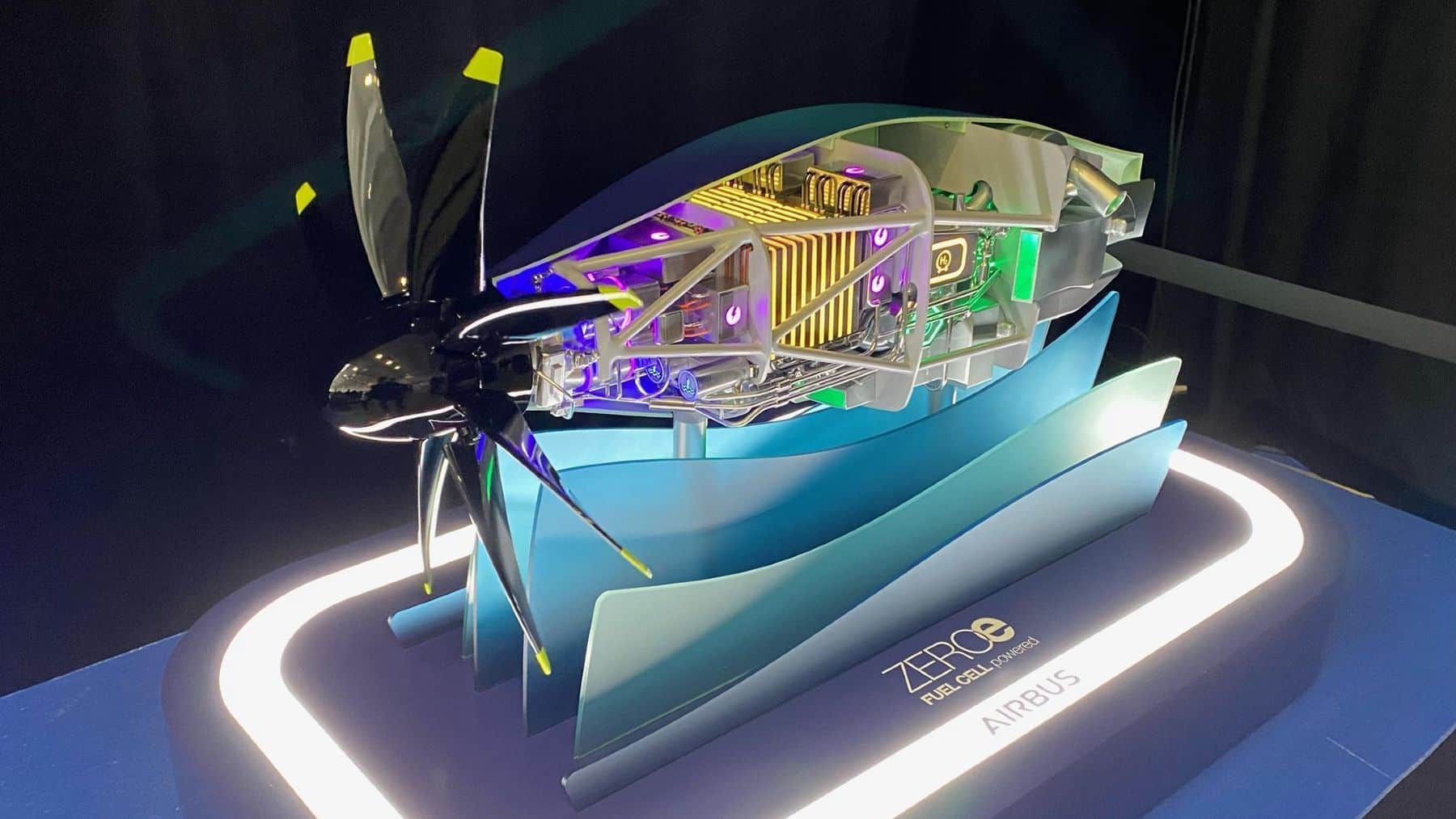
Airbus, the major aerospace corporation, has been looking to explore alternative engine solutions. They had previously announced that they planned to develop an operational hydrogen-fueled airline by the mid-2030s. The plan forms part of their ZEROe initiative to develop a hydrogen-powered 100-seat commercial aircraft for service entry.
These plans have, however, been reportedly been put on hold. Force Ouvrière, the French workers union, Airbus has postponed their plans to develop the hydrogen-powered airliner by up to 10 years. In addition t this, they are reducing their funding for the ZEROe technology program by 25%. They have cancelled “unspecified subprojects” and will no longer plan to do a flight test for a fuel cell powertrain on their A380 flying testbed.
In response to the changed plans, Airbus has said that they remain “committed to our goal of bringing a commercially viable, fully electric hydrogen-powered aircraft to market. This commitment aligns with our ambition to lead aviation decarbonization and support the industry’s long-term sustainability goals.”
They added: “We recognize that developing a hydrogen ecosystem—including infrastructure, production, distribution and regulatory frameworks—is a huge challenge requiring global collaboration and investment. Recent developments indicate that progress on key enablers, particularly the availability of hydrogen produced from renewable energy sources at scale, is slower than anticipated.”
A new focus on advancing new generation engine concepts
There were signs emerging in 2024 that the hydrogen project was to be put on hold. In December, hydrogen solutions were not present in requests for proposals for the next phase of Europe’s Clean Aviation research project. ZEROe technology development is majority supported by the Clean Aviation public-private initiative but Call 3, the first call for projects under the Phase 2 of the European program, does not include flight testing of any hydrogen engine.
Instead, Airbus appears to be planning on conducing flight tests of an open fan with evaluations of a ducted engine using the same pylon. “We have decided now that the flight test demo is going to be SAF-based, so it’s not hydrogen,” says Clean Aviation executive director Axel Klein. Commenting at the American Institute of Aeronautics and Astronautics (AIAA) SciTech meeting in Orlando, Florida, in January, he adds: “We are going to fly first with an open fan on an inner engine on an A380. So, the open fan will be first and second, we will be looking at the ducted engine proposals, which are going to be second on the same pylon.”
Is hydrogen still on the cards?
With regards to when we could see the hydrogen engine plans continuing, Clean Aviation says, “major projects corresponding to Hydrogen Powered Aircraft should be planned in the fourth Call.” Call 4 is planned for 2025 and Call 5 for 2027, so a hydrogen flight test might come later in Phase 2, but for now there is nothing firm beyond a planned ground test in 2026.
Hydrogen engines however are continuing to develop rapidly in the automobile space. Toyota in particular has been advancing hydrogen fuel-cell technology in response to the growing market demand to diversify alternative engine solutions. While electric and hybrid engines still maintain their status as the most popular green engine solution, developing hydrogen solutions is an essential step in ensuring that the internal combustion engine can be phased out without relying on one engine solution to replace them.