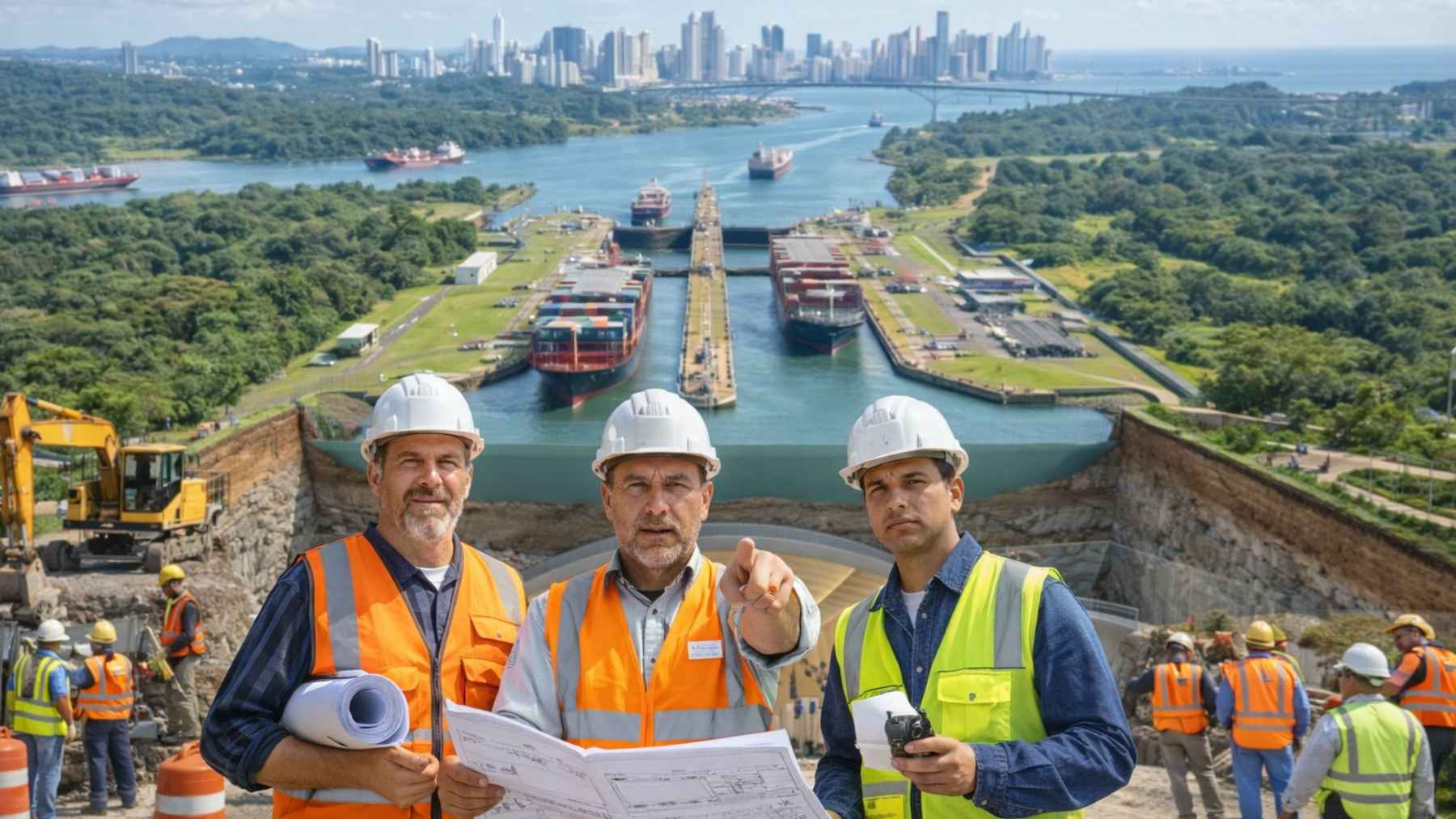
Panama City’s plan for a pedestrian and bicycle tunnel beneath the Panama Canal did not take the top prize in a tunneling contest finalized in late March 2026. The project, nicknamed “The Canal Underline,” was a finalist, but three U.S. proposals were chosen instead.
City leaders say the concept may still advance through further studies, just outside the competition. That matters because the canal is both a global shipping shortcut and a very local barrier that shapes commutes, errands, and tourism. Could a route made for feet and bicycles change daily life on both sides of the water?
A tunnel built for walking and biking
“The Canal Underline” envisions a roughly 0.6-mile underground passage that would let people cross the canal on foot or by bike, without mixing with car traffic. Panama City also stood out as the only finalist outside the United States.
Beyond the tunnel itself, the concept includes parks and public spaces at both ends, turning the entrances into places to gather instead of just places to pass through. Early descriptions also call for exhibits that explain how the canal was built and how it reshaped the country.
Why aim so small, when the canal is so huge? The idea is not to move freight, but to give residents and visitors a simple way to cross without planning their day around bridge traffic.
The contest that put it on the map
The idea was submitted to the Tunnel Vision Challenge run by The Boring Company, a tunneling firm founded by Elon Musk. The contest asked for proposals for tunnels shorter than one mile, and its rules said the company planned to pay for tunnel construction while other add-ons could be negotiated with the winning team.
Interest was strong, with 487 entries narrowed to 16 finalists. When the winners were announced, the company said it was “overwhelmed” by submissions and would support three projects instead of one, selecting proposals in New Orleans, Baltimore, and Dallas.
Even for those winners, selection is not the same as breaking ground. The contest rules emphasize feasibility checks, permits, and coordination with local officials, and they leave room for plans to change if a tunnel proves impractical.
A city split by water and traffic
The canal helped turn Panama into a crossroads of world trade, but it also slices through the metro area like a physical divider. As communities have grown on both sides, moving back and forth has leaned heavily on road links, and those can clog during peak hours.
A pedestrian and bike tunnel would not replace a metro line or a bus system. But it could add something those systems sometimes struggle with, which is a direct and predictable connection for short trips, leisure rides, and tourists who want to get around without renting a car.
In a statement posted March 24, 2026, Panama City’s mayor, Mayer Mizrachi, said the tunneling company behind the challenge was “still interested” and wanted to “dig deeper” into pre-feasibility studies outside the competition. That early phase is where engineers test whether a concept can realistically be built, permitted, and paid for.
The engineering reality under the canal
Building below an active canal is not like digging under a quiet street. Engineers have to deal with water pressure, unstable ground in some areas, and strict safety rules, since any disruption could ripple into shipping and national revenue.
This is why projects start with geotechnical studies, which are tests of the soil and rock to see how stable they are. Any plan would also need coordination with the Panama Canal Authority, along with emergency exits, ventilation, and strong fire safety systems.
Panama already has a fresh example of under-canal tunneling. The Panama Metro said its Line 3 tunnel boring machine completed the canal crossing about 213 feet below the navigation channel and had excavated about 1.9 miles of tunnel by early February 2026.
What would decide if it ever gets built
If the walking tunnel advances, the next headlines will likely be about studies, not shovels. A realistic plan would need clear answers on who controls the land at both ends, how the entrances connect to streets and bike paths, and how much it would cost to run and maintain year after year.
Public response could matter too. A tunnel meant for everyday use has to feel safe at all hours and convenient enough that people actually choose it, otherwise it risks becoming an expensive curiosity.
For now, the Canal Underline sits in that in-between space where an idea has proven it can attract attention, but still has to pass the hard tests of engineering and governance. If new feasibility work moves forward, it will show whether crossing the canal on foot is a realistic future project or just a bold thought experiment. For now, it’s wait-and-see.
The main official statement has been published by the Municipality of Panama.