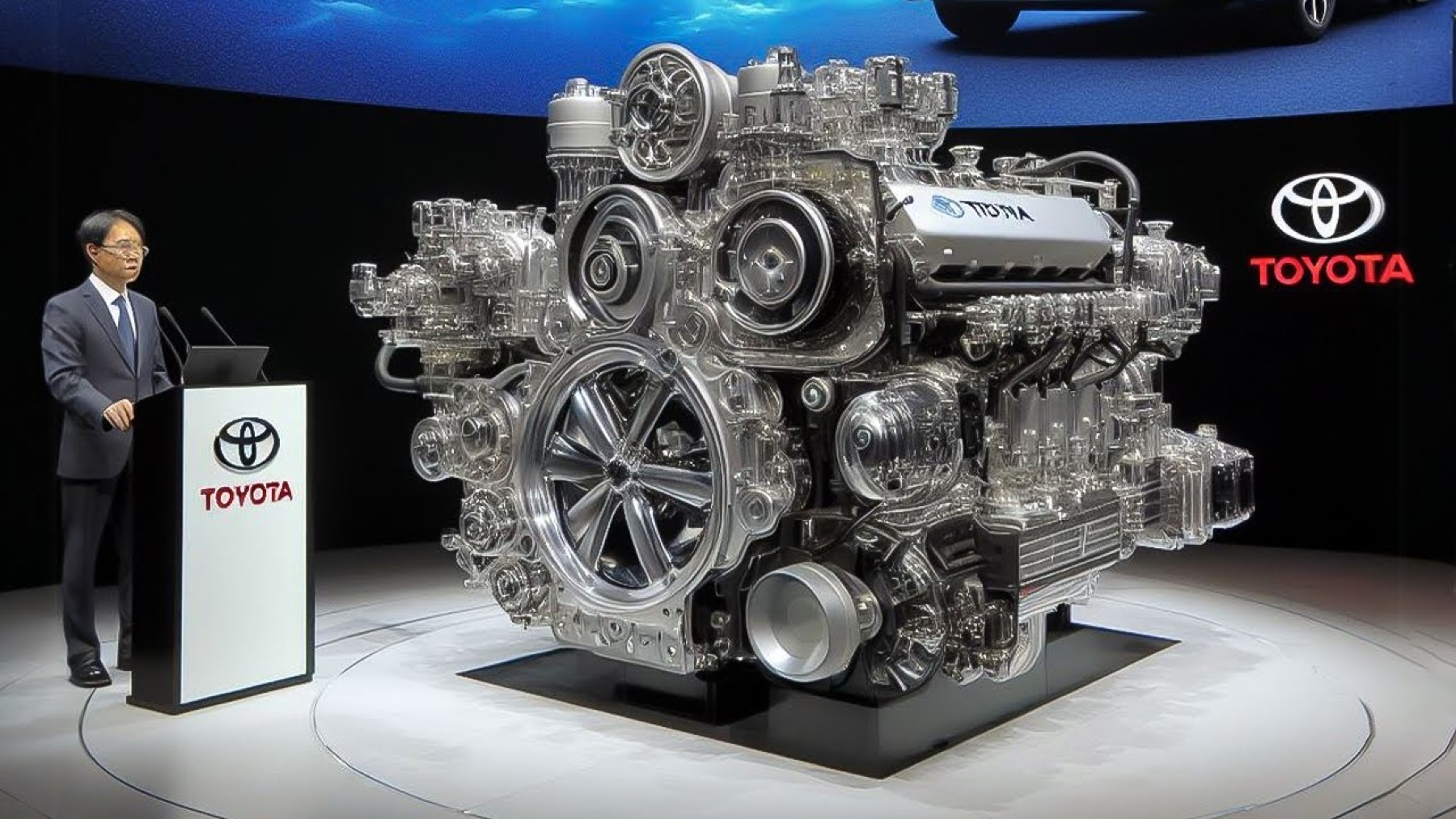
Remember when Japan used to brag to the world about Suzuki’s innovation? It’s a brand that quickly fell into oblivion, something that’s not going to happen to Toyota. It’s been a while since the legendary carmaker launched anything new, and now it has been discovered why: they have been working for years on a “secret project” that has now finally been unveiled, with the first engine that is both combustion and zero emissions at the same time. How did they achieve this? It all starts with this never-before-seen fuel.
Japan and Toyota had a “secret plan”: Now, it has been unveiled, and works with water and air
The Toyota Corolla Cross Hydrogen Concept is a pioneering vehicle in the automotive industry towards hydrogen as a fuel. This first prototype is based on the mid-size SUV and uses a modified prototype. The RZ Turbo badges hail from the GR Corolla, which runs on a 6-litre turbocharged three-cylinder.
This engine has been redesigned in such a way to enable the use of high-pressure hydrogen direct injection, which enables the combustion of hydrogen instead of gasoline or diesel. The car can host five passengers and their belongings, as the construction was not affected by the placement of hydrogen fuel tanks.
The combustion of hydrogen means the direct burning of hydrogen with an internal combustion engine to produce mechanical power with no CO2 emissions. Combustion of hydrogen involves the mixing of hydrogen with air, which is forced into the cylinders of the engine. With the help of the spark plug, a fire is ignited to cause a controlled explosion to run the vehicle.
This engine is combustion, but zero emissions at the same time: Japan has achieved the impossible
This method reduces the main greenhouse gas emissions responsible for the environmental pollution in conventional petrol engines, which allows one to achieve carbon neutrality. The Corolla Cross Hydrogen Concept showcases impressive performance enhancements achieved through its hydrogen combustion technology:
- Power Increase: The hydrogen combustion system has raised the power output by 24 percent to the level of ordinary gasoline engines.
- Torque Enhancement: Torque has been increased by 33%, and as a result, the handling of the vehicles has been made better.
- Range Extension: The driving range has been increased by about 30%. This was concerning because of one of the major issues with the use of hydrogen cars.
- Refueling Time: It has considerably been established that the refueling process was extended to about five minutes; however, with the new development, it only takes one and a half minutes, which is important to the consumers.
Tesla and BYD fear this new engine: Toyota has presented its latest prototype to beat EVs
Motorsports activities have initiated the Corolla Cross-Hydrogen Concept Development process through Toyota. The Company has taken part in the Super Taikyu endurance series with the hydrogen powered GR Corolla, where Toyota’s President, Akio Toyoda, has not only participated but also contributed to the assessment of the vehicle.
That involvement has created applied pressures in competitor environments, instantly advancing the hydrogen-burning technology and making it possible to fine-tune and check out the engine’s feasibility on a daily basis. The prototype is still being extensively tested in actual conditions, such as winter in northern Japan.
This phase is important for testing the vehicle’s use under different circumstances and durability before releasing it to the market. Currently, Toyota intends to bring the Corolla Cross Hydrogen Concept and similar hydrogen-powered automobiles to market, but only in the medium term.
Neither electricity nor gas nor methanol, but the Toyota hydrogen engine, is the invention that Japan is bringing to the world. A secret project on which they have been working for several years and that now could mean the end of Tesla EVs, aimed at the same customer segment. We will see if it really ends up being as promising as it is painted, or if it remains in oblivion as happened with the ammonia prototype that, as we denied at the time, they were never developing.