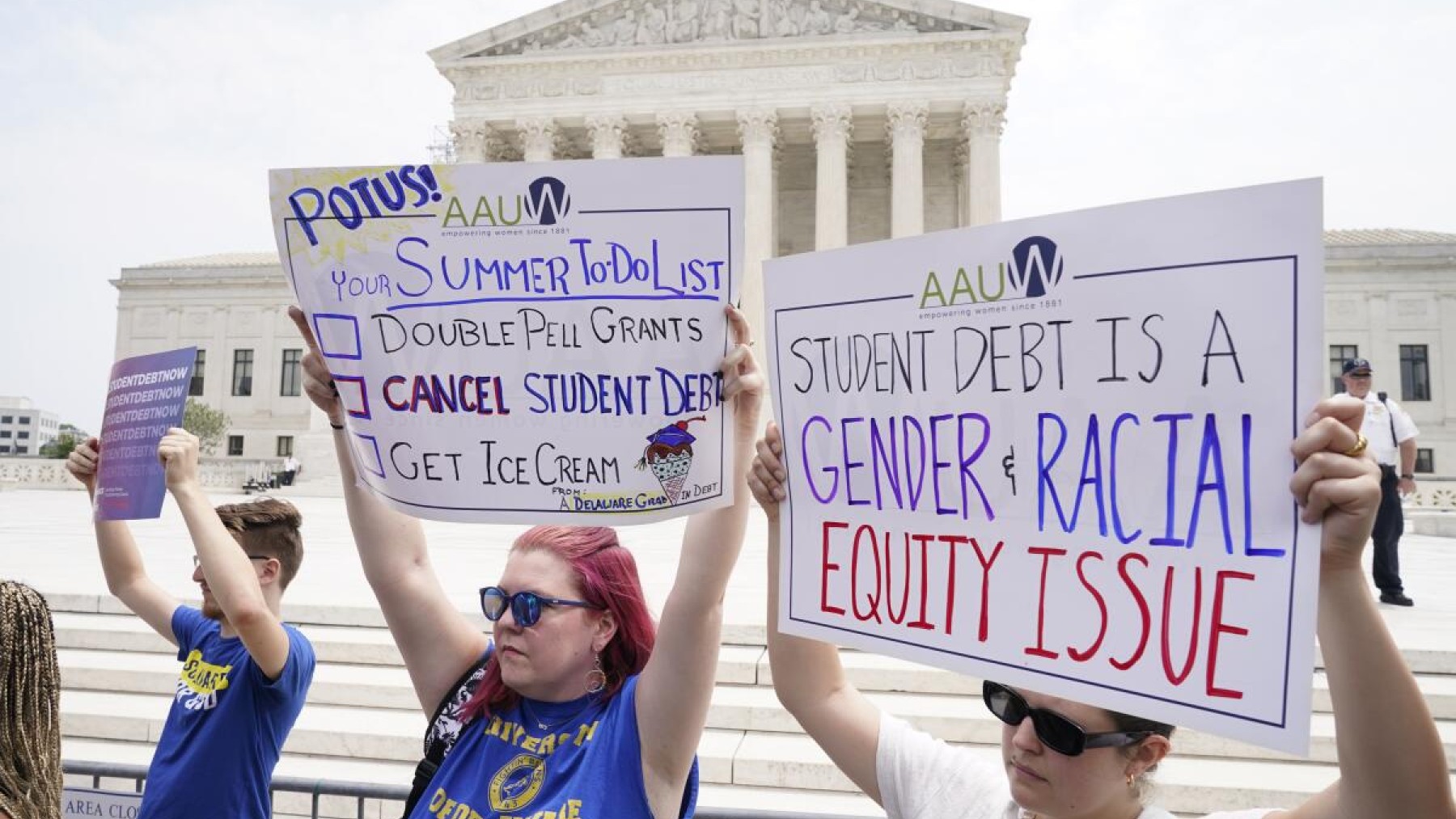
Student debt has been a significant concerns through this year’s election period. As of 2023, Americans owe more than $1.7 trillion in student loan debt, making it one of the largest forms of consumer debt in the country, second only to mortgage debt. Under President Biden’s administration, a number of efforts were made to provide student debt relief. With President-elect Donald Trump set to start his second term as president in January 2025, student debt remains a topic of strong debate.
Student debt relief under the Biden administration
The Biden administration has pursued a number of actions aimed at providing relief to borrowers and addressing the long-term challenges of the student loan system. Early in his presidency, Biden continued the moratorium on student loan payments that had been implemented during the COVID-19 pandemic under the Trump administration. This pause allowed borrowers to suspend their payments without accruing interest, providing significant relief to millions of Americans struggling due to the economic impacts of the pandemic. This pause ended in October 2023.
Biden has also supported broad student loan forgiveness for federal borrowers. During his campaign, he proposed forgiving $10,000 per borrower in federal student loans but Congress has yet to pass any significant legislation to enact this. In 2022, the Biden administration announced a $10,000 forgiveness plan for individuals making less than $125,000 per year and $20,000 for Pell Grant recipients. However, this initiative faced significant legal challenges. In 2023, the Supreme Court struck down Biden’s debt cancellation plan, ruling that the administration did not have the authority to forgive large-scale student debt without Congress’s approval.
Plans for student debt under Trump’s second term
Despite challenges Biden encountered with reducing student debt during his presidency, he was able to successfully reduce or forgive student debt for over 5 million Americans. However, Trump is known to not support student debt forgiveness and it is unlikely that initiatives the Biden administration has done to forgive student debt will be continued under Trump’s second term.
Some experts expect that Trump’s administration will eliminate the Public Service Loan Forgiveness (PSLF) program. PSLF is a federal program designed to encourage individuals to work in public service by offering student loan forgiveness after a set period of qualifying employment and payments. The program is aimed at federal student loan borrowers who work for government organizations or nonprofit organizations.
The future of student debt
Student debt remains a significant divider between conservatives and liberals. More liberal leaning individuals typically advocate for broad debt forgiveness and policies aimed at making higher education more affordable, arguing that student loan debt is a significant barrier to economic mobility, particularly for lower-income and minority students.
However, those who lean more conservatively, argue that student debt forgiveness is an unfair handout that would place the financial burden on taxpayers, including those who did not attend college or those who have already paid off their loans. Many point out that tertiary education is a choice and that it is unfair to expect taxpayers to pay for your higher education when you enroll knowing that you will not be able to pay off your student loans.
Both debates boil down to the same problem: tertiary education is (for the most part) unaffordable to the average American. Additionally, there are not enough vocational training opportunities as well as not enough career options where you can make a sustainable living without having a university degree. Over 45 million Americans carry student loan debt, and the average borrower owes approximately $37,000.
While it is unlikely that university education will ever become free as it is in some European countries, there is certainly room to argue that there needs to be a larger focus on expanding career opportunities which do not require tertiary education.