600 million light-years away from us, there is a solitary, invisible monster that is destroying any object, be it a star or a universe, that gets close enough. This is NASA’s latest discovery, which is not only historic but also slightly frightening. This monster already has a name, and we already know where it lives, so it’s best not to get too close, even though it’s basically impossible at that distance.
What, or rather, who, can cause the end of the Universe?
It’s no surprise to anyone that black holes have always been a topic that attracts the attention of not only scientists, but society as a whole, whether out of curiosity, fascination or even fear that one day they will come too close to us and destroy our universe. That’s why NASA scientists are always monitoring these events; after all, the more information, the better.
That’s why, in May of this year, NASA used the Hubble Space Telescope together with the Chandra X-ray Observatory to make a historic discovery: they found a solitary supermassive black hole that consumed a star in a rather shocking way.
This event has even been named; it’s called AT2024tvd, and it occurred 600 million light-years from Earth. But why is this so historic? Well, it revealed a very rare type of cosmic phenomenon that could change the way we understand the evolution of galaxies. And it’s not just about the phenomenon itself, but also the place where it happened and what it means for us from now on.
A black hole unlike any other
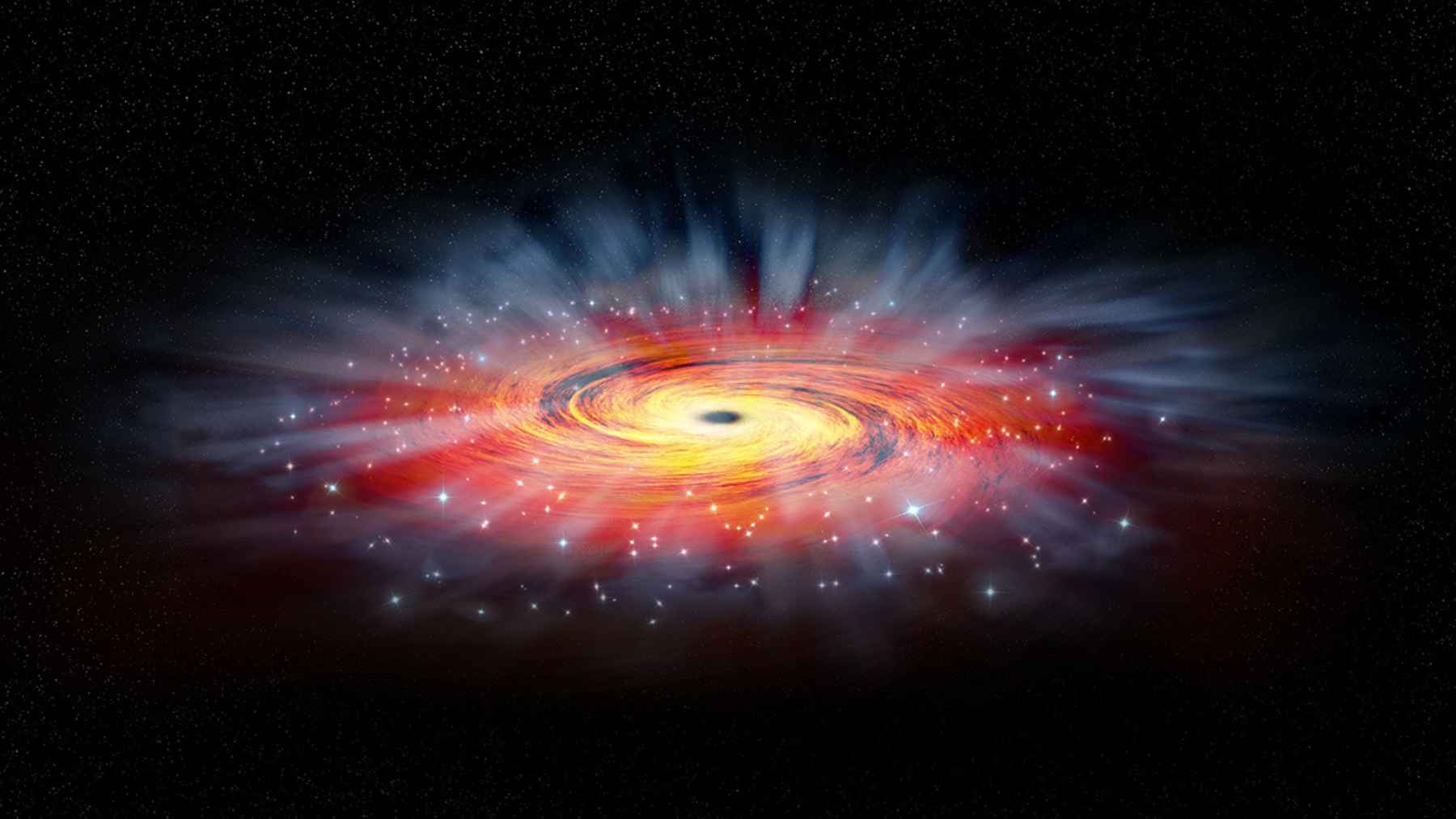
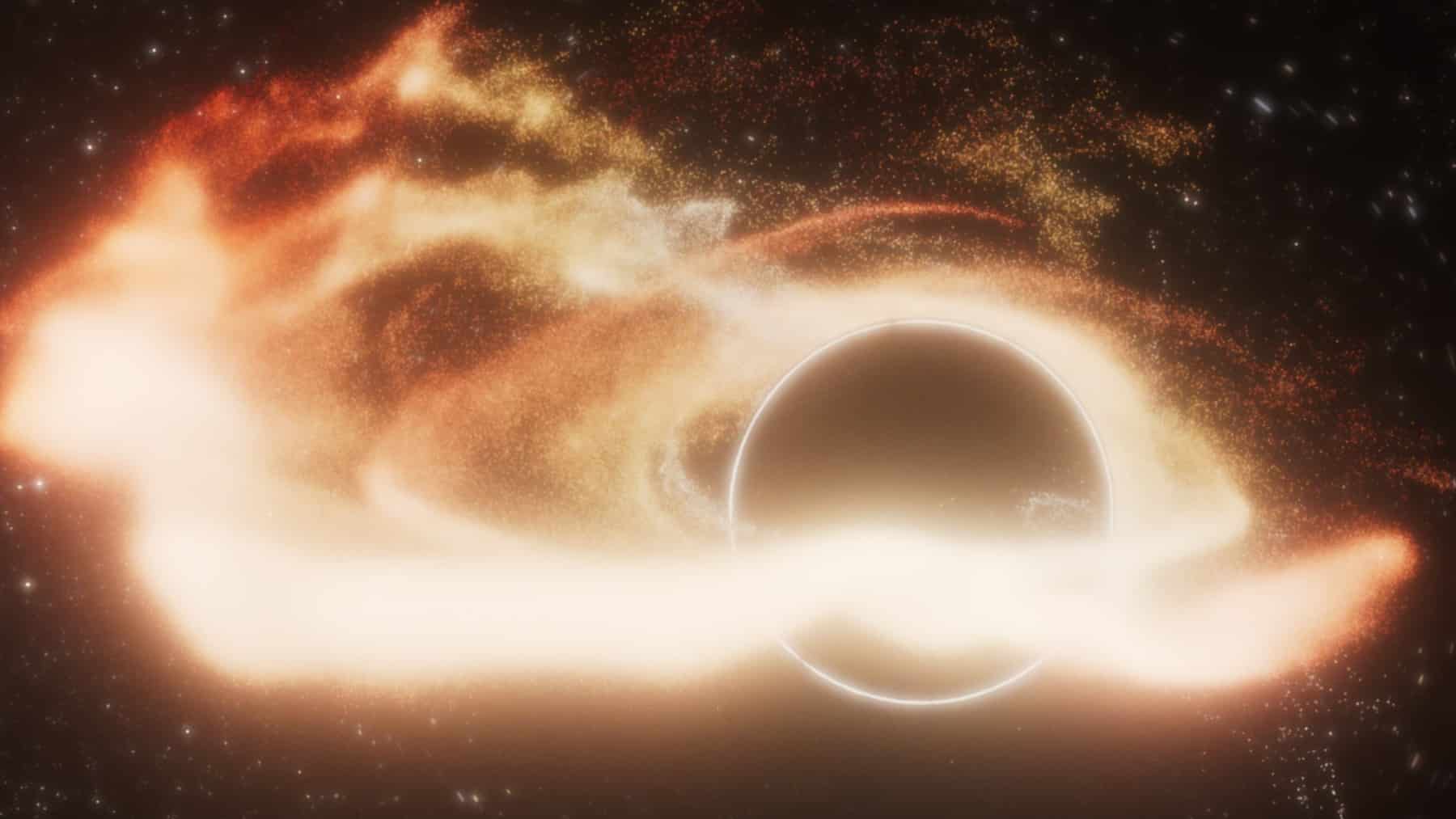
If we think about other black holes we’ve seen around (not in the literal sense, of course), we’ll realize that they follow a pattern: they exist at the center of galaxies, as a kind of gravitational core that attracts matter, gas, and stars (like the one found inside a solar system). However, this didn’t happen with AT2024tvd. Scientists realized that they weren’t facing a supernova as usual, but a TDE (tidal disruption event). What does that mean? It’s the moment when a star is torn apart by the gravitational forces of a hungry black hole.
And as if that fact wasn’t shocking enough in itself, scientists also realized that this TDE didn’t happen at the heart of the galaxy, but 2,600 light-years away from the center, where another, even larger black hole already exists. This revelation became a milestone for the first time we found a “displaced” TDE, that is, it was caused by a wandering black hole.
“AT2024tvd is the first deflected translational event captured by optical sky surveys and opens up the possibility of discovering this elusive population of wandering black holes in future sky surveys”, said Yuhan Yao of the University of California, Berkeley, lead author of the study.
Why is this discovery so impressive in our understanding of the universe?
This discovery, besides shocking everyone right away, is historic because it shows us that giant black holes are wandering through the cosmos, invisible to most of our tools here on Earth. Except when they devour a star out of nowhere and emit a luminous signal that basically screams their presence… The place where all this happened is also striking, because it is in a dark, silent and apparently empty region, unlike the usual.
We can say that it was like a flash, similar to a bright blue dot, and highlighted against the orange tone of the galaxy. All this light was from the spaghettification process of the star, whose remains were heated to millions of degrees before being swallowed. For scientists, it was like watching an end-of-the-world explosion where the universe seems to disintegrate into darkness. Yes, it was a completely different situation from when they saw this black hole explode right in front of Earth.