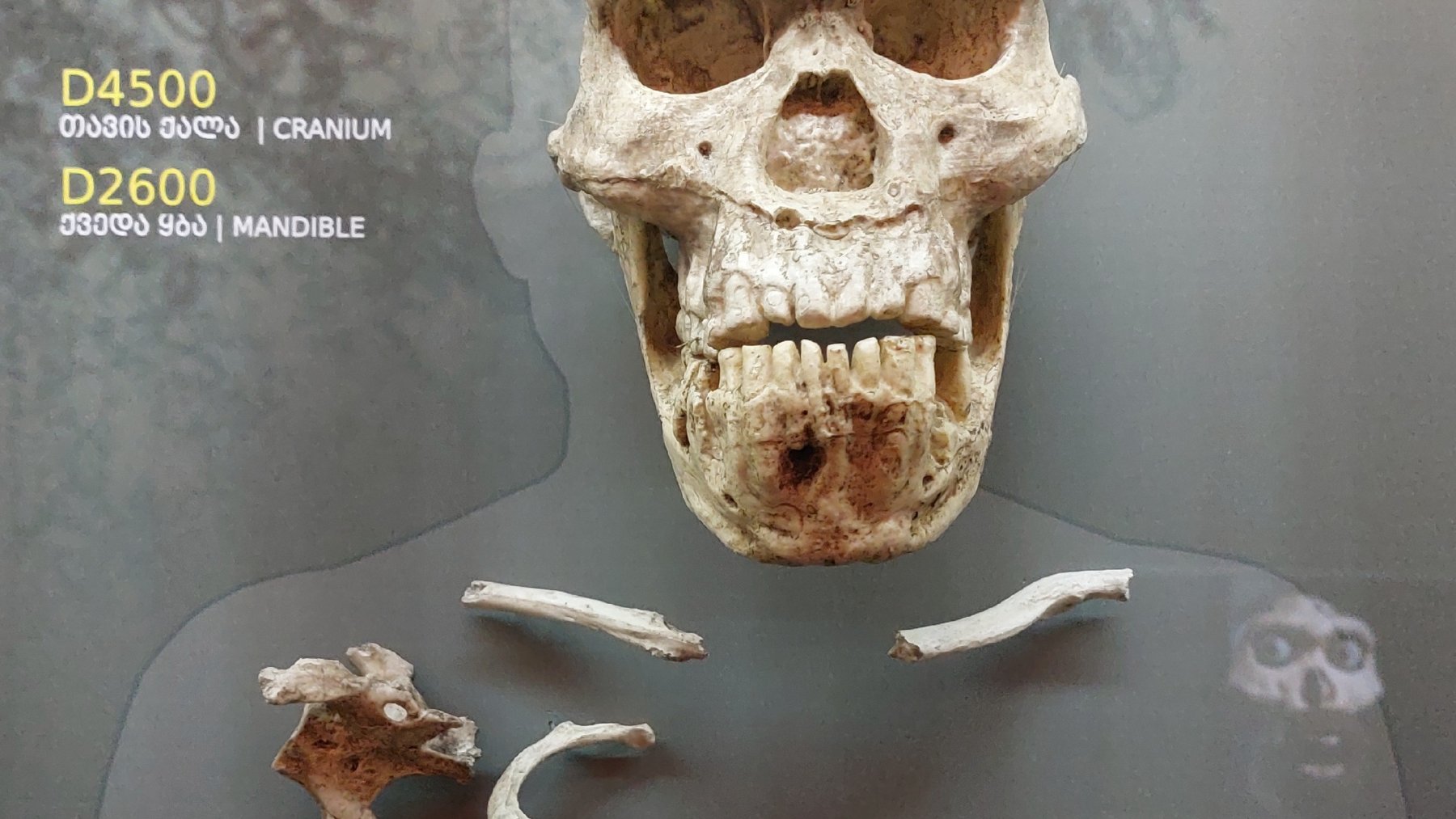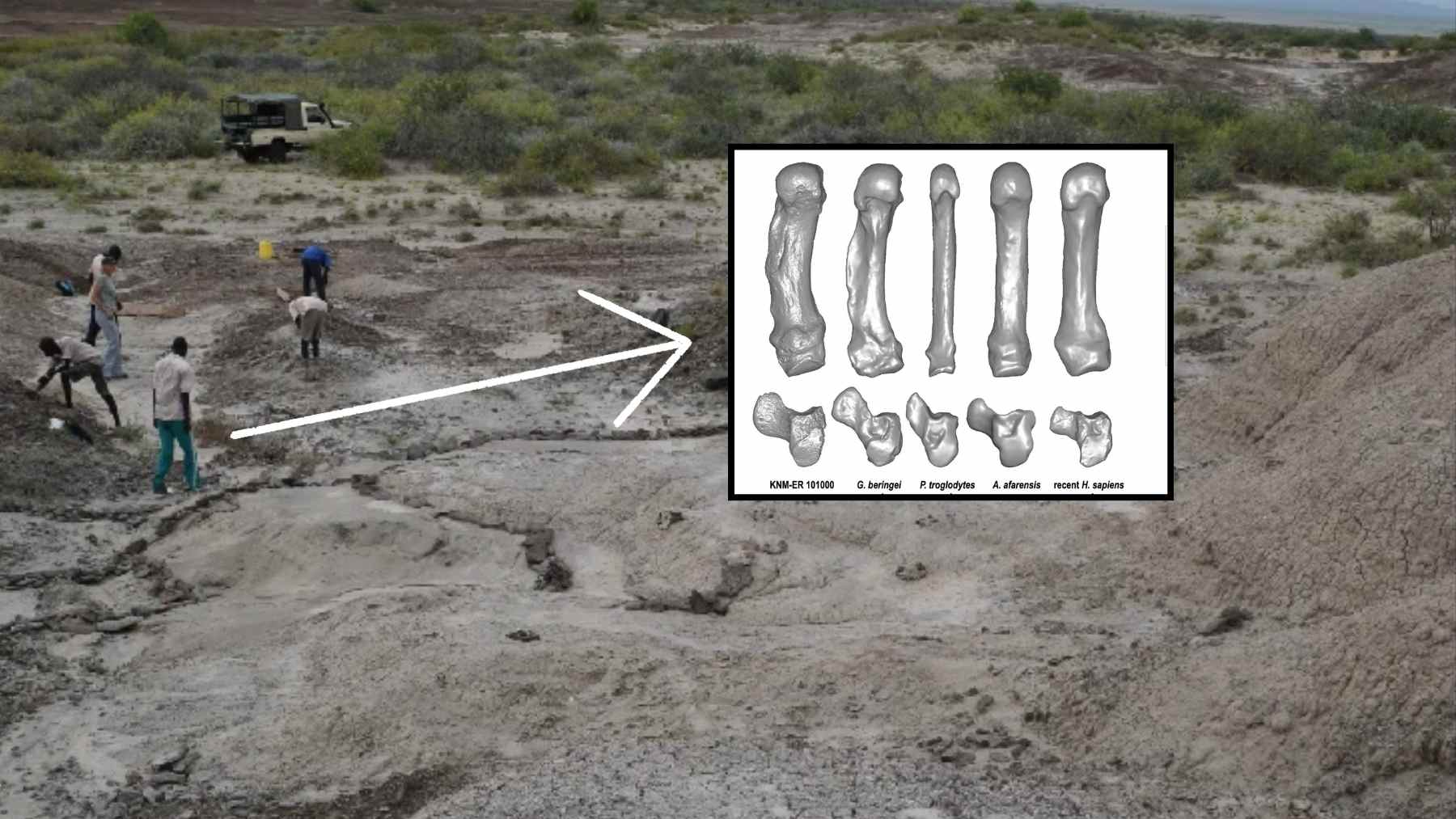
A partial skeleton found near Lake Turkana in northern Kenya includes the first hand and foot bones ever linked to Paranthropus boisei. The fossils, about 1.52 million years old, show a tool ready grip and a fully upright stride.
Researchers excavated the bones at Koobi Fora on the lake’s eastern shore, a place known for early human history. The find points straight at how this stocky cousin of ours moved and used its hands.
What the fossils show
Lead researcher Carrie Mongle of Stony Brook University (SBU) reports a study describing a skeleton with hand bones, three foot bones, teeth, and skull fragments. The team labels the find KNM-ER 101000 and this is a standard Kenyan museum catalog code.
The hand shows a long thumb relative to the fingers, a setup that boosts precision grip, thumb to fingertip pinching used for fine control. Strong muscle marks on several bones hint at repeated forceful use, especially during tough food processing.
The foot bones point to a lateral arch, the outer curve that stiffens the foot for push off. That design fits a two legged gait with energy saving recoil and a forward driving step.
In short, these bones reveal a gripping hand and a walking foot in the same individual. That joint evidence was missing for this species until now.
Why this changes the story
For decades, Paranthropus boisei was known mainly from skulls and teeth. As a hominin, human lineage after the split with chimpanzees, its story lacked evidence from hands and feet.
At Lomekwi in northern Kenya, 3.3 million year old stone tools showed that toolmaking began long before our genus appeared. That result challenged the old view that only early Homo shaped rock into cutting edges.
Nyayanga on the Homa Peninsula yielded Oldowan findings near 3.0 million years, along with Paranthropus molars. Oldowan, the earliest simple stone tool tradition, marks flake making by striking stone.
The new bones show that Paranthropus boisei had the right parts to pinch, pull, and press with control. They also show a foot tuned for pushing off, not for grasping branches.
How researchers know the age and identity
The fossils were buried in lake margin sediments tied to well studied Turkana layers. Age estimates cluster around 1.52 million years based on the position of volcanic markers and the site stack.
Identity rests on teeth and skull details that match Paranthropus boisei. A thick enamel and a crest for jaw muscles fit the species.
The hand and foot bones were found with those teeth, in the same small excavation area. That association lets scientists tie the limbs to the face and chew gear with confidence.
A human relative with a different skill set
Paranthropus boisei lived alongside Homo erectus and other early Homo species in East Africa. Several species shared the same lakes and riverbanks, likely drawing on different strengths.
“This is the first time we can confidently link Paranthropus boisei to specific hand and foot bones,” said Mongle, stressing the significance of linking hands and feet to this species.
“It would have had a very firm handshake,” said Louise Leakey, the director of the Koobi Fora Research Project (KFRP). Leakey has highlighted how powerful those hands were during daily tasks.
“We can tell from the few foot bones that it was fully bipedal,” said Leakey, also noting a fully upright stride supported by the foot bones.
What questions remain
Do these bones prove that Paranthropus boisei made tools, or only that it could have used them. The anatomy says the hands could shape and hold flakes, but behavior is tested best at sites with tools and bones together.
Even if this species climbed on occasion, the finger shapes are not the curved style seen in tree living apes. The foot looks tuned for land travel, with stiff joints that resist twist and bend.
The next step is to expand the tool record from the same layers at Koobi Fora. A broader sample could clarify how this cousin divided labor with early Homo along the same ancient shores.
What the hand says about behavior
The thumb base is more curved than in humans, so load passed differently through the wrist. That shape likely made pinch less efficient while keeping power grips strong for repeated squeezing and pulling.
Researchers also point to very robust finger bones that resist bending and twisting. The pattern matches gorillas in some ways, hinting at hard manual tasks in food processing rather than frequent climbing.
Beneath the ankle, the foot shows a stiff midfoot and a long big toe bone for push off. Those features reduce grasping ability but help steady two legged walking over uneven ground.
How this fits into East African timelines
This species lived through intervals of shifting lakes and grasslands in the Turkana Basin. That backdrop likely favored different strategies, from plant heavy diets to flexible foraging with stone tools.
The new skeleton belongs to a single individual recovered from a tight grid of excavation squares. Geologists mapped the layer against known marker beds, tying it to the region’s dated volcanic sequence.
Old debates about the famous OH 7 and OH 8 hands and feet may be reexamined with this find. Linking teeth and limbs in one place offers a clearer baseline for sorting mixed fossil sets.
What to watch next
Archaeologists will look for cut marked bones and stone chips in the same layers as this skeleton. Those pairings can test how often Paranthropus boisei picked up tools for meat or plant work.
Careful computed tomography and 3D modeling can quantify wear and muscle scars on each bone. That approach turns small ridges and joint curves into measurements that speak to daily force and motion.
If future sites turn up a stone cache beside a Paranthropus boisei skeleton, the debate will shift from could to did. Until then, this hand and foot set anchors a real, testable picture of its abilities.
The study is published in Nature.