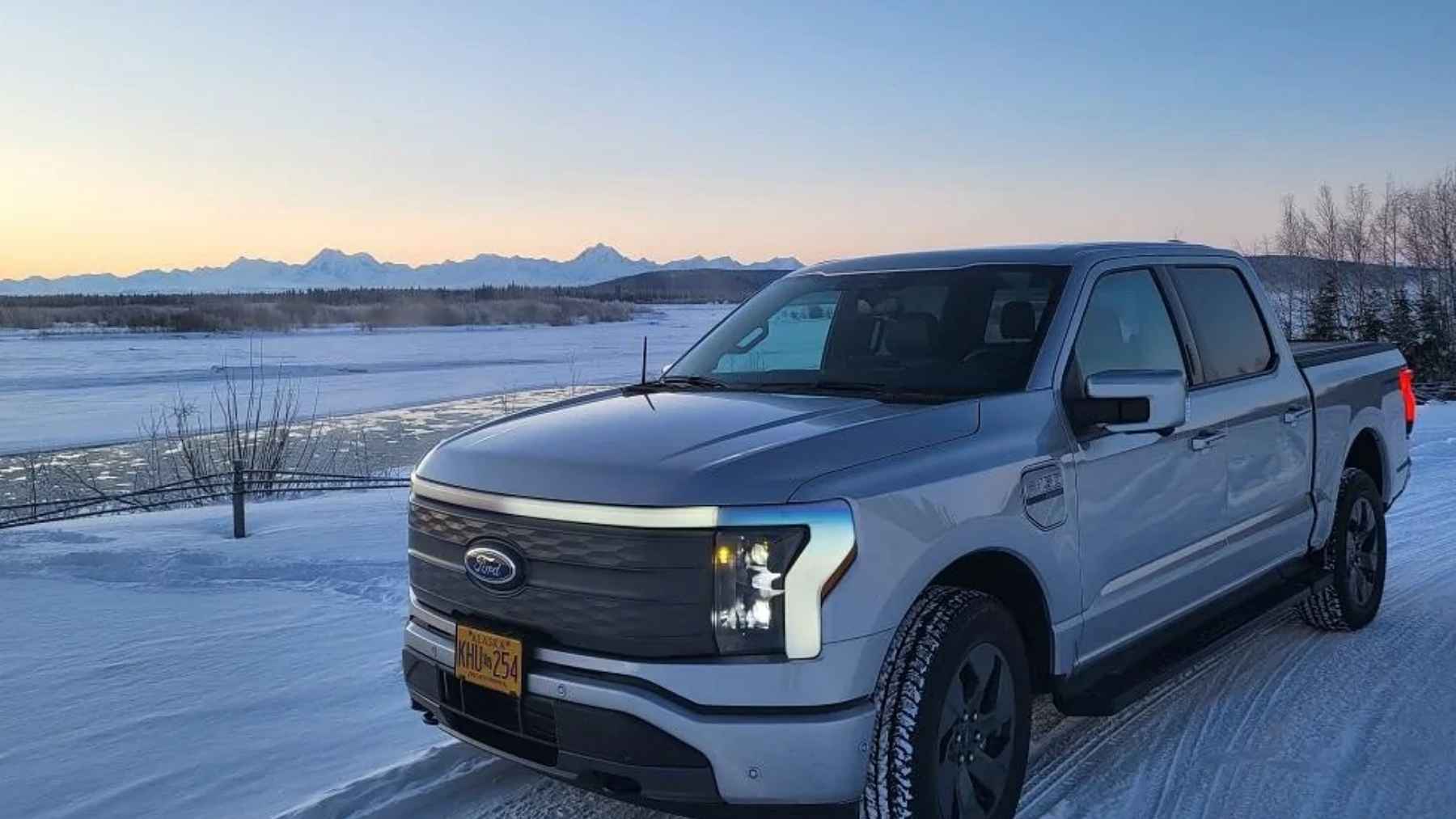
When the temperature drops into single digits, many electric vehicle owners notice their trucks start acting differently. Range shrinks, charging takes longer, and the electric bill creeps up just when the heating bill is already painful. That is exactly what Ford F-150 Lightning owner Devin Trainor saw when he pointed a thermal camera at his truck in a Maine driveway at about 3 degrees Fahrenheit and watched the battery area glowing hot against the frozen night.
His takeaway was blunt: keeping a big hunk of metal warm in the driveway all winter costs real kilowatt hours and real money. Many Lightning owners are now wondering whether leaving the truck plugged in every night is smart battery care or a steady drain on their wallets. To get past guesswork, we can look at new lab research on cold weather charging and large data sets from everyday EV use to see what really happens when the mercury plunges.
A Ford F-150 Lightning Owner Puts Winter Charging Under the Lens
Trainor, who drives a 2024 Ford F-150 Lightning Flash extended range, charged his truck from about 80 to 90 percent on a night when the outside temperature was roughly 2.7 degrees Fahrenheit. After charging, he moved the truck and used his thermal camera on the patch of driveway where it had been sitting. The images showed a warm rectangle on the pavement, proof that a lot of the energy he bought had ended up as heat leaking into the winter air instead of stored in the battery.
Other Lightning owners in the same online group described similar experiences. One driver said he stopped plugging in every night because, below freezing, the truck used a noticeable amount of energy each evening just to heat and condition the battery, even though a single charge could last him most of the week. Another commented that he did not need a camera at all, because his driveway snow melts right under the truck whenever it charges on very cold days.
What The Lab Says About Cold Weather EV Charging
Those stories line up closely with what scientists have seen in controlled experiments. In a climate chamber at the European Commission’s Joint Research Centre (EC) in the Netherlands, researcher Germana Trentadue and colleagues ran a 2018 study in the journal Energies that tested seven commercial 50 kilowatt fast chargers and two electric vehicles at temperatures from around minus 13 degrees Fahrenheit to about 104 degrees. They measured how much power the chargers pulled from the grid and how much actually reached the vehicles, then worked out an “energy return” number that shows how many units of electricity you must buy to store one unit in the battery.
At comfortable conditions near 77 degrees Fahrenheit, the chargers worked close to their rated power, and roughly 90 percent of the energy from the wall ended up in the pack. In deep cold near minus 13 degrees, one charger’s efficiency slid to about 40 percent, so more than half of the electricity turned into waste heat instead of useful charge. The team also saw some chargers fall into error states in extreme cold, a reminder that electronics, cables, and displays are all stressed when the air outside feels like the inside of a freezer.
Why Your Truck Uses More Power On Freezing Nights
Cold weather slows the chemistry inside a lithium ion battery and makes it harder for current to move. To a large extent, the battery management system in a modern EV reacts by limiting how quickly the pack can be charged or discharged until it warms up, so drivers do not damage the cells.A 2023 review of electric vehicles in cold climates found that low temperatures can significantly lengthen charging times and force fast chargers to run well below their rated power, especially once temperatures drop into the teens and below.
For a big pickup like the F-150 Lightning, the effect is stronger because the battery pack is huge and heavy, so it takes a lot of energy to bring it from well below freezing up to the “happy zone” near room temperature. An analysis of 4,200 electric vehicles and millions of trips found that around 5 degrees Fahrenheit, many EVs only deliver a little more than half of their official rated range, with the rest of the energy going into warming the battery, cabin, and even tires on cold pavement.
Tips For Ford F-150 Lightning Owners In The Cold
So what can owners do besides watching a heat-shaped outline of their truck appear on the driveway. One option, which some Lightning drivers already follow, is to skip plugging in every single night if daily driving barely dents the battery. Waiting until the state of charge falls to around 40 or 50 percent before charging again cuts down on how often the truck has to drag the pack all the way up from freezing, which can save both time and kilowatt hours over a long winter.
Ford suggests a slightly different approach in its winter electric vehicle guide. The company advises parking in a garage or covered spot when possible, keeping the vehicle plugged in during longer stops, and setting departure times so the truck can warm the battery and cabin while it is still drawing power from the grid rather than from the pack itself. On 2024 and later F-150 Lightning models, a vapor injection heat pump moves heat more efficiently than traditional electric heaters, which can reduce the extra energy needed to keep both driver and battery comfortable on bitterly cold days.
Cold Weather Costs Are Real, But They Are Manageable
In practical terms, all of this means winter really does change how much electricity your electric pickup uses, even if it never leaves its parking spot. Trainor’s thermal camera photos, the stories about melted snow, and the bump in winter electric bills are all different views of the same pattern that lab tests have confirmed: when the air is brutally cold, chargers and batteries waste more energy as heat and take longer to reach the same state of charge.
At the end of the day, that does not make a Ford F-150 Lightning or any other EV the wrong choice for drivers in snowy states, but it does mean owners need to plan for longer charging sessions, higher winter energy use, and smarter habits about where and when they plug in. Automakers and researchers are already working on better thermal management and charging strategies to ease those penalties for future vehicles, yet for now understanding the physics can help drivers decide whether to keep the truck toasty all night or save a few kilowatt hours for the next electric bill.
The main study has been published in the journal Energies.