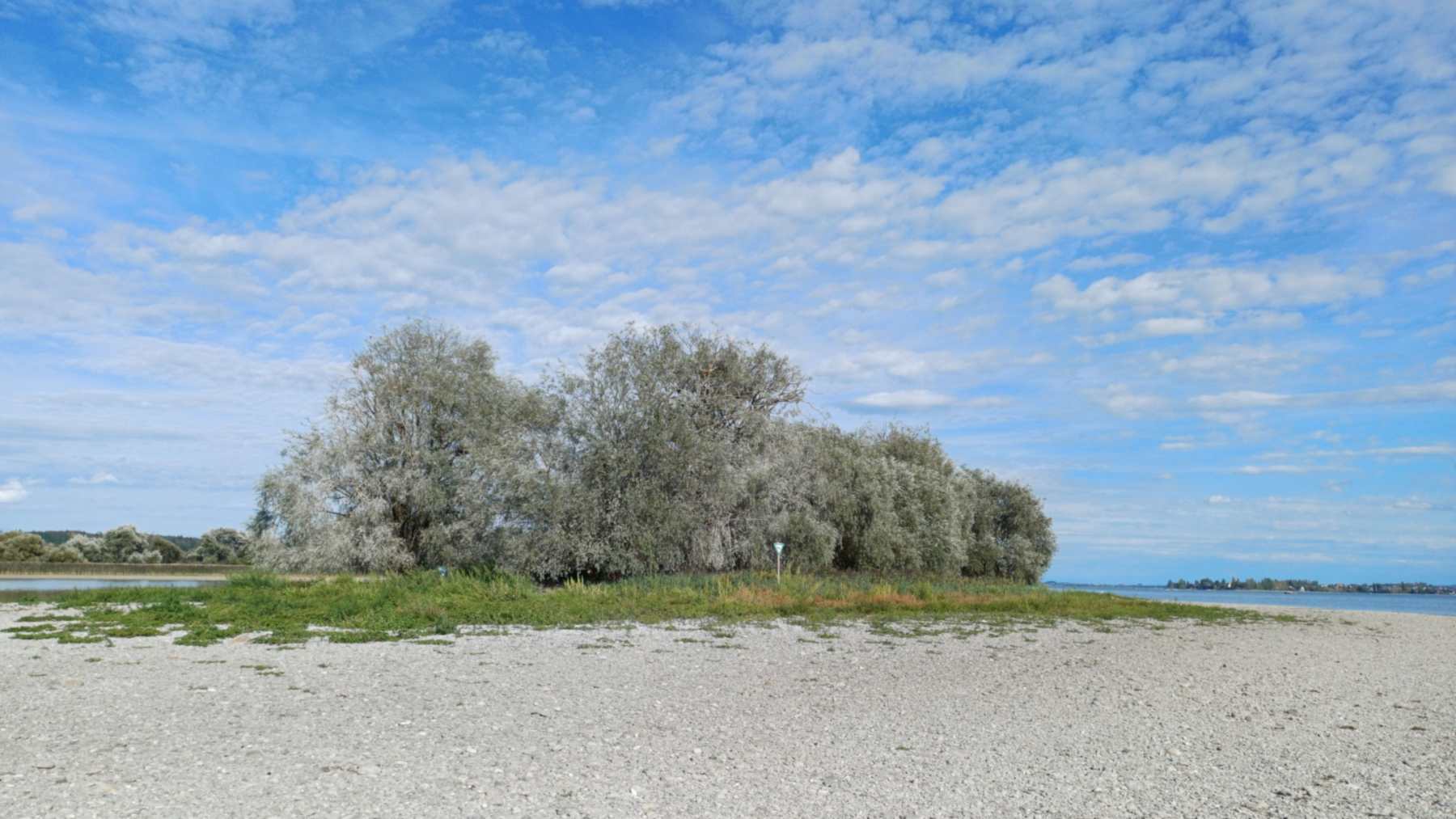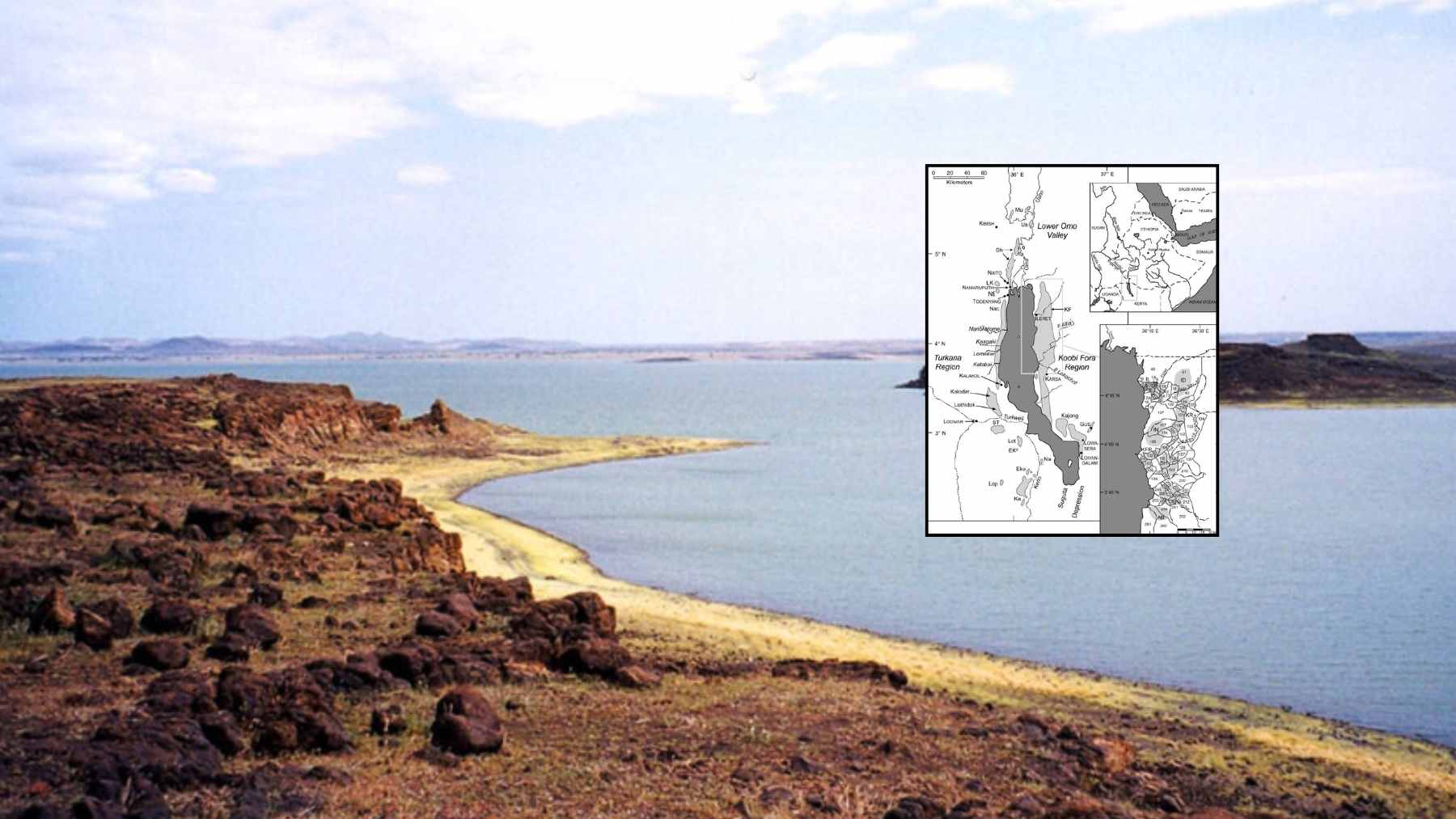
When you stand on the baked shores of Lake Turkana today, it can feel like the middle of nowhere. Hot wind, dust, a desert lake that depends on a single river for most of its water. Yet beneath those same rocks lies one of the richest archives of human origins on Earth. A new open access study now counts that archive in detail and shows that this harsh landscape has quietly preserved about one third of Africa’s known hominin fossils from the past seven million years.
The team, led by François Marchal, Denné Reed, and Sandrine Prat, pulled together 117 separate publications into one integrated catalog of the Omo Turkana Basin, which stretches from the lower Omo River in Ethiopia down to the shores of Lake Turkana in Kenya. In total, they log 1,231 hominin specimens representing an estimated 658 individuals, most dating between about 4.2 and 1.3 million years ago.For a region that today is hot, semi desert and strongly dependent on a fragile water balance, that is an extraordinary deep time record of changing habitats.
At first glance, the timeline sounds almost continuous. Look closer and the picture becomes more sobering. Marchal and colleagues show that for much of the interval between 6 and about 0.8 million years, the basin actually preserves fossils for only about 1.33 million years in total. Large gaps appear, for example between roughly 3.9 and 3.6 million years and again around 2.9 to 2.75 million years, and fossils become very rare after 1.5 million years. Even in the best studied basin on the continent, three quarters of deep time is either blank or nearly so.
The record is uneven in space as well as time. Western exposures capture some of the oldest hominins, northern outcrops in the lower Omo Valley are richest for the interval between about 3.2 and 2 million years, while the eastern Koobi Fora area is especially dense for fossils younger than about 2 million years. This patchwork matters because scientists often compare species across the basin as if they shared the same lakes and river margins at the same moment. The new synthesis shows that, to a large extent, each area is preserving different chapters of the story.
Another surprise sits in the details of who is actually present. For years, many overviews have pictured the genus Homo as rare before 2 million years, almost a marginal player beside more robust relatives. The new analysis tells a different story. The authors identify at least 45 individuals that belong to early Homo between 2.7 and 2 million years ago, most of them in the northern part of the basin, and they estimate that the true number could reach roughly 75 once poorly identified specimens are fully studied. In other words, early members of our own genus were present in this landscape for hundreds of thousands of years before the classic East African skulls that usually make the textbooks.
The work also quantifies a long noted pattern in how different hominin lineages shared the same ecosystems. Wherever the robust genus Paranthropus and Homo overlap in the Omo Turkana record, Paranthropus fossils are usually about twice as common as Homo. That ratio holds for roughly 1.5 million years of coexistence, suggesting that big jawed, heavy-chewing specialists were, for the most part, more numerous in these ancient mosaics of lakeshore, river bank and open woodland. The exception, intriguingly, sits in the Upper Burgi and KBS rock units at Koobi Fora, where the ratio flips and Homo fossils outnumber Paranthropus by roughly two to one and more complete skulls and limb bones are preserved.
Why this reversal happens is still not fully understood. The authors test several ideas involving lake levels, river systems, and the kinds of sediments that tend to preserve heads and limbs rather than scattered teeth. None of those explanations quite fits on its own. What the study makes very clear, though, is that preservation bias is not a small detail. About 56 percent of all Omo Turkana hominin fossils are isolated teeth, rising to more than 80 percent in some northern exposures, and only about 70 percent of specimens can currently be assigned confidently to a species. When researchers debate how flexible early Homo was, or how tough the diet of Paranthropus might have been, they are often arguing over a handful of jaws and skull fragments floating in a sea of teeth.
All of this is happening in a basin that is still under environmental pressure today. The Omo River provides roughly ninety percent of Lake Turkana’s inflow, and modern studies warn that dam building, irrigation projects, rising temperatures and repeated droughts are already reshaping water levels, fisheries and local livelihoods around this desert lake. Fossils from Omo Turkana show that hominins have weathered big climatic swings here before. The new catalog reminds us that our view of those past changes is fragmentary and that even the richest archive needs to be read with care.
The study was published in the Journal of Human Evolution.