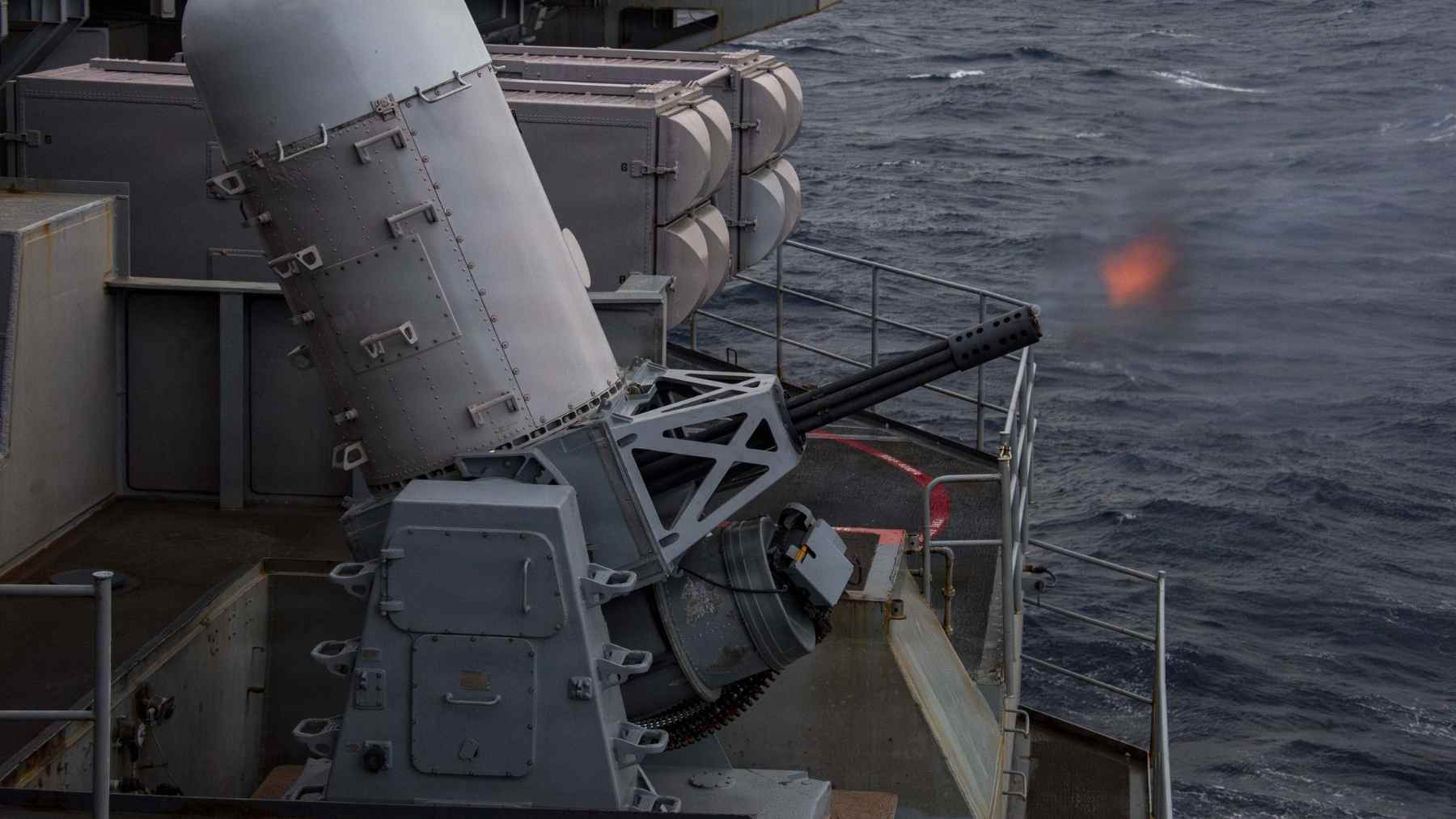
A few days ago, the U.S. Navy’s nuclear powered aircraft carrier USS Abraham Lincoln carried out live fire exercises in the South China Sea, including tests of its Phalanx Close-In Weapon System, as part of routine carrier strike group operations in the Indo Pacific.
From a security angle, this is business as usual. From an ecological angle, it is one more layer of pressure on one of the most biodiverse and already damaged seas on Earth.
A supercarrier in fragile waters
The Abraham Lincoln Carrier Strike Group arrived in Guam for a scheduled port visit in December, before resuming operations in the U.S. Seventh Fleet area, which includes the South China Sea.
Rear Adm Todd Whalen summed up the mission in straightforward terms when he said that the strike group presence in Seventh Fleet waters shows a commitment to a “free and open Indo Pacific” and that port calls like Guam help the group stay ready for maritime operations.
Photographs released by the Navy and reported by the Australian Naval Institute show the Nimitz class carrier firing its Close-In Weapon System on January 8 while underway with its strike group in the South China Sea.
So on the surface this is a story about deterrence and sea lanes. Below the surface, literally, the story looks very different.
An underwater world already under pressure
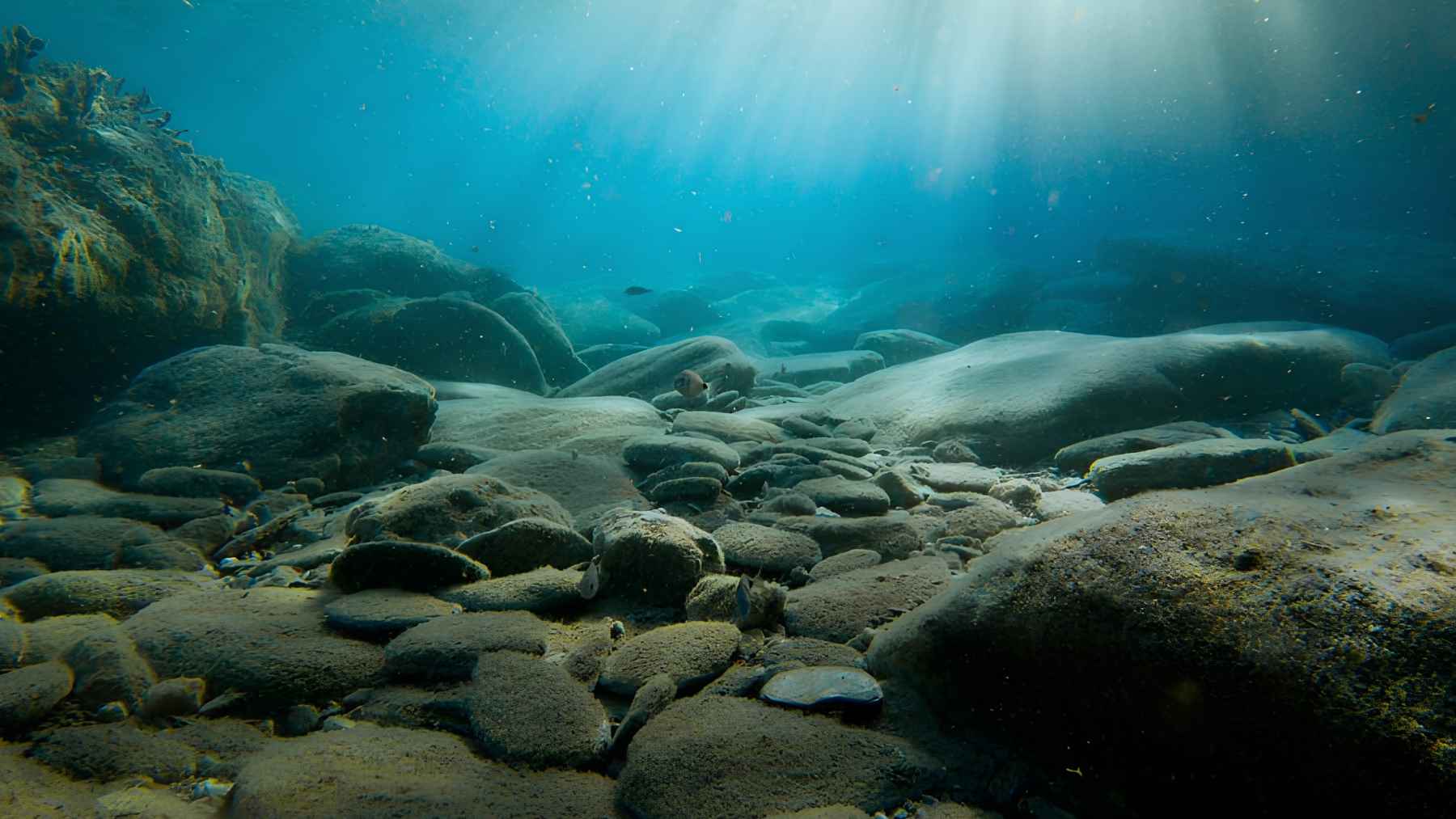
The South China Sea is one of the planet’s great marine treasure troves. Analyses compiled by the Center for Strategic and International Studies describe more than 6,500 marine species there, along with over 570 of the world’s reef forming coral species.
Those reefs are the foundation of a food web that supports about 22 percent of all fish species and around 12 percent of the global fish catch. At least 3.7 million people in surrounding countries depend directly on these fisheries, and more than half of the world’s fishing vessels work in these waters.
Yet the ecosystem is already buckling. Studies of the region point to coral cover declining by about 16 percent per decade, while overfishing has driven estimated fish stock losses of 70 to 95 percent since the 1950s.
On top of that, the world is living through the most extensive global coral bleaching event ever recorded, with extreme ocean heat battering reefs in at least 82 countries. The South China Sea is not immune to that warming.
Add land reclamation, dredging and giant clam harvesting, which have already erased or scarred large areas of reef, and you get an ecosystem that is stressed long before any naval gunnery practice begins.
Noise, blast and the lives of whales and dolphins
Militaries are not the only source of harm at sea, but their footprint is distinctive. A recent scientific review of anthropogenic sound in the oceans lists explosions, large commercial ships and military sonars among the loudest human made sources. The authors conclude that such noise can cause hearing loss, disrupt communication, alter behaviour and, in extreme cases, contribute to mass strandings of marine mammals.
At the same time, new work in the deep waters of the northern South China Sea shows just how much is at stake. A 2025 study in the journal Animals documented 28 encounters with whales and dolphins, involving 12 species and more than one thousand individual animals, and described the area as having “remarkably rich cetacean biodiversity”.
The same paper warns that these animals already face strong pressure from fishing, dense shipping traffic and oil and gas activities, and that robust conservation policies are urgently needed.
Put that together with the bangs and rattle of live ammunition and high-speed aircraft and you get an uncomfortable question. How much extra stress can these animals absorb?
Even governments are starting to acknowledge the collateral damage of training at sea. In late 2025, an ecological report from China’s Ministry of Natural Resources, cited by state media, attributed damage to coral reefs around Scarborough Shoal partly to “bomb dropping” military activities, alongside illegal fishing and repeated intrusions.
The hidden climate cost of naval power
There is also the quieter issue that never shows up on a household electric bill. Military activity is energy hungry. A landmark study for the Conflict and Environment Observatory and Scientists for Global Responsibility estimated that the world’s militaries account for roughly 5.5 percent of global greenhouse gas emissions, which would give them the fourth largest national carbon footprint if they were treated as a single country.
More recent research in Nature Communications finds that when the global share of military spending rises, so does the carbon intensity of the world economy. According to that study, past wars and military build ups explain more than a quarter of the change in global emission intensity since the mid 1990s, and high future military spending could make the Paris climate targets unattainable.
Navies are part of that picture. Even if a supercarrier is nuclear powered, its escort ships and, above all, its fast jets burn large volumes of fossil fuel. That fuel use quietly links live fire drills in a disputed sea to rising temperatures that are bleaching corals and heating the very waters those ships sail through.
Looking at security through a green lens
None of this means aircraft carriers will vanish from strategic hotspots any time soon. But scientists and environmental analysts are increasingly arguing that security planners should treat the ocean itself as critical infrastructure.
In practical terms, that can mean mapping whale and dolphin hotspots and routing the loudest activities away from them when possible, limiting explosive training near vulnerable reefs, improving cleanup of spent munitions and, over the longer term, bringing military emissions into the same transparent reporting and reduction frameworks that already apply to civilian sectors.
The South China Sea is often described as a flashpoint for great power rivalry. The science suggests it is also a living laboratory that shows what happens when an irreplaceable ecosystem absorbs layer after layer of human pressure.
At the center of that scientific warning is the growing body of work on marine mammals in these deep waters.
The study was published on MDPI.
Photograph by the United States Navy. Public domain image, taken by Mass Communications Specialist Third Class Shepard Fosdyke-Jackson. VIRIN: 260108-N-GC617-2109. Source: United States Pacific Fleet.