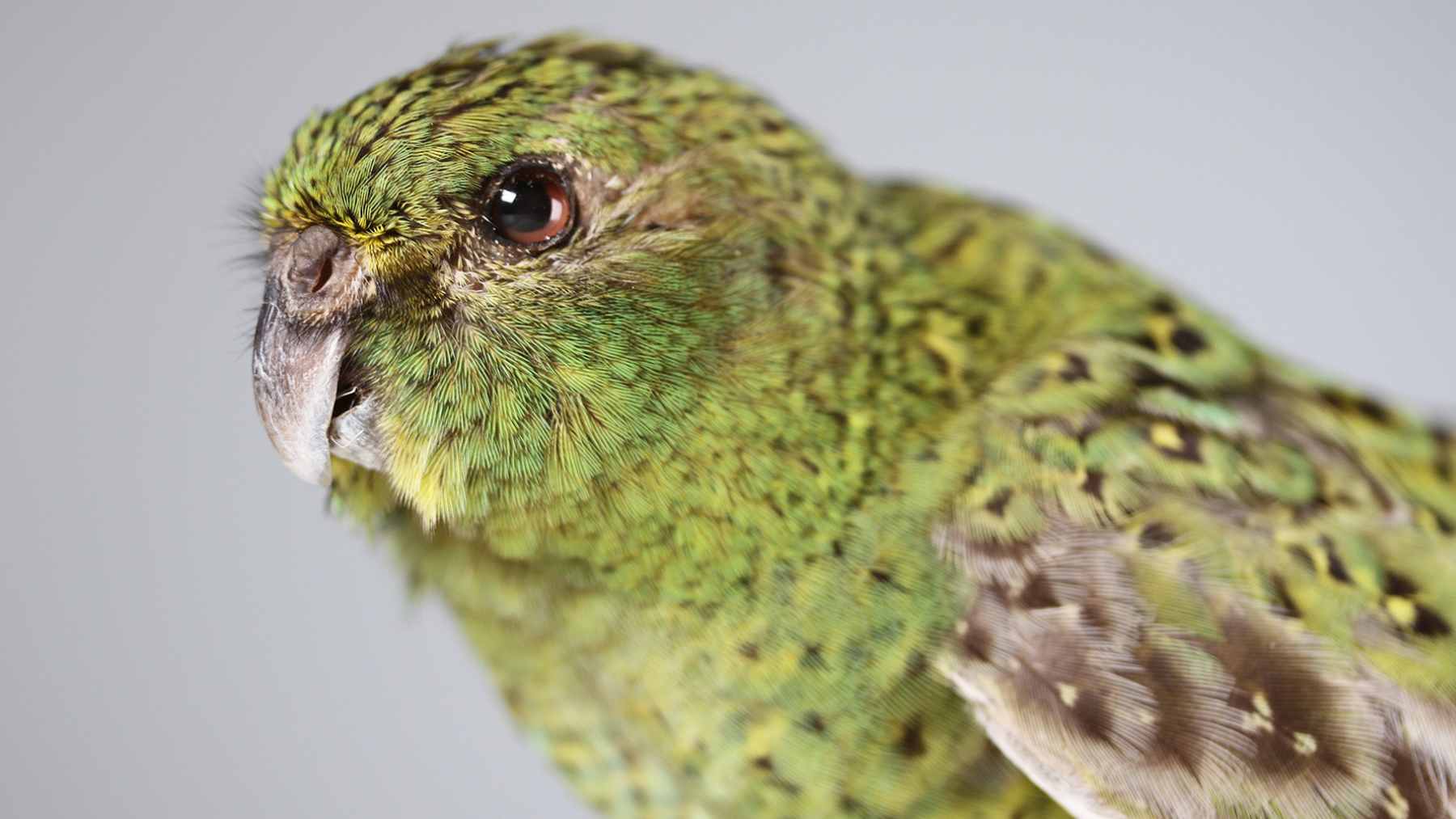
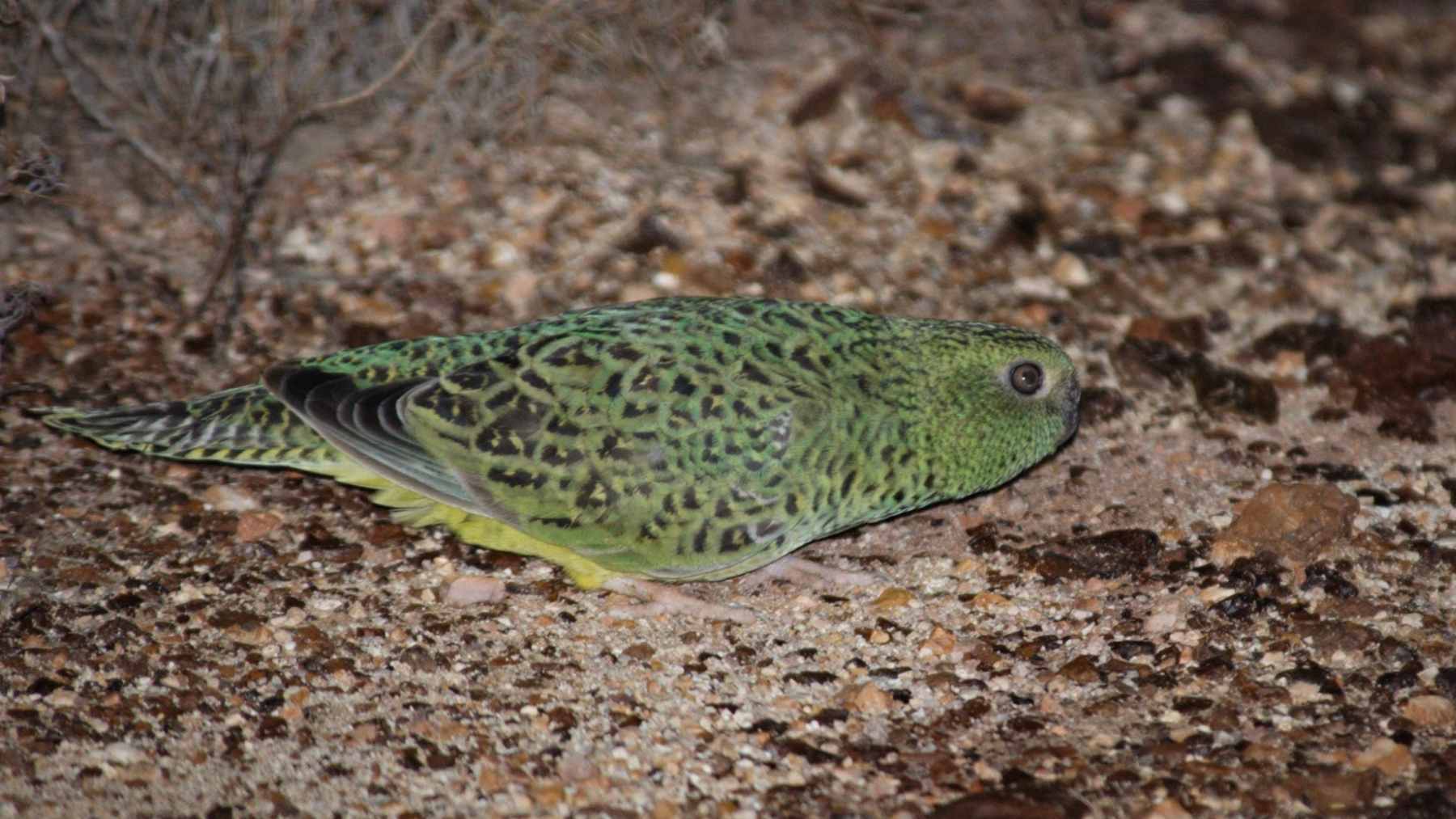
For most of the 1900s, the night parrot felt like a rumor with feathers. It lives in Australia’s arid interior, hides in thick grass by day, and mostly speaks after dark. So how do you protect something you almost never see?
New fieldwork on Ngururrpa Country in Western Australia suggests the bird is not just hanging on. Researchers and Indigenous rangers detected night parrots at 17 of 31 survey sites and estimate there could be at least 50 individuals in the area, making it the largest known population so far.
Listening for a bird that won’t pose for a photo
Between 2020 and 2023, teams used weatherproof acoustic recorders to capture nighttime sound across dozens of sites. The idea was simple: if you can’t spot the bird, let the bird reveal itself by voice.
Nick Leseberg, an ecologist at the University of Queensland and a co-author, described one call as sounding like “didly dip, didly dip,” like a telephone. Another, he said, was “dink dink,” like a bell. In practical terms, those audio hits became map pins for where the parrots still live.
The spinifex “igloos” that keep parrots alive
Recordings led researchers to daytime roosts tucked inside mature clumps of bull spinifex, also known as Triodia longiceps. These older plants form dense, dome-like shelters that help birds stay cool and hidden, which matters in a landscape where shade is not exactly plentiful.
Younger spinifex does not do the same job. The study’s message here is blunt: when frequent fires keep spinifex stuck in a thin, early stage, the parrots lose their cover. No quick substitute. Just more exposure.
Fire is the big risk, and it moves fast
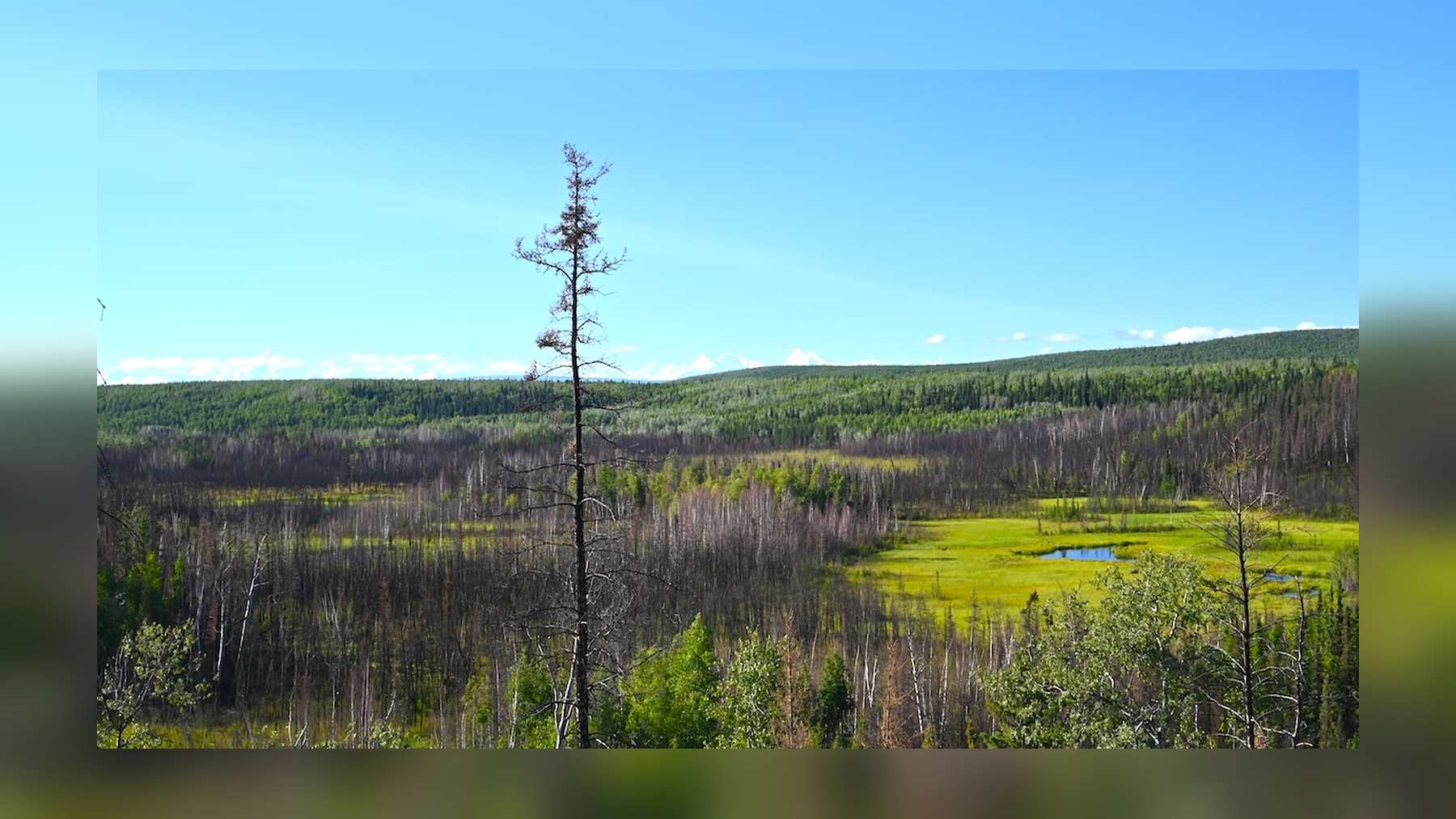
In the Great Sandy Desert, lightning and long dry spells can turn a spark into a wide-running blaze. Using decades of satellite images, the team found that areas around roosts tend to burn every 6 to 10 years, which is fast when you are waiting for plants to mature into real shelter.
That is where planned, cooler-season burns come in. Instead of one massive fire that wipes everything, managers can aim for a patchwork that breaks up fuel. Think of it like creating speed bumps for fire before the worst summer conditions arrive.
Dingoes, feral cats, and a messy predator story
Camera traps often picked up dingoes near parrot habitat. That might sound like bad news for a ground-roosting bird, but scat analysis showed feral cats were a staple prey for dingoes at these sites, while cats were only occasionally detected near roosting areas.
Still, this is not a settled debate across Australia. A James Cook University report on earlier work argued dingoes may keep cats “at bay” partly by changing when and where cats hunt. On the other hand, a 2021 paper in Food Webs reported no sign that dingoes constrained feral cats in parts of Western Australia, even with heavy monitoring.
What conservation looks like when the clock is ticking
The study’s recommendations are practical and place-based. Fire management should lean on ranger knowledge and modern mapping to plan strategic burns that reduce fuel around key roosting habitat. It is not flashy work, but it can be the difference between a tough season and a wipeout.
Predator control also needs a light touch. Programs that harm dingoes could backfire if cats become more common near roosts, and cats are widely recognized as dangerous night hunters for small wildlife. One rough fire year, a few new vehicle tracks, or weeds that change how flames travel could shift the balance quickly.
The main study has been published in Wildlife Research.